Mastering the Bulgarian Split Squat: A Comprehensive Guide to Optimizing Performance and Mobility

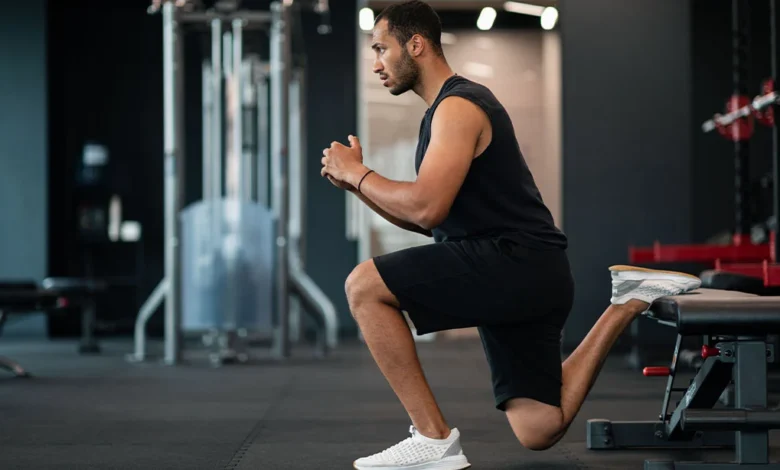
The Bulgarian split squat, often referred to in strength and conditioning circles as the most challenging unilateral lower-body exercise, remains a cornerstone of athletic development. While notoriously difficult to perform, its physiological benefits are well-documented: enhanced hypertrophy of the quadriceps and gluteus maximus, significant improvements in single-leg stability, and the mitigation of bilateral strength imbalances. However, the movement’s complexity often exposes critical weaknesses in an athlete’s kinetic chain, including restricted hip mobility, limited ankle dorsiflexion, and inadequate pelvic control. When these mechanical deficiencies are present, the exercise transitions from an effective training tool to a source of injury risk and suboptimal performance.
The Biomechanics of the Bulgarian Split Squat
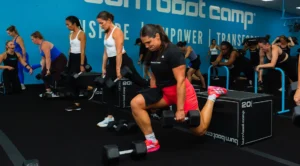
Historically, the Bulgarian split squat—a variation of the classic split squat where the rear foot is elevated on a bench or stand—gained prominence in the late 20th century, largely popularized by Bulgarian national weightlifting coach Angel Spassov. By shifting the load primarily onto the lead leg, the exercise mandates a high degree of neuromuscular coordination. Unlike the traditional back squat, where the spine bears significant axial load, the Bulgarian split squat isolates the lower body, forcing the stabilizers of the hip and ankle to work in concert to maintain balance while descending into deep knee and hip flexion.
According to recent studies in the Journal of Strength and Conditioning Research, the Bulgarian split squat produces electromyographic (EMG) activity in the gluteus maximus and vastus lateralis that is comparable to, or in some instances higher than, the traditional back squat, despite the use of significantly less absolute weight. This reduction in spinal loading makes it an essential tool for athletes managing lower back fatigue or injury, provided the user possesses the requisite mobility to execute the movement without compensatory patterns.
Identifying Performance Deficiencies
The "humbling" nature of the Bulgarian split squat often stems from a failure to "own" the bottom position. Athletes frequently struggle with premature fatigue, balance loss, or lower back strain, all of which are diagnostic markers of underlying mechanical issues.
A primary indicator of a setup error is the "tuck" or "arch" of the lumbar spine. When the rear hip flexors are restricted, the pelvis is often pulled into an anterior tilt as the athlete descends. This forces the lower back to compensate, increasing the risk of disc-related discomfort. Furthermore, if the lead ankle lacks dorsiflexion, the heel will lift off the ground, causing the center of mass to shift forward, placing excessive stress on the patellar tendon rather than the targeted hip and thigh musculature.
Strategic Adjustments: Before Correcting Mobility
Before prescribing corrective exercises, it is imperative to evaluate the setup. Many practitioners misalign their distance from the bench. If the stance is too narrow, the knee will travel excessively far over the toe, often causing the rear leg to cramp. If the stance is too wide, the emphasis shifts heavily toward the rear hip flexors, limiting the depth of the lead leg’s range of motion.
A neutral spine should be maintained throughout the movement. Athletes are encouraged to perform a test set while filming from a lateral perspective. Key indicators to monitor include the alignment of the knee over the second toe, the maintenance of a flat foot, and the degree of torso lean. A slight forward lean is generally acceptable and often necessary to engage the glutes effectively, but excessive leaning that results in spinal rounding is a technical failure that must be addressed before increasing the intensity of the load.
Five Targeted Mobility Interventions
When technical adjustments fail to resolve performance plateaus, mobility training is required. These five movements are designed to address the specific restrictions that prevent full-range execution.
1. The Lateral Lunge to Box
The Bulgarian split squat is primarily a sagittal plane movement, but it requires significant frontal plane stability. The lateral lunge to box focuses on the adductor complex. By stretching the adductors through a lengthened position while requiring hip strength to return to the starting position, the athlete builds the capacity to resist lateral shifting—a common cause of knee instability during split squats.
2. The Couch Stretch
The rectus femoris, which crosses both the hip and knee joints, is frequently the culprit behind restricted range of motion in the rear leg. The couch stretch is the gold standard for lengthening this muscle. By placing the rear shin against a wall or vertical support while in a half-kneeling position, the athlete can systematically restore length to the quadriceps. This allows for a more upright torso and a deeper, more comfortable descent.
3. Weighted Ankle Rocker
Ankle dorsiflexion is perhaps the most underrated component of lower-body training. If the ankle is "stiff," the knee cannot track forward, causing the heel to rise. The weighted ankle rocker utilizes a kettlebell placed on the knee to drive the joint into controlled dorsiflexion. By performing this as part of a pre-workout routine, athletes can improve the mechanical leverage of the front leg, allowing for a deeper, more stable squat.
4. Front-Foot Elevated Split Squat with Pause
To build strength in the end-range position, the front-foot elevated split squat is highly effective. By elevating the lead foot by two to four inches, the athlete increases the requirement for hip and knee flexion. Incorporating a three-second pause at the bottom of the movement forces the musculature to stabilize under tension, effectively bridging the gap between passive mobility and active strength.
5. Half-Kneeling Hip Flexor Mobilization with Overhead Reach
The iliopsoas, which plays a critical role in hip extension, is often tight due to sedentary lifestyles. This drill targets the deep hip flexors. By adding an overhead reach and a lateral side bend, the athlete places the iliopsoas under increased tension. This movement not only improves mobility but also reinforces the pelvic stability required to prevent the lower back from arching during the split squat.
The Broader Impact of Mobility Training
The implications of these corrective measures extend beyond the Bulgarian split squat. By addressing ankle, hip, and pelvic limitations, athletes often report significant improvements in their bilateral back squat, deadlift, and running gait. The reduction of compensatory movement patterns decreases wear on the joints, potentially extending an athlete’s career and improving overall movement quality.
Industry experts emphasize that mobility training should not be viewed as a separate, optional endeavor but as a prerequisite for high-intensity loading. The objective is to achieve a state where the athlete can move through their full, functional range of motion without the "leaks" in stability that lead to injury.
Conclusion
The Bulgarian split squat remains an essential, albeit demanding, component of any serious training program. While the exercise is designed to test the limits of strength and stability, it should not be a test of how much pain one can tolerate through poor biomechanics. By systematically evaluating setup, identifying mobility deficits, and integrating targeted corrective drills, athletes can transform this "dreaded" movement into a reliable, high-yield exercise. Consistency in these mobility protocols, combined with a disciplined approach to form, will ultimately yield superior results in strength, size, and athletic longevity. As with all strength training, the goal is not merely to perform the rep, but to master the movement—ensuring that the bottom position of the split squat becomes a place of strength, not a site of struggle.
Related posts: