Ilona Maher and the New Frontier of Athlete Advocacy: Balancing Olympic Glory with the Business of Sport

The meteoric rise of USA Women’s Rugby Sevens star Ilona Maher during the 2024 Paris Olympics represents a significant shift in the landscape of American sports marketing and athlete visibility. While the Games traditionally serve as a platform for elite physical performance, Maher has transcended the role of a typical Olympian, becoming a cultural touchstone who has successfully leveraged her newfound mainstream celebrity to advocate for the visibility of niche sports. For Maher, the transition from a specialized rugby athlete to a household name has not been a catalyst for personal transformation, but rather an opportunity to amplify a discipline that has historically struggled for airtime in the American market.
"I think for some people when they get famous, maybe it changes who they are and who they believe themselves to be," Maher tells Muscle & Fitness. "I just never found that to be me. I think I’m kind of a similar person I was before the Paris Olympics."
The trajectory of Maher’s career since the Paris Games has been characterized by a rapid succession of high-profile opportunities. Following the conclusion of the Olympics, where she helped secure a bronze medal for the United States, her public profile surged. This momentum led to a cover feature in Sports Illustrated, an appearance as a contestant on the reality competition series Dancing with the Stars, and the establishment of a popular podcast. Furthermore, she has secured strategic brand partnerships with global entities including Maybelline New York, Adidas, and Burn Boot Camp. Despite these external demands, the fundamental reality of her existence remains tethered to the rigorous, often invisible, grind of professional rugby.
The Visibility Gap in Women’s Rugby
Despite her massive social media following and public acclaim, a significant disconnect remains between Maher’s personal brand and the accessibility of the sport she represents. Rugby Sevens, while popular globally, faces substantial hurdles in the United States, particularly regarding broadcast infrastructure and fan engagement. Maher acknowledges this logistical reality with characteristic candor.
"Honestly, it doesn’t frustrate me because we don’t have enough places for them to watch rugby," Maher says. "So I would tell you to watch rugby. I could tell you there’s games on this weekend, but it’s not like you tune into one game, then I’ll keep watching that team."
The challenge is structural. International rugby fixtures often take place in time zones that are prohibitive for a North American audience, with matches frequently held in South Africa, Australia, or across Europe. Maher highlights the difficulty of cultivating a casual fan base when the barrier to entry involves waking up at 4:00 a.m. to catch a fragmented broadcast of a match taking place thousands of miles away.
This "visibility gap" is a documented phenomenon in non-traditional American sports. Unlike the WNBA, which has seen a record-breaking surge in viewership and media rights value due to the "Caitlin Clark effect," rugby lacks a consistent, domestic "home" for its content. However, industry analysts suggest that Maher is performing a similar function to Clark by serving as an entry point for new fans who may not know the rules of the sport but are invested in the personality of the athlete. By leveraging her platform to explain the game and demystify the physicality of rugby, she is effectively performing the role of an ambassador, even if the broadcast infrastructure has yet to catch up to the demand.
A Life Built Around the Training Schedule
Maher’s commitment to her athletic craft remains the cornerstone of her daily routine, which dictates all other professional activities. As she prepares for the 2028 Los Angeles Summer Olympics, her calendar is meticulously structured around the requirements of Team USA. Unlike individual athletes who may have more flexibility in scheduling their media appearances, Maher operates within the rigid framework of a team sport.
"We have meetings throughout the day and rehab and stretching to ramp the body up and whatnot," she explains. "I have to do whatever timing my team says. I’m not an individual athlete that can build my life around my podcast. I have to build the podcast and everything else around my training life; I have to be in the gym at 8 a.m. with all the girls."
Her training regimen is exhaustive, consisting of two on-field sessions daily, supplemented by four days of intensive weightroom work. A typical week includes speed and skills drills, cardiovascular endurance training that can reach up to 20,000 steps of running, and explosive power movements designed to prepare her for the high-impact nature of the pitch. For Maher, skipping a day of training is not an option, as the collective nature of her sport demands peak performance from every member of the squad.
"If my girls are grinding, I want to be out there grinding with them and not just taking the easy road," she notes. "But it is important for me to also focus on things like the podcasts or speaking, because that’s how I financially live the life I do."
Strategic Partnerships and Empowering the Next Generation
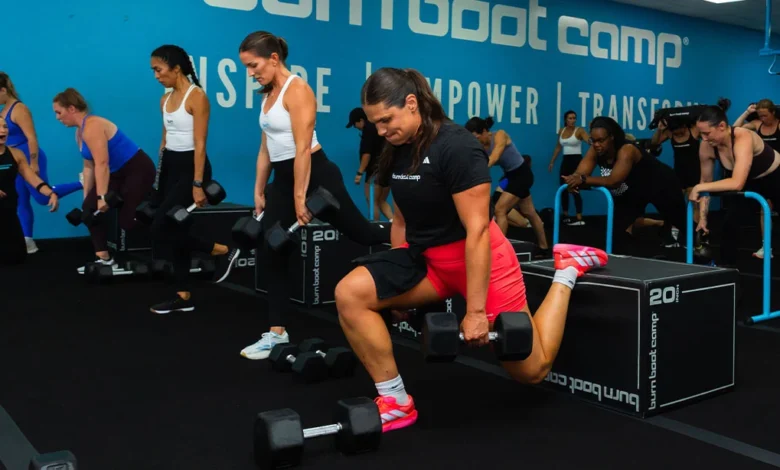
Maher’s decision to partner with brands like Burn Boot Camp is rooted in a desire to translate her platform into actionable empowerment for young women. She frequently receives messages from followers who express interest in fitness but feel intimidated by the traditional gym environment. By highlighting the community aspect of these workouts—where high-fives and mutual encouragement are as central as the physical exertion—Maher is attempting to reshape the narrative around strength and body image.
"I just watched it and the energy and the way that these women came to this class, so excited to be there," Maher says. "They were high-fiving each other and they were getting stronger and it was the sort of community that I’m trying to foster… I have so many girls who message me saying, ‘I wanna get strong. I wanna be strong like you. I just don’t know where to start and I’m intimidated by the gym.’"
Her work in the gym is not merely for performance; it is a source of genuine satisfaction. She speaks with enthusiasm about the technical aspects of her training, particularly exercises that allow for incremental progression. "I do love dumbbell incline bench press," she says. "Where you do a weight and then you’re like, ‘I think I can do a little bit more weight!’ and you put a little more weight and you did and you’re like, ‘OK, I can do a little more weight.’ Those are the moments where I really love being in the gym."
The Path to Los Angeles 2028
As the international sports community turns its gaze toward the 2028 L.A. Games, the implications of Maher’s advocacy for rugby are significant. The Olympics provide a unique opportunity to grow the domestic audience for the sport, provided that the governing bodies and broadcasters can bridge the gap between Olympic interest and day-to-day engagement.
Maher’s approach to her newfound status is one of measured discipline. She is acutely aware that her current visibility is a resource that must be managed. "I have to say no to a lot of opportunities," she admits. "I will get invited to this cool event and I just have to pick my battles."
The ultimate goal, she suggests, is the creation of a more sustainable ecosystem for rugby in the United States. This includes not just higher viewership, but more opportunities for fans to engage with the sport on "home soil." While the road to 2028 involves many unknowns, Maher’s commitment to her team and her desire to elevate the sport remain constant.
In the final analysis, Ilona Maher represents a new archetype of the modern athlete: one who is fully integrated into the digital economy yet remains fundamentally committed to the traditional, grueling demands of professional team sports. Her ability to navigate these two worlds—the high-glamour sphere of celebrity and the high-intensity sphere of the rugby pitch—serves as a case study for how athletes can influence the growth of their sports in an era of fractured media and social-first fandom. Whether or not the infrastructure of rugby expands to match her reach, Maher’s influence on the cultural perception of strength and athleticism is already firmly established.