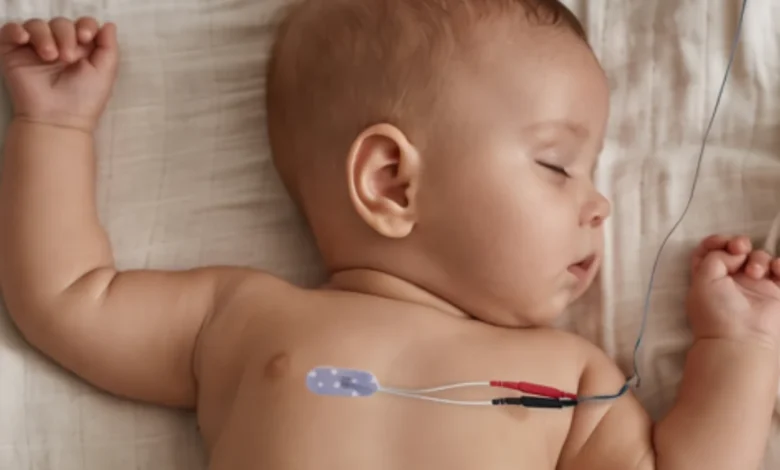
The Evolution of Pediatric Respiratory Monitoring
Historically, respiratory effort monitoring has relied on plethysmography belts—elastic bands wrapped around the chest or abdomen to measure the physical expansion and contraction associated with breathing. While effective for adults, these belts have long posed significant challenges in pediatric and neonatal care. For premature infants or those in neonatal intensive care units (NICUs), the pressure exerted by traditional belts can cause physical discomfort, skin irritation, and even sleep fragmentation, which is counterproductive to the diagnostic goal of obtaining a "natural" sleep study.
The development of the GentleTouch patch represents the culmination of years of engineering aimed at replacing mechanical constraints with high-sensitivity sensor technology. By utilizing polyvinylidene fluoride (PVDF) film, Dymedix has created a patch that is thin, lightweight, and capable of detecting minute movements. This transition from macro-mechanical sensors to micro-sensitive adhesive patches aligns with a broader industry trend toward "wearable-first" diagnostic tools that minimize the burden on the patient while maximizing the quality of data harvested by clinicians.
Technical Specifications: The Power of PVDF
At the core of the GentleTouch system is PVDF technology. Polyvinylidene fluoride is a highly non-reactive thermoplastic fluoropolymer known for its piezoelectric properties—meaning it generates an electrical charge in response to applied mechanical stress. In the context of respiratory monitoring, as the patient’s chest or abdomen rises and falls, the PVDF sensor within the patch experiences subtle mechanical strain. This strain is converted into a high-fidelity electrical signal, providing a clean, clear waveform of respiratory effort.
Unlike older methods that rely on inductance or impedance—which can be easily compromised by patient movement or poor belt fit—the PVDF patch is self-contained. It adheres directly to the skin, eliminating the "noise" often introduced by the shifting of a belt. The sensitivity of the material allows for an extremely fast response time, capturing the rapid, shallow breathing patterns common in infants with greater precision than traditional belts.
Chronology of Dymedix’s Pediatric Innovations
Dymedix Diagnostics has spent the last decade positioning itself as a leader in pediatric sleep medicine. The introduction of the GentleTouch patch follows the success of the broader Lullaby line of sensors, which were specifically designed to meet the unique anatomical requirements of neonates.
- Initial Development Phase: Dymedix began pivoting toward PVDF-based sensors, recognizing that pediatric sleep studies were often plagued by high failure rates due to sensor intolerance.
- The Lullaby Line Launch: The company introduced its initial Lullaby sensors, focusing on airflow and effort. These tools were met with positive clinical feedback, leading to the refinement of the current patch technology.
- Clinical Testing and Validation: Throughout 2024 and early 2025, Dymedix engaged in pilot programs across major pediatric sleep centers to evaluate the adherence, skin safety, and signal reliability of the GentleTouch prototype.
- Current Rollout: The formal release of the GentleTouch Respiratory Effort Patch in late 2026 marks the commercial maturity of this project, moving it from research-based trials to standard clinical availability.
Addressing the Neurodiagnostic Gap
One of the most critical aspects of the GentleTouch system is its utility in neurodiagnostic procedures, specifically in identifying respiratory artifacts within electroencephalogram (EEG) data. During sleep studies for infants, identifying whether a neurological event is truly seizure-related or simply an artifact caused by respiratory movement is a significant challenge for neurologists.
The GentleTouch patch provides a clean effort waveform that acts as a reference point for clinicians. By isolating the breathing signal, technicians can easily filter out interference from the EEG readings. Troy Pridgeon, vice president of business development at Dymedix, emphasized that this capability is intended to streamline the interpretation of complex datasets, reducing the time spent on manual artifact correction and increasing the diagnostic accuracy of the sleep study.

Official Commentary and Industry Reactions
In a recent corporate release, Todd Eiken, vice president of product development, underscored the strategic intent behind the product: "Incorporating PVDF technology into the GentleTouch respiratory effort patch results in a unique beltless monitoring solution. GentleTouch is very light and much more tolerable for sensitive patients. The PVDF technology provides an extremely fast response time and is exceptionally sensitive to respiratory effort movement."
Industry analysts following the sleep diagnostics sector suggest that this launch is a direct response to the "patient experience" mandate currently sweeping healthcare. Hospitals and sleep clinics are increasingly evaluated not just on clinical outcomes, but on patient and parental satisfaction. A device that reduces the number of wires and bands on a baby’s body is a strong selling point for clinics aiming to reduce parental anxiety during what can be an overwhelming diagnostic process.
Implications for Clinical Workflow
The shift toward adhesive, beltless sensors has profound implications for clinical workflow efficiency. Traditionally, setting up a pediatric patient for a sleep study involves a time-consuming process of measuring and fitting multiple belts, which often require readjustment throughout the night.
With the GentleTouch patch, the setup process is simplified:
- Preparation: The site is cleaned, and the patch is applied.
- Calibration: The PVDF sensor, by nature of its physical properties, does not require the extensive calibration that traditional inductive plethysmography belts demand.
- Monitoring: The patch remains in place, providing consistent data without the need for periodic manual adjustments, even if the infant shifts positions.
This improved workflow is expected to be particularly beneficial in busy pediatric labs where throughput is high, but the time required to comfort and settle a patient is limited. By reducing the "prep time" and the likelihood of having to restart a study due to a dislodged sensor, the patch could potentially lower the operational costs associated with repeat studies.
Broader Impact on Pediatric Sleep Medicine
The broader implications of this technology reach into the future of remote and home-based pediatric monitoring. As the industry looks to move more diagnostics out of the laboratory and into the home, the need for robust, user-friendly sensors becomes paramount. A patch that can be applied by a parent with minimal training—and that remains stable during the duration of sleep—is a critical component of home-based pediatric sleep medicine.
Furthermore, the integration of PVDF technology is likely to set a new benchmark for "signal quality" in the industry. As pediatric clinicians become accustomed to the clarity of these waveforms, the demand for high-fidelity sensors will likely drive competitors to move away from older belt-based technologies.
Conclusion
The launch of the Dymedix GentleTouch Respiratory Effort Patch represents a significant technological leap for pediatric diagnostics. By successfully adapting PVDF technology for a beltless application, the company has addressed the primary pain points of pediatric sleep studies: patient discomfort, signal artifact, and procedural complexity. As clinical centers begin to adopt this technology, the focus will likely remain on how these high-sensitivity patches improve the overall accuracy of neurodiagnostic and respiratory data. With this, Dymedix continues its efforts to modernize pediatric diagnostics, ensuring that the smallest patients receive the highest quality of care with the least amount of intervention. The transition toward sensor-based, non-restrictive monitoring appears not only as a convenience but as a necessary evolution in modern medical care.