For the millions of Americans diagnosed with obstructive sleep apnea (OSA), the CPAP machine is a life-saving tool. However, the transition from a clinical diagnosis to nightly home compliance is fraught with logistical hurdles. Patients are often instructed to keep their devices at specific heights to prevent "rainout"—a common phenomenon where condensation builds up in the tubing and causes water to spray into the user’s airway—yet standard nightstands are rarely designed to accommodate the specific dimensions, power requirements, and hose management needs of medical-grade breathing equipment.
The Anatomy of a Compliance Crisis
The medical community has long grappled with the issue of CPAP adherence. According to data from the American Academy of Sleep Medicine, the clinical efficacy of CPAP therapy is contingent upon consistent, nightly use. Despite the clear health benefits, which include reduced risks of hypertension, stroke, and cardiovascular disease, the dropout rate remains staggeringly high. Research suggests that nearly 50% of patients prescribed CPAP therapy cease using the device within the first twelve months of treatment.
This phenomenon, often referred to as "treatment fatigue," is not solely attributed to the discomfort of the mask or the noise of the motor. Rather, it is a cumulative effect of daily frustrations: the clutter of hoses on a nightstand, the inconvenience of refilling humidifiers, and the physical struggle of arranging a bedroom to accommodate a device that was never intended to fit aesthetically or functionally into a modern sleeping space. The My CPAP Caddy enters the market as a targeted intervention designed to mitigate these environmental stressors.
The Evolution of the My CPAP Caddy
The development of the My CPAP Caddy was not a rapid overnight success but a response to a long-standing void in the durable medical equipment (DME) market. Jackson’s journey began with his own observations of the domestic struggle involved in sleep therapy. He noted that while medical device manufacturers were pouring billions into noise reduction, pressure algorithms, and sleek user interfaces for the machines themselves, the "furniture" ecosystem for these devices remained stagnant.
"After experiencing and observing the same frustrations faced by CPAP users night after night, I realized that manufacturers had focused on improving the machines themselves, but very little attention had been given to where those machines are actually used," Jackson noted in a recent press statement.
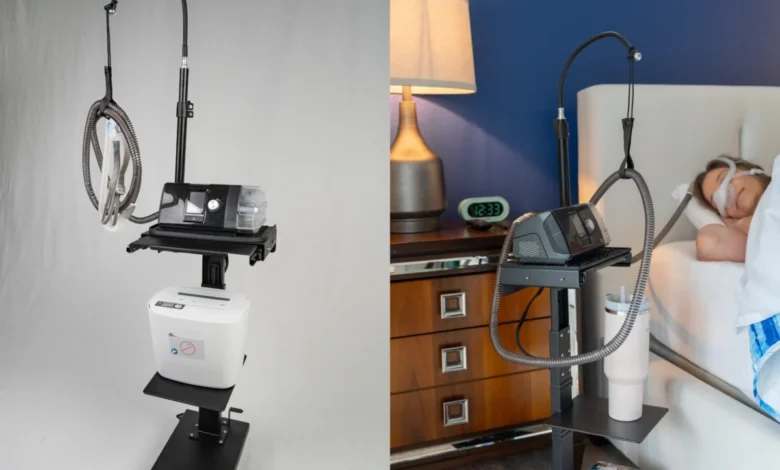
The product development cycle spanned several years, focusing on three core pillars: height adjustability, stability, and cable management. By ensuring the machine can be placed at the manufacturer’s recommended level—typically level with or slightly below the patient’s head—the caddy directly addresses the physical causes of hose condensation. Furthermore, the design incorporates features that allow for the tidy routing of power cords and air hoses, preventing the "spaghetti effect" of tangled wires that often plagues the bedside area.
Supporting Data and Industry Context
The implications of this invention extend beyond simple convenience; they touch upon the critical metrics of patient health outcomes. The healthcare industry is increasingly moving toward "patient-centered design," a framework that acknowledges that a medical device is only as effective as the patient’s willingness to use it.
When a patient struggles with their equipment, the clinical result is often "partial adherence," where the machine is used for only a few hours per night, rendering the treatment ineffective against the apnea-hypopnea index (AHI) spikes that occur during REM sleep. By providing a stable, dedicated platform, the My CPAP Caddy aims to standardize the physical setup of the equipment, theoretically reducing the barrier to entry for new users and lowering the anxiety associated with the nightly routine.
The market for sleep apnea treatment is currently valued in the billions, driven by an aging population and a growing awareness of the dangers of untreated sleep disorders. With national healthcare retailers and major medical distributors beginning to incorporate such accessories into their catalogs, there is a clear acknowledgment that the "experience" of therapy is as important as the therapy itself.
Official Responses and Strategic Partnerships
The transition from a prototype to a widely available retail product required significant strategic maneuvering. Jackson has successfully negotiated partnerships with national healthcare retailers and major distributors of CPAP equipment. These partnerships are essential; in the world of sleep medicine, the majority of patients obtain their devices through DME providers, who act as the gatekeepers for insurance-covered accessories.
Industry analysts suggest that the inclusion of the My CPAP Caddy in these catalogs represents a shift in how insurance providers and medical suppliers view "patient comfort accessories." Historically, items that were not strictly essential for the operation of the CPAP machine were sidelined. However, as the focus shifts toward long-term value-based care—where providers are incentivized by patient compliance rather than just device sales—the value of an organizational tool that promotes adherence becomes much clearer.
Analyzing the Impact on Long-Term Adherence
While the My CPAP Caddy is a physical solution to a physical problem, its success may ultimately be measured by its psychological impact on the patient. The ritual of setting up for sleep is a mental trigger. If the experience is chaotic, messy, or frustrating, the patient is more likely to view the CPAP machine as an intruder in their sanctuary.
By formalizing the location of the device, the caddy helps the CPAP machine become a seamless part of the bedroom environment rather than an eyesore. This subtle psychological shift is often the difference between a patient who views their therapy as a chore and a patient who views it as a necessary, integrated part of their health regimen.
Future Implications and Market Trends
The success of the My CPAP Caddy raises questions about the future of home medical equipment design. We are seeing a move away from the "clinical" aesthetic—which often features sterile plastics and harsh lighting—toward products that blend into home decor. This "lifestyle integration" is likely to become the gold standard for all home-based health devices, from home dialysis machines to insulin pumps.
Furthermore, as telemedicine continues to grow, the ability for patients to self-manage their equipment at home has become more critical. With less face-to-face interaction with respiratory therapists, patients are increasingly responsible for their own setup and maintenance. Products like the My CPAP Caddy provide a "best practices" template that users can follow, ensuring that their equipment is positioned for optimal performance without the need for a home visit from a clinician.
Conclusion
The development of the My CPAP Caddy by Eric Jackson represents a microcosm of a larger trend in healthcare: the recognition that the patient’s home environment is the final, and perhaps most important, frontier of medical treatment. By focusing on the neglected details of CPAP therapy—the ergonomics, the organization, and the daily user experience—this invention serves as a reminder that innovation is not always about inventing a new drug or a faster computer chip. Sometimes, innovation is simply about making it easier for a patient to wake up feeling rested, healthy, and compliant with the therapy that keeps them alive.
As the product continues to roll out through national distribution channels, its performance will be tracked not just by sales figures, but by the anecdotal and clinical reports of users who find their nightly routines simplified. For a patient population that has long been underserved by the peripheral design of their medical equipment, this focus on the "bedside" experience may prove to be a transformative advancement in the ongoing effort to improve sleep health across the United States. Through deliberate design and a commitment to addressing the human element of medicine, Jackson’s solution provides a blueprint for how future medical device developers can better support patients in their own homes.