Beyond Inert: Groundbreaking Research Reveals How Microplastics Generate Toxic Chemical Reactions in Water

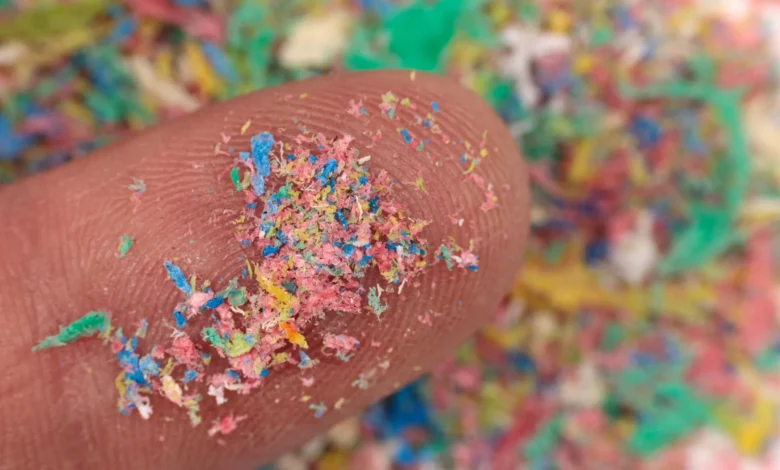
For decades, modern society has relied on plastic as an indispensable building block of everyday life. From food packaging and water bottles to children’s toys and medical devices, synthetic polymers have saturated global commerce largely because they were long assumed to be chemically stable, inert, and unlikely to react with their surrounding environments. However, a sweeping body of new scientific research fundamentally challenges this foundational assumption. A collaborative team of scientists from Columbia University and the University of California, Berkeley, has discovered that as plastics break down into microscopic particles, they undergo a radical transformation—shifting from passive debris into active chemical agents capable of interacting with water to generate harmful, high-energy molecules.
This paradigm-shifting study, published in the prestigious journal Nature, sheds light on a previously overlooked biological mechanism. When larger plastic objects fragment into microplastics and invisible nanoplastics, their surface area expands exponentially. According to the researchers, these newly exposed boundaries actively alter the chemistry of surrounding aqueous environments. By catalyzing electron transfers, the plastic-water interface produces reactive oxygen species (ROS)—volatile, high-energy radicals notorious for damaging living cells, degrading tissues, and potentially accelerating serious human diseases.
As regulatory bodies, public health officials, and environmental scientists race to understand the full scope of global plastic contamination, these findings provide a missing link. For years, medical researchers have documented alarming correlations between microplastic exposure and severe physiological conditions, yet the precise biochemical pathways remained elusive. By proving that water and plastic can act as an active chemical factory inside the human body and natural ecosystems, this research redefines the global conversation surrounding plastic pollution.
The Chronology of Discovery: From Invisible Contamination to Biochemical Hazard
To fully grasp the magnitude of the recent findings in Nature, it is essential to examine the chronological progression of microplastic research over the past several years. For a long time, scientists understood that macro-plastics degraded mechanically via wave action, ultraviolet radiation, and thermal stress into smaller shards, but the exact concentration of these particles—particularly at the nanoscale—remained vastly underestimated.
The foundation for the current biochemical breakthrough was laid in January 2024, when a team of researchers at Columbia University, led by chemist and biomedical engineer Wei Min, published a landmark study. Using a newly developed, highly sophisticated laser-based stimulated Raman scattering microscopy technique, Min and his colleagues peered into commercial bottled water with unprecedented precision. The results stunned the scientific community. The researchers discovered an average of approximately 240,000 detectable plastic fragments in a single liter of bottled water. Crucially, roughly 90 percent of these particles were nanoplastics—measuring less than one micrometer in length—while the remainder were microplastics. This meant that actual contamination levels were 10 to 100 times higher than previous technological estimates had suggested.
The 2024 revelation acted as a catalyst, sparking intense public scrutiny regarding how much plastic humans ingest daily through food, beverages, and ambient air. It also accelerated public health investigations. By 2026, the federal government responded to mounting pressure by launching a comprehensive $144 million research initiative aimed squarely at tracking and neutralizing toxic microplastics within the human body. Concurrently, the U.S. Environmental Protection Agency (EPA) officially added microplastics to its contaminant candidate list for drinking water, marking the first time these particles were formally recognized as a potential regulatory threat in municipal water systems.
Despite these regulatory strides, a fundamental scientific paradox persisted. If plastics are inherently stable polymers, how could their mere presence inside the human body lead to systemic biological damage? Medical journals such as the New England Journal of Medicine, Nature Medicine, and Nature Health had increasingly linked microplastic and nanoplastic exposure to heightened risks of heart attacks, strokes, neurodegenerative conditions like dementia, and even brain tumors. Yet, without a demonstrated mechanism of cellular toxicity, skeptics could only point to physical irritation or inflammation.
The 2026 study published in Nature resolves this critical knowledge gap. By demonstrating that microplastics actively generate reactive oxygen species upon contact with aqueous solutions, the Columbia and UC Berkeley research teams provided the missing biochemical link connecting macroscopic plastic fragmentation to microscopic cellular destruction.
Dissecting the Chemistry: How Water and Plastic Create Toxic Radicals
At the heart of the new discovery lies a counterintuitive chemical process involving water. Most commodity plastics—such as polyethylene, polypropylene, and polystyrene—are fundamentally hydrophobic, meaning their molecular structures naturally repel water. When water encounters these water-repelling surfaces, the local physics and chemistry of the liquid change dramatically compared to bulk water.
To investigate this phenomenon at the absolute limits of resolution, Wei Min’s laboratory at Columbia joined forces with theoretical chemists and computer simulation experts in Professor Teresa Head-Gordon’s laboratory at the University of California, Berkeley. While the Columbia team conducted rigorous chemical and biological experiments, the Berkeley team deployed advanced molecular dynamics simulations to visualize how plastic surfaces interact with water molecules at the nanoscale.
The theoretical models revealed a fascinating and troubling dynamic. Because plastic surfaces are hydrophobic, negatively charged particles known as hydroxide ions become densely concentrated in the microscopic layers of water immediately abutting the plastic boundary. In this unique, constrained environment, these ions can readily shed electrons, triggering a cascade that forms hydroxyl radicals and other reactive oxygen species (ROS).
"Water is a key active player here, rather than just a spectator," explained Wei Min, elaborating on the mechanics of the reaction. "It’s integral to making these microplastics reactive. Water molecules become chemically active when they come into contact with plastic, which is hydrophobic. Contact between the water and plastic creates an environment that facilitates electron transfer, and the formation of reactive radicals. When plastics fragment into smaller particles, their increasing surface-to-volume ratio creates more of these chemically active areas."
Naixin Qian, a postdoctoral researcher in Wei Min’s lab and a co-lead author of the study, emphasized the biological implications of this chemical pathway. "Our research found that when microplastics interact with water, as they do when they’re in bottled water, or when they’re absorbed into our bloodstream, they spontaneously generate what we call reactive oxygen species," Qian stated. "ROS are textbook examples of the kinds of molecules that can damage animal and human tissue."
Within human biology, blood, lymph fluid, and cellular cytoplasm are predominantly aqueous. Once microscopic plastic particles cross biological barriers—such as the intestinal lining or the pulmonary membranes—and enter the bloodstream, they encounter a continuous supply of water. Rather than remaining inert, these circulating particles act as ongoing catalysts, continuously churning out ROS that can oxidize lipids, damage proteins, and fracture DNA strands within cells. While the research establishes the foundational chemical mechanism rather than proving direct causality for specific medical diagnoses, it offers a robust, scientifically validated hypothesis for why microplastic exposure correlates with severe systemic pathologies.
Broad Implications for Human Health, Ecosystems, and Daily Life
The ramifications of this discovery extend far beyond laboratory glassware, touching nearly every facet of modern environmental science, industrial manufacturing, and public health policy.
Co-author Beizhan Yan, a researcher at Columbia University’s Lamont-Doherty Earth Observatory, noted that microplastics originate from a vast array of industrial and domestic sources. Wastewater treatment plants, industrial manufacturing discharges, and commercial laundromats continuously shed billions of synthetic fibers and particles into aquatic environments. Furthermore, everyday domestic activities—such as heating food in plastic containers inside a microwave oven, or leaving bottled water exposed to high temperatures and direct sunlight during transportation and storage—drastically accelerate the breakdown of polymers, yielding a higher density of reactive nano-sized particles.
"This work has significant implications for environmental and human health," Yan explained. "In certain environments, such as discharges from plastic manufacturers and laundromats, microplastics can form and enter aquatic environments. This work also indicates that radicals can form on hydrophobic plastic surfaces in water, which could affect ecosystems and human health following exposure. In addition, various uses and processes in our daily lives can generate microplastics, including microwave heating, sunlight exposure of bottled water during storage. This foundational work provides a potential pathway for understanding their health impacts."
Aquatic ecosystems face a parallel threat. As rivers, lakes, and oceans accumulate massive quantities of microplastics, the continuous generation of reactive oxygen species in the water column could exert chronic oxidative stress on aquatic life, impacting everything from microscopic phytoplankton to large marine vertebrates.
Toward Safer Materials: Engineering the Future of Plastics
Despite the sobering nature of the findings, the research offers a tangible roadmap toward mitigation and remediation. By identifying the precise physicochemical properties that render microplastics reactive, scientists have opened the door to radical innovations in material science and chemical engineering.
According to Professor Teresa Head-Gordon of UC Berkeley, the fundamental insights gained from their molecular simulations could eventually guide manufacturers in redesigning commodity plastics from the ground up. By altering the surface hydrophobicity, introducing stabilizing chemical additives, or shifting toward genuinely biodegradable biopolymers that degrade without generating high-energy radicals, industry leaders may be able to engineer safer materials that do not pose the same biochemical hazards.
"Our fundamental work showing that the most hydrophobic microplastics interacting with water can drive chemical reactivity could ultimately lead to new engineering solutions by redesigning the chemistry of these commodity plastics to reduce the toxic outcomes on health and the environment," Head-Gordon said.
As governments allocate multi-million-dollar research grants and regulatory agencies tighten drinking water surveillance, the scientific community’s understanding of plastic pollution has entered a critical new phase. The long-held illusion that plastic is a harmless, inert companion of modern civilization has been permanently shattered. Moving forward, confronting the global plastic crisis will require not only reducing overall waste and improving recycling infrastructure, but fundamentally rethinking the chemical architecture of synthetic materials to protect both human physiology and the natural world.