As the suicide rate grows among Black youth here is where a UC Berkeley researcher sees reason for hope

On a vibrant summer afternoon at the University of California, Berkeley, four teenagers stood before a whiteboard, their markers moving rapidly as they mapped out potential solutions to a national public health crisis. While the setting was academic, the task was profoundly human: these young advocates were collaborating with researchers to design mental health interventions specifically tailored to curb the alarming rise in suicide rates among Black youth. This participatory research model, facilitated by Assistant Professor of Psychology Jasmin Brooks Stephens, represents a pivotal shift in how the scientific community approaches adolescent mental health—moving away from reactive crisis management and toward the cultivation of inherent strengths.
The urgency of this work cannot be overstated. For decades, the United States has seen a disturbing divergence in suicide trends. While adolescent suicide rates have begun to stabilize or decline for the general population, the trajectory for Black children and teenagers remains upward. Data from the Johns Hopkins Bloomberg School of Public Health indicates that between 2007 and 2020, the suicide rate for Black youth aged 10 to 17 surged by 144 percent. Furthermore, the internal demographics of these statistics reveal complex patterns: while Black boys historically die by suicide at more than double the rate of their female peers, the rate for Black girls saw a staggering 182 percent increase between 2001 and 2017. These numbers are not merely statistical anomalies; they represent a systemic failure to protect a vulnerable population.
A Chronology of Crisis and Innovation
The genesis of the current research project lies in a broader, multi-year effort to understand the intersection of systemic racism and mental health outcomes. In recent years, public health experts have increasingly recognized that traditional, "one-size-fits-all" clinical models often fail to address the specific stressors faced by Black youth.

The timeline of this research initiative began with an observational phase, where Dr. Brooks Stephens documented how the dual stressors of the COVID-19 pandemic and systemic racial discrimination significantly exacerbated suicide risk for Black young adults. By 2023, the focus shifted toward "upstream" interventions—the concept that prevention must begin long before a crisis manifests. During the summer of 2026, this culminated in an eight-week partnership with the Homeless Children’s Network and their Jabali Youth Advocacy program. The program invited teenagers to the UC Berkeley campus, providing them with a rare, transformative opportunity to participate directly in the research design process. For many of these students, it was their first time on a college campus, fostering a sense of agency that was as much a part of the intervention as the data they helped generate.
The Anatomy of the Black Youth Thriving Framework
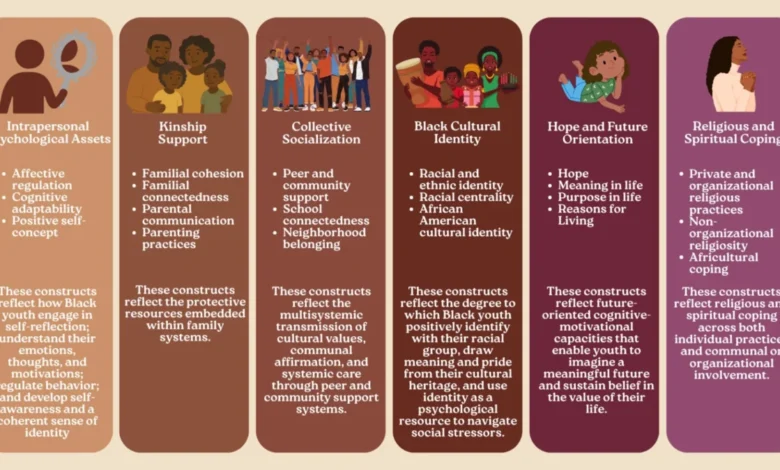
Dr. Brooks Stephens, drawing upon her academic background at the University of North Carolina, Chapel Hill, and the University of Houston, has spent years identifying why current mental health models have been insufficient. Her work, specifically the newly established Black Youth Thriving Framework for Suicide Prevention, is rooted in the identification of six core protective factors. These factors—family support, community connectivity, racial identity, spirituality, belonging, and self-acceptance—serve as the foundation for her upcoming clinical recommendations.
The implications of this framework are significant. By shifting the focus from "why people die" to "what makes people want to live," researchers are discovering that resilience is not merely the absence of depression but the active presence of purpose. In a 2023 study published in scholarly journals, Brooks Stephens and her colleagues provided empirical evidence that Black young adults who report higher levels of self-acceptance exhibit significantly lower vulnerability to suicidal ideation. Furthermore, she has explored how mindfulness and meditation can act as cognitive buffers, helping young people manage the impulsivity that is frequently associated with heightened suicide risk.
Structural Racism and the Mental Health Divide
The disconnect between general suicide prevention efforts and the specific needs of Black youth is often attributed to the failure of existing systems to address structural racism. Dr. Brooks Stephens contends that structural racism is not merely a political talking point, but a tangible psychological stressor that dictates the development of a young person’s self-concept.

"I became aware very early on that Black children are often navigating expectations about who they are supposed to be before they have even had the opportunity to figure out who they are for themselves," Dr. Brooks Stephens noted. This observation highlights the importance of creating "brave spaces" where Black youth can define their own identities, acknowledge their internal brilliance, and imagine futures that are not limited by societal stereotypes. The stigma surrounding mental health in many Black communities—often exacerbated by a lack of culturally competent care—further complicates the ability to seek help. By training clinicians to recognize these specific cultural dynamics, the research team hopes to bridge the gap between community needs and professional service delivery.
Official Responses and Academic Implications
The scientific community has begun to take notice of this shift toward participatory research. Experts in the field of suicidology, including former mentors such as Dr. Enrique Neblett and Dr. Rheeda Walker, have long advocated for more nuanced, culturally informed approaches to mental health. The collaboration between the Homeless Children’s Network and UC Berkeley serves as a blueprint for how academic institutions can engage with community organizations to produce actionable, relevant public policy.
The implications of this work extend beyond the clinical setting. If policymakers and school districts adopt the Black Youth Thriving Framework, they could fundamentally alter the support infrastructure for Black students. This would involve moving resources away from post-crisis interventions—such as emergency psychiatric holds—and toward school-based programs that emphasize racial pride, community belonging, and early emotional regulation.
Future Directions in Suicide Prevention
Looking ahead, Dr. Brooks Stephens plans to translate her findings into comprehensive guidelines for clinicians, policymakers, and educational leaders. The goal is to standardize a "strengths-based" approach that is as rigorous as traditional medical models but significantly more effective at reaching those who have been historically underserved by the mental health system.

The enthusiasm of the four teenagers who stood at the whiteboard at UC Berkeley serves as a reminder of the power of including the target demographic in the design of their own solutions. When asked about their experience, the young participants expressed a sense of newfound power—the realization that they were not just subjects of a study, but architects of a future where their peers could thrive.
As the project continues to evolve, the emphasis remains on the "upstream" mission: building a world where the brilliance of Black youth is nurtured rather than stifled. By fostering a sense of hope, providing the tools for self-reflection, and validating the lived experiences of young people, Dr. Brooks Stephens and her collaborators are working to ensure that the statistics of the future look fundamentally different from those of the past. The path forward is not merely about surviving crises, but about creating environments where every child has the opportunity to recognize their own inherent value and the worth of their own life. This, ultimately, is the essence of true suicide prevention.