New Study Challenges Long-Held Assumptions About Breast Cancer Overdiagnosis in Mammography Screening

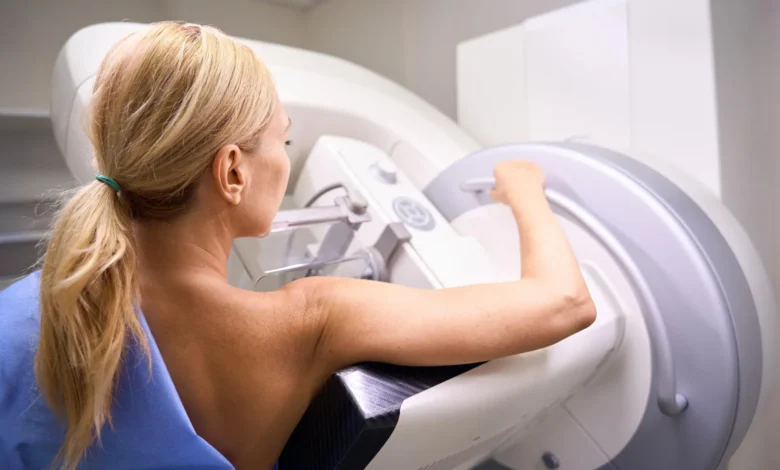
For decades, public health discussions surrounding breast cancer screening have weighed life-saving early detection against a persistent concern: overdiagnosis. This phenomenon occurs when a mammogram identifies a slow-growing or non-progressive tumor that would never have produced symptoms, metastasized, or threatened a patient’s life during their natural lifespan. Long considered a significant drawback of population-wide screening programs, overdiagnosis has been frequently cited in international guidelines and medical literature, with historical estimates suggesting that between 30% and 50% of all breast cancers detected through routine mammography could fall into this category.
However, a comprehensive new study published by an international team of researchers challenges these high figures, concluding that the true rate of overdiagnosis is likely below five percent. By reanalyzing decades-old randomized trial data and comparing them against real-world population tracking from Denmark, the research team suggests that previous high estimates were heavily skewed by methodological oversights, premature data collection, and a failure to account for complex temporal dynamics.
The findings, which offer a fresh perspective on the foundational data of modern oncology, are expected to reshape how health authorities communicate the risks and benefits of mammography to millions of women worldwide.
Reevaluating the Historical Data
To arrive at these conclusions, the research consortium undertook a meticulous re-examination of all eight major randomized controlled trials ever conducted on mammography screening. These historical studies—which include the pioneering New York Health Insurance Plan trial, the Malmö and Two-County trials in Sweden, the Edinburgh trial, the Canadian National Breast Screening Study, the Stockholm and Gothenburg trials, and the United Kingdom’s Age trial—form the bedrock of modern screening policy.
For years, discrepancies within these trials fueled an ongoing academic debate. While some studies indicated minimal overdiagnosis, others produced remarkably high estimates that subsequently influenced global health policy, clinical guidelines, and informed consent disclosures provided to patients.
According to the new research, however, those alarming figures were largely artifacts of immature data. When researchers fail to track trial participants over a sufficiently long follow-up period, or when they do not account for women in control groups who eventually seek out mammography independently, the statistical models become distorted.
"When screening is introduced, the number of breast cancer diagnoses initially rises because cancers are detected earlier than they would have been without screening," explains Elsebeth Lynge, professor emerita at the Department of Public Health at the University of Copenhagen. "Over time, this should be followed by a drop, as some of these cancers would otherwise have been diagnosed later. If researchers do not take these factors into account, the initial increase can be mistaken for overdiagnosis."
The Danish Real-World Reference
To test this hypothesis, the research team utilized Denmark as a unique natural laboratory. Organized breast cancer screening in Denmark was rolled out regionally rather than nationwide, creating a staggered timeline where some areas established routine mammography programs up to 17 years before others.
This staggered introduction provided epidemiologists with a rare real-world reference dataset. By examining how breast cancer incidence fluctuated immediately after screening was launched in a given region, and comparing those trajectories over extended periods, the researchers could track the natural lifecycle of screening-detected tumors.
When the team applied these temporal insights back to the historical randomized trials, the math shifted dramatically. The additional breast cancer cases detected in the controlled trials closely mirrored the long-term patterns observed in the Danish population data.
"Taken together, we believe some previous high estimates of overdiagnosis, which influenced screening guidelines and communication, were based on evidence before trial data had fully matured," notes Matejka Rebolj, Senior Epidemiologist at Queen Mary University of London. "When interpreted in their full temporal context, randomized trial data are consistent with overdiagnosis of less than five percent, rather than with estimates nearing 50 percent."
Lead author Sisse Helle Njor, a professor at the University of Southern Denmark and Lillebælt Hospital, emphasizes that the interpretation of the historical data was never as straightforward as standard literature suggested. "The aim of our study was to bring together the evidence from all randomized controlled trials to get a clearer picture of the extent of overdiagnosis in breast cancer screening," Njor states. "Randomized trials have often been cited as evidence that overdiagnosis is a substantial problem. Our study shows that this interpretation is not as straightforward as it may seem."
Understanding the Mechanics of Overdiagnosis
To appreciate the significance of the new findings, public health experts stress the importance of understanding precisely how overdiagnosis is defined and why timing plays such a critical role in epidemiological calculations.
In clinical terms, overdiagnosis occurs under two primary scenarios. First, it involves tumors that are biologically indolent—cancers that remain dormant or progress so slowly that they pose no physiological threat during the patient’s lifetime. Without a mammogram, the patient would have lived out their normal lifespan completely unaware of the tumor’s presence. Second, overdiagnosis can encompass cases where a patient is diagnosed with breast cancer shortly before dying from an entirely unrelated cause, such as cardiovascular disease or an accident. In such instances, the detection of the cancer yields no therapeutic benefit because the patient’s remaining life expectancy is too limited for the disease to become clinically significant.
The challenge for researchers lies in distinguishing these harmless findings from aggressive, life-threatening malignancies. Because mammography advances the date of diagnosis—identifying tumors months or years before they would present as physical lumps or symptoms—it triggers an immediate spike in diagnostic counts.
If a study period is cut short, researchers capture the initial wave of early detections without waiting for the corresponding deficit years down the line, when diagnosis rates should theoretically drop because those cases were already uncovered. Furthermore, contamination can occur if women randomized into the control groups of historical trials independently sought out mammograms outside the study protocol. When these compounding timing and behavioral variables are integrated into modern statistical models, the estimated rate of true overdiagnosis shrinks precipitously.
Broader Implications for Clinical Practice and Patient Care
For decades, medical ethicists, epidemiologists, and clinicians have grappled with how to counsel patients about the trade-offs of preventative medicine. While early detection undeniably saves lives by catching aggressive cancers at a more treatable stage, the prospect of overdiagnosis—and the anxiety and overtreatment (such as surgery, radiation, or hormone therapy) that can accompany it—has remained a persistent counterweight.
With the publication of this comprehensive reanalysis, the calculus surrounding routine mammography may undergo a significant philosophical shift. If the risk of overdiagnosis is below five percent rather than approaching 50 percent, the perceived harms of population-wide screening programs drop substantially.
"Most women will not develop breast cancer, but with this study we can now be reassured that the benefits of detecting breast cancer early and preventing premature death will outweigh the small risk of unnecessary treatment," Sisse Helle Njor observes.
Public health advocates hope that these findings will streamline conversations between physicians and patients, eliminating exaggerated fears that could otherwise deter women from attending scheduled screenings. By replacing outdated, high-end estimates with more accurate, temporally adjusted data, healthcare systems can offer clearer, more reassuring guidance.
"With this in mind, we hope this study will provide a framework for a more realistic interpretation of the evidence and help us better inform women when they are invited for screening," Njor concludes.
Methodology and Institutional Support
The newly published study represents an exhaustive synthesis of existing scientific literature and public health registries. The research team evaluated both invasive breast cancer and ductal carcinoma in situ (DCIS)—a non-invasive condition where abnormal cells are contained within the milk ducts—across all eight foundational randomized mammography trials.
Financial backing for the research was provided by prominent scientific and philanthropic organizations. Casper Urth Pedersen received support from the Novo Nordisk Foundation under reference number NNF22OC0076184, while Matejka Rebolj was supported by Cancer Research UK under reference number C8162/A29083.
As medical boards and international health organizations review the study’s methodology and conclusions, the findings are expected to prompt a thorough review of patient information leaflets, screening advocacy campaigns, and clinical communication protocols worldwide. By grounding the debate in rigorous temporal analysis, the study marks a milestone in resolving one of modern oncology’s most persistent methodological controversies.
Related posts: