The Timeless Geometry of Wellness: How Extended Triangle Pose Foundationally Shapes Modern Yoga Practice

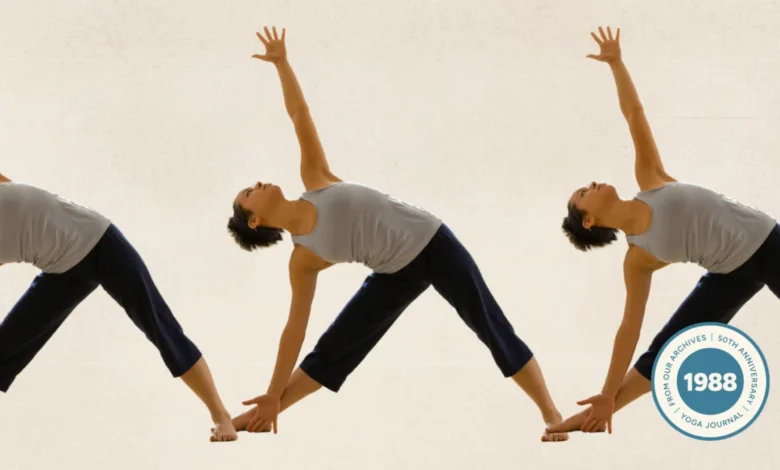
The publication of archival materials from historical editions of specialty fitness periodicals offers a unique lens through which to examine the evolution of modern physical culture. Among the most enduring instructional pieces rediscovered from the January–February 1988 issue of Yoga Journal is a comprehensive analysis of the Extended Triangle Pose, known formally in Sanskrit as Utthita Trikonasana. As contemporary wellness spaces increasingly prioritize mindfulness alongside biomechanical precision, revisiting foundational asanas reveals the underlying anatomical and philosophical principles that continue to govern physical discipline nearly four decades after this analysis was first documented.
Historical Context and the Evolution of Modern Asana Practice
To understand the prominence of Utthita Trikonasana within the broader taxonomy of physical postures, one must examine the mid-to-late 20th-century dissemination of classical hatha traditions into Western societies. Pioneered largely by legendary instructor B.K.S. Iyengar through seminal texts such as Light on Yoga, the systematic categorization of standing poses revolutionized how practitioners approach physical conditioning.
During the 1980s, the American yoga community experienced a significant transitional phase, shifting from an esoteric spiritual pursuit practiced by fringe adherents to a structured, institutionalized discipline integrated into mainstream physical education and health clubs. Archives from this era highlight a pedagogical pivot away from superficial acrobatics toward deep structural alignment. Instructors of the period recognized that standing postures served as the literal and figurative bedrock of practice. By establishing stability in the foundational planes of motion, practitioners could safely navigate more complex spinal extensions, inversions, and balancing movements.
Biomechanical Analysis: The Three Core Lessons of Utthita Trikonasana
Extended Triangle Pose is traditionally characterized by two elemental qualities: stability and structural mystery. Viewed through a modern kinesiological framework, the posture demands a sophisticated interplay of opposing muscle groups, joint articulation, and nervous system responses.
The Role of Lower Extremity Engagement
The primary biomechanical lesson imparted by the posture involves the activation and utilization of the lower limbs. In physiological terms, the posture requires the contraction of the quadriceps femoris on the front leg to extend the knee joint actively against gravitational pull. This engagement prevents a practitioner from passively hanging into the connective ligaments of the knee, thereby mitigating the risk of joint hyperextension and soft-tissue injury.
Concurrently, this intentional contraction triggers a neurological phenomenon known as reciprocal innervation. Through this automatic physiological response, the contraction of the quadriceps facilitates the deliberate release and elongation of the opposing hamstrings on the back leg. Sports scientists and physical therapists note that mastering this balance between muscular engagement and controlled release is vital not only for yoga practitioners but for athletes across various disciplines, enhancing proprioception and postural control.
Axial Rotation and Pelvic Mobility
A common misconception among novices is that Extended Triangle Pose functions as a lateral spinal flexion. However, biomechanical analyses emphasize that the movement originates strictly from the hip joints rather than the vertebral column. By hinging from the pelvis, practitioners minimize undue compressive forces on the intervertebral discs. This reduction in physical agitation allows the central nervous system to quiet down, drawing the practitioner’s awareness inward. This physiological stabilization directly mirrors core principles in somatic education, where reducing sensory overload facilitates enhanced cognitive focus and mindfulness.
Integration of Polarities and Center-Led Movement
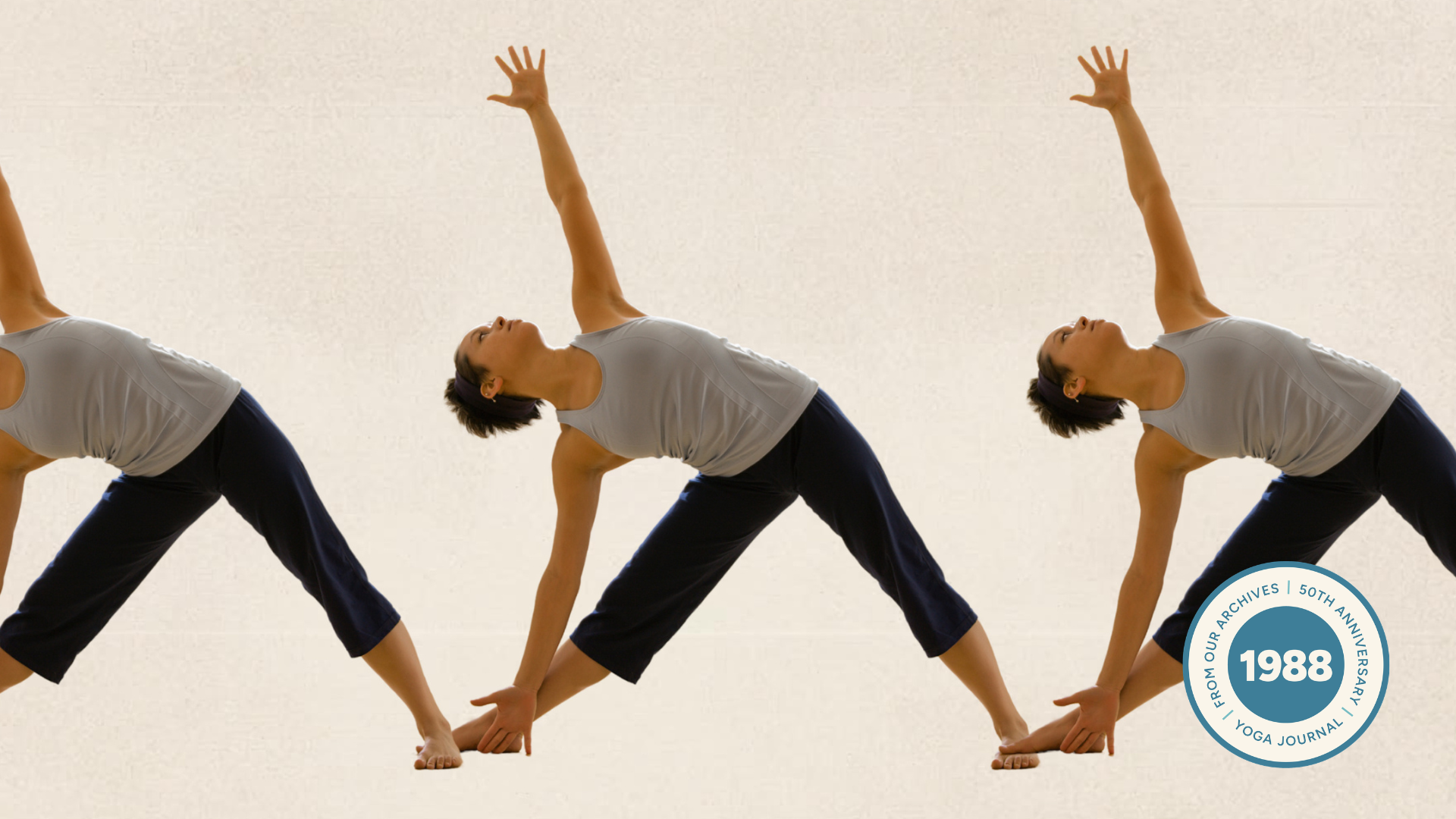
The complexity of Utthita Trikonasana lies in its simultaneous execution of multidirectional vectors of movement. While the rear leg anchors firmly into the floor, the front leg externally rotates away. Simultaneously, the lower torso rolls forward while the upper chest opens backward, and the opposing arms extend vertically along a singular plane. Instructors emphasize that true balance within this posture cannot be manufactured through static tension; rather, it emerges organically when movement originates from a stable, centralized core.
Methodological Shifts in Instruction: Moving Beyond Gimmicks
Reflecting on decades of pedagogical development, senior educators frequently advocate for a return to simplicity in physical training methodologies. Over the past twenty years, the fitness and wellness industry has occasionally leaned toward trend-driven accessories, specialized equipment, and complex sequencing designed to capture consumer interest.
However, veteran practitioners argue that sustained mastery requires stripping away extraneous complications in favor of rigorous, disciplined repetition of fundamental forms. The longevity of foundational asanas demonstrates that human anatomy responds best to consistent, mindful execution of basic geometric principles rather than novel, short-lived fitness fads. Observers of master instructors—such as the observed evolution of B.K.S. Iyengar’s practice across decades—illustrate that true advancement in physical discipline manifests as increased ease, fluidity, and efficiency of movement, rather than mere acrobatic difficulty.
Step-by-Step Execution and Technical Parameters
For practitioners seeking to replicate the structural integrity of Utthita Trikonasana, precise alignment protocols must be observed to maximize physiological benefits and prevent injury.
- Spatial Setup: Begin on a non-slip, stable surface—preferably a natural wood floor. Step or jump the feet apart to a distance roughly equal to the combined length of the practitioner’s torso and head (typically three to four feet).
- Foot Orientation: Pivot the left foot inward by approximately 45 degrees. Turn the right foot outward by a full 90 degrees, ensuring that the heel of the front foot aligns precisely with the instep arch of the back foot.
- Arm Extension: Raise the arms laterally to shoulder height, maintaining a straight horizontal line across the clavicles, elbows, wrists, and fingertips. Avoid elevating the shoulders toward the ears to prevent tension in the trapezius muscles.
- The Descent: Keeping the front thigh muscles actively engaged, hinge fluidly from the right hip joint rather than reaching prematurely for the floor. Move the pelvis backward in opposition to the upper body, allowing the right hand to rest lightly upon the shin, an ankle, or a stabilizing yoga block if hamstring tightness is present.
- Cervical Alignment: Rotate the head smoothly, leading the movement from the mastoid processes located behind the ears, thereby lengthening the cervical spine and preventing unnecessary strain on the neck.
Implications for Contemporary Wellness and Longevity
The enduring relevance of instructional archives from 1988 underscores a broader truth regarding human physical culture: the fundamental mechanics of human movement remain constant regardless of technological advancements or shifting fitness trends. Whether analyzed through the lens of modern physical therapy, sports kinesiology, or classical hatha tradition, postures like Extended Triangle Pose offer a reliable diagnostic tool for assessing functional symmetry, muscular balance, and neurological calm.
As health science continues to validate the physiological benefits of mindfulness-based movement, foundational disciplines retain their vital role in preventive healthcare and physical rehabilitation. By prioritizing structural integrity, breath awareness, and core stability, practitioners across all demographic groups can cultivate enduring physical resilience. Ultimately, the enduring mystery and utility of Utthita Trikonasana lie in its accessibility—serving as a profound transformational vehicle that requires no specialized equipment, only the consistent dedication of mindful practice.