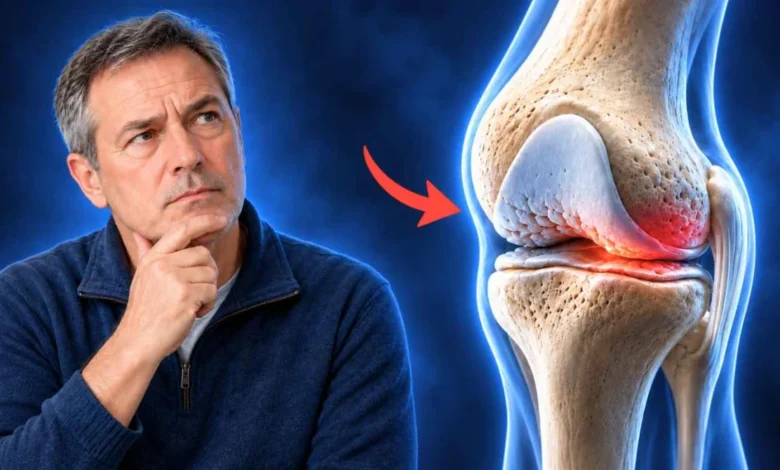
For decades, patients diagnosed with knee osteoarthritis (OA) have been met with a standardized, cautionary directive: "rest and protect" the joint to prevent further degradation. This prevailing wisdom, often reinforced by the analogy of a mechanical hinge or a shoe sole wearing thin with use, has led many to drastically reduce their physical activity. However, contemporary orthopedic research and clinical data suggest that this long-standing advice is not only outdated but potentially detrimental to long-term joint health. The prevailing scientific consensus now posits that walking does not accelerate cartilage wear; instead, it is a vital component of maintaining joint function and systemic health.
The Evolution of Medical Orthopedic Guidelines
The historical belief that osteoarthritis was a purely "wear-and-tear" condition emerged in the early 20th century, drawing parallels between biological joints and mechanical machinery. In this model, cartilage was viewed as an inert material with a finite lifespan, destined to vanish under the pressure of daily movement. This belief system was bolstered by the intuitive, albeit medically flawed, connection between pain and damage. Because movement often elicited discomfort in patients with OA, medical professionals assumed that the discomfort served as a signal of immediate structural destruction.
Consequently, for much of the 1900s, patients were advised to minimize weight-bearing activities. It was not until the mid-1990s and early 2000s that longitudinal studies began to challenge this paradigm. Researchers found that patients who maintained moderate levels of physical activity reported less functional decline than those who remained sedentary. This shift in understanding marked a transition from a "protectionist" model to a "functional maintenance" model, where the objective is to optimize the joint’s environment rather than keep it motionless.
The Biology of Cartilage and Synovial Health
To understand why walking is beneficial, one must look at the unique biological requirements of articular cartilage. Unlike bone or muscle, cartilage is avascular, meaning it possesses no direct blood supply. It relies entirely on the diffusion of nutrients from the synovial fluid—the viscous lubricant that fills the joint capsule.
This process is facilitated by a mechanism of mechanical loading and unloading. During each step, the cartilage is compressed, forcing metabolic waste products out of the tissue. As the foot lifts and the pressure is removed, the cartilage expands like a sponge, drawing in nutrient-rich synovial fluid. Without this cyclical compression, the tissue remains stagnant, failing to receive the necessary chemical signals for homeostasis. Furthermore, inactivity leads to the rapid atrophy of the quadriceps and hamstring muscles, which are the primary stabilizers of the knee. Weakened musculature forces the joint to absorb more impact, creating a cycle of instability that exacerbates the very pain patients are trying to avoid.
Analyzing the Data: Walking and Joint Load
Recent biomechanical studies have effectively debunked the fear of "overloading" the knee during normal ambulation. Measurements of the knee joint during walking indicate that the load is well within the physiological tolerance of the tissues, even in patients with moderate osteoarthritis.
A pivotal observational study tracking adults over the age of 50 found that regular, low-impact walking was associated with a statistically significant reduction in the development of chronic pain. While critics note that such studies are observational—making it difficult to isolate walking as the sole cause—the data remains compelling. Weight management, a significant side effect of increased activity, is a primary driver of reduced joint load. Even a modest reduction in body mass can decrease the force exerted on the knees by several times that amount with every step taken, providing a dual benefit of improved mechanical efficiency and lower systemic inflammation.

Clinical Red Flags: When to Pause
While the general consensus favors activity, medical professionals emphasize that there are specific scenarios where an immediate cessation of activity and a clinical evaluation are necessary. These include:
- Acute Effusion: The sudden appearance of significant swelling within hours of an injury.
- Mechanical Locking: A knee that catches or cannot be fully extended, which may indicate a loose body or meniscal tear.
- Thermal Changes: A joint that is hot, red, and swollen, which can be an indicator of infection or an inflammatory arthritic flare.
- Nocturnal Pain: Persistent, worsening pain at night that disrupts sleep.
- Inability to Bear Weight: An immediate, severe loss of function following a trauma.
In these instances, the "Next-Day Rule" is the standard diagnostic tool for the patient. If the activity of the previous day results in swelling, a limp, or pain that persists beyond the following morning, the volume or intensity of the exercise has likely exceeded the joint’s current capacity.
Implementing a Sustainable Walking Program
The World Health Organization’s recommendation of 150 to 300 minutes of moderate activity per week serves as a long-term goal, not a starting point. For individuals with osteoarthritis, the "titration" of exercise is crucial.
- Interval Training: Splitting a 45-minute walk into three 15-minute segments throughout the day can significantly reduce the cumulative stress on the joint while maintaining the total volume of activity.
- The Talk Test: To gauge intensity, patients should aim for a pace where they can hold a conversation but cannot sing. If they cannot speak comfortably, the intensity is likely too high for the joint’s current state.
- Terrain Management: Flat, stable surfaces are preferred. Uneven, hilly, or inclined terrain significantly increases the torque on the knee joint and should be introduced only after a solid foundation is established.
The Reality of Advanced Osteoarthritis (Grade 3 and 4)
For patients classified as having "bone-on-bone" or severe osteoarthritis, the approach is more conservative but not fundamentally different. Small-scale clinical trials have demonstrated that while walking at this stage does not reverse the damage, it is essential for preventing secondary complications like cardiovascular disease and loss of independence. In these cases, the "threshold" for pain is much lower. Patients are encouraged to find their specific limit—often around 70 to 95 minutes per week—and maintain that consistency. The objective here is maintenance of function, not structural improvement.
Beyond Walking: A Holistic Approach
It is a common misconception that walking can serve as a panacea for all knee-related issues. Orthopedic specialists stress that walking is merely one component of a larger strategy. Strength training, particularly focused on the quadriceps, glutes, and core, is non-negotiable. Stronger muscles act as shock absorbers, protecting the knee joint from the impact of daily movement.
Furthermore, cross-training through low-impact modalities such as swimming, stationary cycling, or water aerobics can provide the cardiovascular benefits of walking while further reducing the stress on the articular cartilage. These options are particularly useful for those who find that land-based walking causes the "next-day" symptoms of overexertion.
Conclusion and Future Outlook
The evidence is clear: the sedentary lifestyle often prescribed to osteoarthritis patients is an archaic relic of outdated medical theory. Current research emphasizes that cartilage requires movement to survive and that the "wear-and-tear" model of aging is a gross oversimplification.
Patients are encouraged to move away from the binary choice of "painful walking" versus "sedentary rest" and toward a measured, iterative approach. By utilizing the "next-day rule," monitoring for signs of systemic inflammation, and integrating strength training, individuals with osteoarthritis can maintain their mobility and quality of life for decades. The goal of modern care is not to eliminate all discomfort, but to navigate the knee’s limitations through informed, consistent, and moderate physical activity. While medical consultation remains the gold standard for individualized care, the overarching message for the millions suffering from this condition is one of cautious empowerment: the knee is designed to move, and, with the right approach, it can continue to do so safely.
Related posts: