There’s A Third Number Hiding In Your Blood Pressure Reading — Here’s Why You Shouldn’t Panic

Understanding the Mechanics of Pulse Pressure
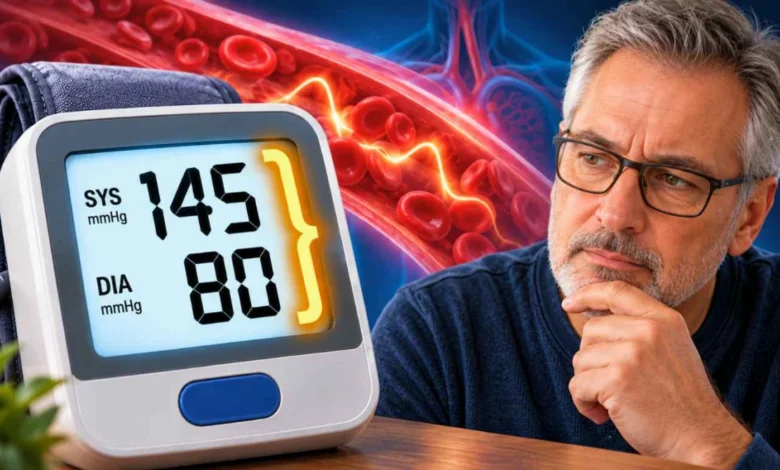
To grasp why pulse pressure exists, one must understand how blood moves through the circulatory system. The systolic pressure represents the force exerted against artery walls when the heart contracts, while the diastolic pressure reflects the force when the heart rests between beats. Pulse pressure serves as a rough, non-invasive proxy for the elasticity of the large arteries, most notably the aorta.
In a healthy, young cardiovascular system, the aorta is highly compliant. It expands during systole to absorb the surge of blood from the heart and recoils during diastole to maintain steady blood flow. This "cushioning" effect prevents extreme pressure spikes. As humans age, the aorta and other major arteries undergo structural changes, often accumulating collagen and losing elastin. This process, known as arterial stiffening, renders the vessels less capable of absorbing the stroke volume. Consequently, the systolic pressure rises because the heart must pump against a rigid system, and the diastolic pressure may stagnate or decline. The resulting widening gap—the pulse pressure—is a common, albeit gradual, biological marker of the aging process rather than a sudden onset disease state.
Clinical Guidelines and the 60 mmHg Threshold
The clinical significance of pulse pressure is often misunderstood due to the misapplication of specialized guidelines to the general public. The 2023 European Society of Hypertension (ESH) guidelines identify a pulse pressure of 60 mmHg or greater as a criterion for assessing arterial stiffness in individuals over the age of 60.
It is critical to distinguish between a "clinical criterion" and a "treatment target." The ESH does not recommend that physicians attempt to "treat" the pulse pressure itself. Instead, clinicians treat the individual blood pressure components. A gap of 60 mmHg or higher in a senior patient serves as a signal for the doctor to conduct a more thorough cardiovascular assessment, such as checking for secondary signs of end-organ damage. Conversely, the 2025 American guidelines have largely moved away from emphasizing pulse pressure as a primary diagnostic indicator, reflecting a growing consensus that the metric lacks the predictive precision to serve as a standalone alarm for the average patient.
The Problem with Universal Benchmarks
The danger of self-diagnosis based on a simple subtraction is evident when comparing different patient profiles. For instance, two 72-year-old patients may both exhibit a pulse pressure of 60 mmHg, but their clinical reality may be vastly different. Patient A might present with a reading of 140/80 mmHg, while Patient B presents with 180/120 mmHg.
While the pulse pressure is identical, Patient B’s absolute blood pressure levels place them in a high-risk category requiring immediate intervention. In this scenario, focusing on the gap between the numbers distracts from the primary danger: the dangerously high absolute pressure being exerted on the heart, brain, and kidneys. Medical professionals emphasize that pulse pressure is intended to be an additive piece of information—a "contextual layer"—to be viewed alongside the primary blood pressure readings, not a replacement for them.
Variables Affecting Younger Populations
The narrative that a "wide gap" is always pathological is particularly misleading for younger, athletic individuals. In people in their 30s and 40s, a higher pulse pressure is frequently observed in those with high levels of physical fitness. An athletic heart is often more efficient, capable of ejecting a larger volume of blood with each beat. This increased stroke volume can lead to a higher systolic reading.

Furthermore, the technology used to measure blood pressure at home—the standard upper-arm cuff—measures pressure at the brachial artery. Due to the physics of pressure wave amplification, the pressure wave can actually become more pronounced as it travels from the heart toward the limbs. In a young person with highly elastic arteries, the reading at the arm may show a wider gap than the actual pressure existing at the aorta. Distinguishing this "athletic pattern" from the onset of premature arterial stiffness is a complex task that cannot be accomplished with a single home-monitored reading. It requires longitudinal data, sometimes involving 24-hour ambulatory blood pressure monitoring and professional interpretation of risk factors such as smoking, sodium intake, and family history.
The "Low Diastolic" Concern in Managed Hypertension
A common point of anxiety arises among patients on antihypertensive medication who notice their diastolic number dropping into a low range. Historically, some clinicians feared that a low diastolic number could impair coronary perfusion, as the heart receives its own blood supply during diastole. However, modern cardiology has updated this perspective.
The 2024 European cardiology guidelines suggest that when treating systolic hypertension in patients who also exhibit low diastolic pressure, the primary goal remains the management of the systolic number. If a patient tolerates the medication well, the systolic pressure should be controlled even if the diastolic number sits below 60 mmHg. "Tolerance" is the operative word here; if a patient experiences dizziness, lightheadedness, or syncope (fainting) upon standing, the dosage must be adjusted by a physician. This adjustment process is not an indication of medical uncertainty but a precise calibration to find the patient’s individual "optimal blood pressure" range.
Evidence-Based Approaches to Arterial Health
While the internet is replete with claims regarding "natural" ways to reverse arterial stiffness, scientific evidence remains firm: there is no pill, supplement, or diet that can instantly rejuvenate an artery. Arterial health is the result of long-term lifestyle management.
Clinical research consistently points to four pillars of cardiovascular maintenance:
- Regular Aerobic Activity: Engaging in 30 minutes of moderate-intensity exercise—such as brisk walking, swimming, or cycling—most days of the week helps maintain vascular flexibility.
- Sodium Regulation: Reducing excessive sodium intake is one of the most effective ways to lower the strain on the arterial system.
- Weight Management: Maintaining a healthy body mass index reduces the metabolic burden on the heart and blood vessels.
- Sleep Hygiene: Adequate, high-quality sleep is essential for the hormonal regulation of blood pressure.
Recommendations for Monitoring
For those concerned about their cardiovascular health, the recommended protocol is not to obsess over daily fluctuations in pulse pressure. Instead, patients should maintain a log of both blood pressure numbers, the pulse pressure, and the time of measurement for a period of two weeks. This log should be kept under controlled conditions: seated, resting for five minutes prior to the reading, and avoiding stimulants or stress.
Patients are encouraged to discuss their findings with a primary care physician if they meet two specific conditions:
- They are over 60 years old and consistently record a pulse pressure of 60 mmHg or higher.
- They observe a significant, sustained change from their established personal baseline, regardless of whether the resulting number hits a specific, arbitrary threshold.
Ultimately, the goal of home monitoring is to provide the physician with a reliable, long-term dataset. By focusing on the consistent tracking of both systolic and diastolic numbers, patients can provide their medical team with the information necessary to make informed decisions about their health. Panic over a single, isolated calculation of pulse pressure is rarely warranted and can often lead to unnecessary stress, which in itself can negatively impact blood pressure readings. When in doubt, the most prudent course of action is always a consultation with a qualified healthcare professional who can interpret the data within the context of the patient’s complete medical history.