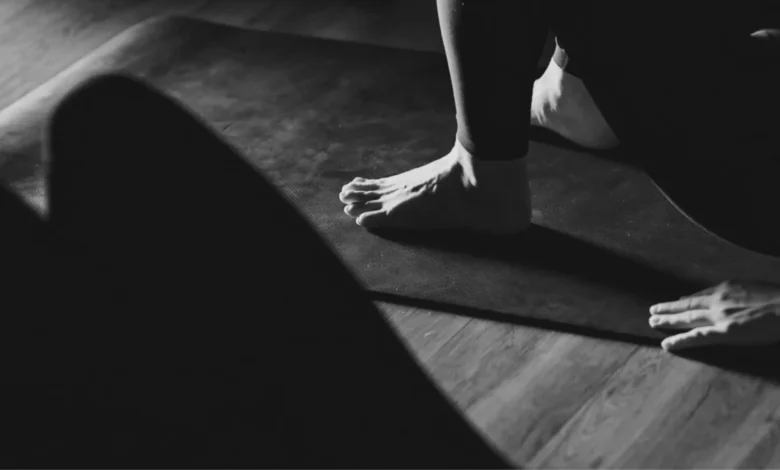
In an era defined by hyper-connectivity and digital isolation, physical community hubs have taken on an increasingly vital role in public health and social cohesion. Among these, neighborhood yoga studios frequently function as modern "third places"—spaces distinct from home and the workplace where individuals find regular, low-stakes social engagement. However, when these brick-and-mortar spaces are forced to relocate, the disruption often provokes a psychological response far more profound than mere inconvenience. Recent relocations of independent wellness spaces have highlighted an under-examined phenomenon: the acute grief experienced by practitioners when their physical sanctuaries change addresses, even when ownership, staff, and curriculum remain entirely identical.
Background Context and Chronology of Studio Relocations
Urban wellness spaces have faced mounting economic and logistical pressures over the past decade. Driven by shifting commercial real estate markets, rising lease rates, and post-pandemic urban restructuring, many independent yoga studios across metropolitan areas have been compelled to move from their long-standing neighborhood footprints.
For veteran practitioners, such as Danielle Brunson—a yoga therapist with over a decade of teaching experience and more than 500 hours of specialized training—the transition unfolds in predictable yet disorienting stages. When a beloved studio relocates down the street, retaining the same instructors, student base, and ownership, the immediate expectation is a seamless operational transition. Yet, reports from educators and students consistently point to a delayed emotional reckoning.
In the initial weeks following a move, practitioners often describe an inexplicable sense of alienation. Despite the physical improvements of a new facility—such as upgraded flooring, enhanced climate control, or better lighting—patrons report feeling unsettled. Chronologically, this sets off a specific emotional arc: initial disorientation within the first fortnight, followed by cognitive dissonance upon realizing the exterior environment is optimized while internal comfort is lacking, and finally, the realization that the unsettling emotion is grief. This grief stems not from the loss of a business, but from the sudden severance of tactile and spatial anchors that quietly structured individuals’ weekly routines for years.
Supporting Data on Loneliness and Third Places
The psychological weight attached to physical studio spaces is supported by a growing body of sociological and public health data regarding community infrastructure and loneliness. According to data compiled by the U.S. Surgeon General’s advisory on the healing effects of social connection and community, social isolation poses a mortality risk equivalent to smoking 15 cigarettes a day. Urban planners and sociologists note that "third places"—a term coined by sociologist Ray Oldenburg—are essential antidotes to this crisis.
Research indicates that regular participation in localized, in-person group activities yields measurable reductions in cortisol levels and increases oxytocin production, fostering a sense of psychological safety. Furthermore, data from wellness industry associations demonstrate that over 65% of regular yoga practitioners cite community, routine, and a sense of belonging as primary motivators for class attendance, superseding physical fitness goals. When a studio space changes, these measurable buffers against isolation are temporarily disrupted, forcing patrons to rebuild neurological and behavioral pathways of comfort from scratch.
Anatomy of a Sanctuary: Why Specific Physical Spaces Matter
Urban wellness spaces often acquire specific micro-cultures that defy corporate standardization. Unlike national fitness chains designed for high-turnover efficiency, independent yoga studios frequently occupy imperfect, older buildings characterized by irregular architecture, mismatched furniture, and idiosyncratic surroundings—such as adjacent dive bars or neighborhood markets.
Within these physical envelopes, practitioners establish deeply embedded routines. Behavioral analysis of studio use reveals several key spatial anchors that contribute to the feeling of a "home" studio:
The Assigned-Yet-Unassigned Spot
While formal seating charts are virtually non-existent in yoga classes, informal territorialism governs the mat floor. Regular attendees consistently gravitate toward specific geographic zones within a room—beside a heater, near a window, or facing a particular structural flaw in the ceiling, such as a distinct crack observed during Savasana. This spatial consistency provides a psychological grounding effect, allowing the mind to bypass the stress of orientation and settle immediately into the practice.
The Micro-Interactions of Recognition
The front desk attendant who notices a three-week absence, the instructor who remembers a student’s family milestones, or the silent peer who unfailingly rolls out a mat by the exit every Tuesday—these micro-interactions form a web of low-intensity recognition. Studies in environmental psychology show that being visually acknowledged in a routine space significantly enhances feelings of self-worth and belonging without demanding the emotional labor of intense social networking.
Absence of Transactional Urgency
Unlike retail environments engineered to maximize consumer velocity and encourage immediate departure, traditional wellness spaces frequently permit prolonged lingering. Patrons can arrive early to read in a corner or remain in the lobby post-practice without justification. This sanctioned stillness is rare in modern commercial real estate, making the loss of the physical environment a distinct blow to mental decompression routines.
Industry Perspectives and Expert Analysis
Mental health professionals and wellness directors suggest that the grief associated with studio relocation is frequently invalidated because society tends to minimize losses that do not involve human bereavement or major financial disruption.
"We drastically underestimate the degree to which our cognitive maps are tied to physical geography," notes Dr. Elena Vance, an urban environmental psychologist specializing in human-space attachment. "When a physical container for our rituals disappears, the brain experiences a minor form of spatial disorientation. For wellness spaces, where individuals process vulnerability, trauma, and personal growth, the walls literally hold the energetic residue of those experiences. Changing the walls forces the nervous system to re-evaluate its sense of safety."
Studio owners navigating relocations frequently report anticipating logistical hurdles—such as permitting, equipment transport, and membership communication—while remaining entirely unprepared for the emotional gravity expressed by their student base. Many owners have begun implementing transition rituals, such as closing ceremonies in legacy spaces and threshold-crossing inaugurations in new venues, to help communities consciously bridge the gap between past memories and future routines.
Broader Implications and the Future of Urban Wellness Spaces
As commercial real estate dynamics continue to push independent businesses out of historic urban neighborhoods, the relationship between community spaces and their physical environments will remain a critical point of study for urban sociologists and wellness advocates.
The phenomenon of studio-induced grief underscores a vital truth about modern wellness: health practices cannot be effectively divorced from the social and physical ecosystems in which they occur. A yoga mat can be rolled out anywhere, and an alignment instruction remains identical regardless of the room’s paint color. Yet, the transcendent value of a studio lies not in the mechanics of the Asana, but in the slow, cumulative accumulation of shared existence—witnessing pregnancies, career changes, aging, and quiet recoveries side-by-side with strangers who eventually become fixtures of one’s personal history.
Ultimately, while the immediate aftermath of a relocation involves mourning the loss of a specific architectural container, the underlying community infrastructure proves resilient. Over time, new cracks in new ceilings are memorized, fresh neighborhood faces become familiar, and new spatial rituals take root, transforming a mere commercial address back into a place of genuine belonging.