Trump Administration Shelves Plans for Military Airstrikes in Mexico Amid Improving Security Ties and Diplomatic Breakthroughs

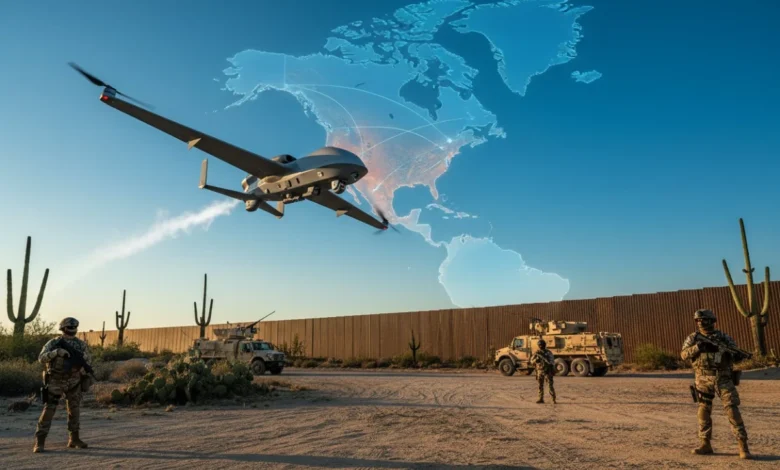
The Trump administration has effectively paused preparations for unilateral U.S. military airstrikes on Mexican soil, marking a significant strategic pivot in the White House’s approach to combatting transnational drug cartels. According to reports from U.S. and Mexican officials, the decision to shelve plans for direct kinetic action comes as a direct result of enhanced security cooperation and a thawing of diplomatic relations between Washington and Mexico City. While the White House has yet to provide an official confirmation, the de-escalation of military posturing signals a move away from the aggressive rhetoric that defined the early months of President Donald Trump’s second term.
A Shift in Strategic Posture
Throughout 2025 and early 2026, the administration maintained a consistent public stance regarding the necessity of direct military intervention to dismantle cartel operations. In January 2026, President Trump stated in a televised interview with Sean Hannity that the administration was prepared to begin "hitting land" against the cartels, building upon maritime interdiction efforts that officials claimed had disrupted 97 percent of drug smuggling routes by water.
These comments followed a November 2025 declaration in which the President asserted that the U.S. possessed the intelligence necessary to identify the "addresses of every drug lord." At the time, the administration viewed the use of force as a primary tool to combat the flow of fentanyl and methamphetamine into the United States. However, recent developments—including a noted decline in illegal border crossings and a more collaborative posture from the Mexican government—have led to a reassessment of these military plans.
Chronology of Escalation and Cooperation
The path to the current diplomatic stabilization was marked by a series of high-pressure moves and tactical maneuvers:
- December 2024: Before taking office, Trump announced a $15 million bounty for information leading to the capture of Nemesio Rubén Oseguera Cervantes, the leader of the Jalisco New Generation Cartel (CJNG).
- August 2025: The Department of Defense received a classified directive to draft plans for potential lethal operations within Mexico.
- February 2026: In a pivotal operation supported by U.S. intelligence, Mexican special forces confronted El Mencho. The subsequent shootout resulted in the death of the cartel leader and over 70 others.
- July 2026: Secretary of State Marco Rubio formally designated the Juárez cartel and Los Viagras as foreign terrorist organizations, expanding the legal framework for U.S. intervention.
- August 2026: The U.S. military successfully utilized laser-based technology to neutralize three cartel-operated drones near the Texas-Mexico border, signaling the technical edge of current U.S. surveillance.
- September 2026: Diplomatic negotiations reached a climax as the White House signaled that a new, comprehensive trade agreement was imminent, effectively putting the military option on the back burner.
The Role of Intelligence and Joint Operations
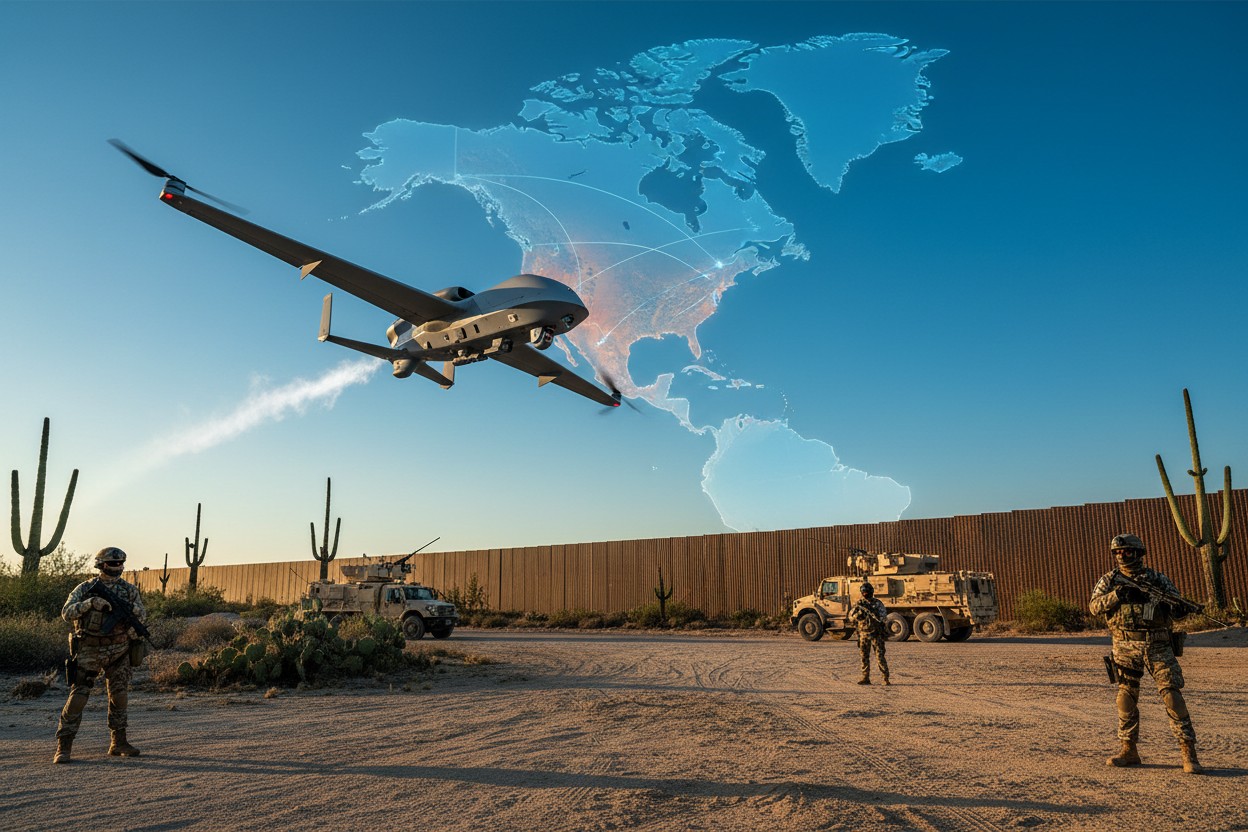
The death of El Mencho in February 2026 served as a catalyst for deeper integration between U.S. and Mexican security apparatuses. Although the full extent of the intelligence provided by the U.S. remains classified, officials acknowledge that the operation would not have been possible without high-level cross-border coordination. This intelligence-sharing architecture has since expanded to include CIA drone surveillance over suspected fentanyl production facilities and the deployment of U.S. Navy P-8 Poseidon reconnaissance aircraft along the Pacific coast.
Perhaps most significantly, August 2026 saw the initiation of "mirror patrols," where Mexican armed forces operated alongside U.S. personnel in coordinated sweeps. These operations, utilizing armored vehicles and integrated communication systems, replaced the need for independent U.S. strikes by demonstrating that both nations could achieve tactical success through joint presence.
Economic and Diplomatic Ramifications
The pivot away from military intervention is inextricably linked to broader economic negotiations. President Claudia Sheinbaum and President Trump have communicated frequently, with both sides characterizing the recent dialogue as productive. The administration’s move to normalize relations comes despite ongoing trade tensions, such as the temporary suspension of avocado inspections in Michoacán earlier this year.
Furthermore, the U.S. has leveraged economic sanctions as an alternative to kinetic strikes. By targeting the financial networks of the CJNG—including tequila producers and peripheral logistics companies—the Treasury Department has attempted to degrade the cartels’ influence without violating Mexican sovereignty. Simultaneously, diplomatic pressure on China has yielded results, with Beijing agreeing to implement stricter permitting requirements for precursor chemicals—a key demand of the White House.
Analysis: Risks and Future Implications
Despite the current pause in airstrike planning, the strategy remains fragile. Analysts have long debated the risks of unilateral military action in Mexico. Critics of the interventionist approach, such as independent observers and security analysts, have frequently warned that airstrikes could mirror the geopolitical quagmires of the 20th century. By transitioning toward a model of intelligence-led, joint enforcement, the Trump administration appears to have acknowledged the logistical and political costs of an open-ended military campaign.
However, the "normalization" of violence remains a concern. The reprisal attacks that followed the death of El Mencho—which left significant portions of Mexican infrastructure in flames and disrupted tourism in hubs like Puerto Vallarta—demonstrated the volatility of the cartels. Future success depends on the ability of the Mexican government to sustain internal security without a constant reliance on U.S. oversight.
The Current Diplomatic Outlook
Looking ahead, the focus has shifted from the threat of "hitting land" to the consolidation of a new trade and security pact. President Trump’s recent address to the United Nations highlighted a "very good relationship" with Mexico, marking a stark contrast to the rhetoric of late 2025.
For now, the U.S. government seems to have concluded that the objective of dismantling cartel networks is more efficiently achieved through a combination of targeted economic sanctions, collaborative law enforcement, and technological surveillance rather than direct combat. As both countries work toward finalizing a new trade framework, the military option remains a latent contingency, but one that is no longer at the forefront of the bilateral agenda.
The stabilization of the border and the success of joint operations have provided the administration with the political capital necessary to prioritize long-term diplomatic solutions over immediate, high-risk military interventions. Whether this trajectory holds will depend largely on the continued efficacy of the current intelligence-sharing regime and the ability of both nations to withstand the inevitable pushback from organized criminal networks seeking to exploit any remaining gaps in the security perimeter.