The Evolution of Self-Assessment: How Wearable Technology Is Redefining Human Health Monitoring

For generations, human health management relied almost exclusively on internal feedback loops. Our ancestors gauged their physical state through subjective markers: the rate of their breath, the presence of hunger, the sensation of muscle fatigue, and the quality of their rest. These biological signals served as the primary data points for survival and recovery. However, in the modern era, the landscape of personal health has shifted toward a digitized framework. Today, individuals can monitor their heart rate, step count, sleep architecture, and metabolic intensity through compact, sophisticated wearable technology. This transition represents a significant leap in our ability to quantify the human experience, yet it raises critical questions about the reliability of our internal instincts versus the cold precision of silicon-based sensors.
The Rise of Quantified Self-Monitoring
The contemporary obsession with data-driven wellness is rooted in the "Quantified Self" movement, which gained momentum in the early 2010s as consumer-grade sensors became affordable. The premise is simple: subjective feelings are prone to cognitive bias. Humans are notoriously poor at estimating caloric intake, exertion levels, or sleep duration. For instance, a common phenomenon in nutrition coaching involves clients who believe they are maintaining a strict caloric deficit, only for data tracking to reveal that they are consuming hundreds of hidden calories daily through condiments or miscalculated portion sizes.
While outlier performance exists—such as elite athletes like Ben Johnson, who famously possessed the near-superhuman ability to gauge his 100-meter sprint times within a tenth of a second—the average person lacks this internal calibration. For the general population, technology acts as a bridge, grounding subjective feelings in objective reality. However, the efficacy of this bridge depends entirely on the quality of the instrumentation and the literacy of the user.
Assessing the Reliability of Modern Trackers
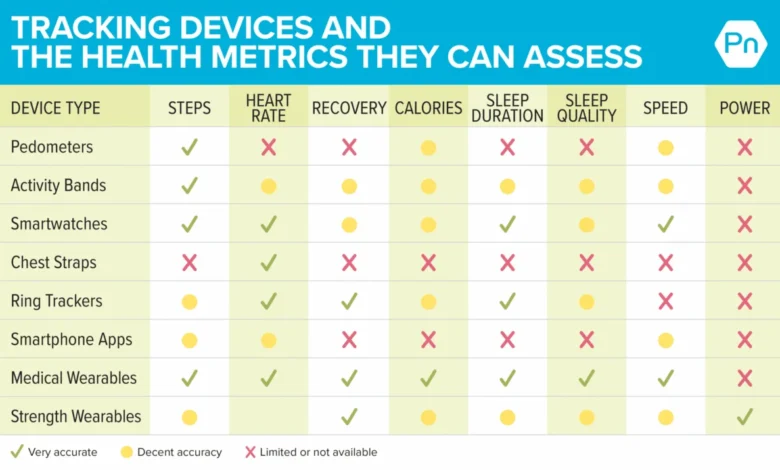
Not all data outputs are created equal. In the hierarchy of health metrics, heart rate and step counts occupy the top tier of reliability. Accelerometers and optical heart rate sensors (PPG) have reached a level of maturity that provides actionable, high-confidence data for most users. Conversely, metrics such as "calories burned" or "sleep quality" remain estimates with substantial margins for error. These metrics rely on proprietary algorithms that interpret raw data through software models, which can vary significantly between manufacturers.

The current market is saturated with various form factors, from medical-grade wearables to lifestyle rings and basic pedometers. While medical wearables provide the highest fidelity, they often lack the longitudinal user-friendliness of consumer activity bands. For consumers, the challenge lies in understanding that a "sleep score" is a mathematical derivation, not a direct measurement of neurological rest. When individuals treat these estimates as absolute truths, they risk misinterpreting their health status.
The Paradox of Information Overload
A critical concern in the field of digital health is the inverse relationship between data volume and decision-making clarity. Computer scientist Samantha Kleinberg, a noted expert in health behavior change, has observed that surplus information often impairs our ability to make sound choices. This is frequently described as the "inverted U" of decision-making: having too little information leads to ignorance, but having too much leads to analysis paralysis.
In the context of fitness, this manifests as a cycle of constant data checking. When a user is presented with a deluge of metrics—resting heart rate, heart rate variability (HRV), blood oxygen, recovery scores, and strain scores—the cognitive load can become overwhelming. The "sweet spot" occurs when a user identifies one or two key indicators that correlate with their physical well-being. When the data ceases to inform action and starts to drive anxiety, the technology has transitioned from a tool to a hindrance.
Psychological and Behavioral Implications
Tracking can serve as a powerful catalyst for behavioral change, provided it aligns with the user’s psychological profile. For an athlete like "Zak"—a hypothetical case study common in coaching circles—tracking acted as a corrective lens. Zak struggled with "grinding" through workouts, unable to trust that lower-intensity training could yield results. By monitoring his resting heart rate over several weeks, he observed a downward trend, which served as objective validation for his recovery. This data-backed reassurance allowed him to alter his training methodology without the anxiety that he was "falling behind."
However, the reverse is equally true. For individuals predisposed to stress or those navigating difficult life transitions, such as new parents managing sleep deprivation, constant monitoring of "poor sleep scores" can exacerbate existing physiological strain. In such instances, the act of tracking introduces a psychological burden that outweighs the potential benefit of the data. The most effective use of technology occurs when it reinforces positive behavior rather than acting as a source of performance-based judgment.

Calibrating the Senses: A Three-Step Framework
To move toward a more sustainable relationship with fitness technology, experts recommend a framework that prioritizes human perception over digital output.
- Pre-Data Check-in: Before reviewing a tracker’s summary, users should perform an internal audit. Ask: "How energetic do I feel? What is my perceived level of fatigue?" Once a subjective assessment is made, compare it against the device’s data. This practice recalibrates the user’s internal sensors, bridging the gap between "feel" and "measure."
- Developing Mental Shortcuts: Rather than relying on constant real-time data, users can develop proxies for effort. For example, using the Rate of Perceived Exertion (RPE) scale allows an individual to estimate their intensity without needing a glance at a watch. Over time, these estimations become increasingly accurate as they are sporadically checked against objective metrics.
- Prioritizing Biological Intelligence: Humans possess a sophisticated network of internal sensors, including proprioception (the sense of body position), interoception (the sense of internal state), and vestibular feedback. Technology should be treated as a consultant, not a primary physician. If a device suggests a high level of readiness but the body signals exhaustion, the internal signal should take precedence.
Future Trajectories in Health Monitoring
The future of wearable tech lies in the transition from descriptive data (what happened) to predictive and prescriptive data (what will happen and what to do about it). Continuous glucose monitors (CGMs) and advanced metabolic sensors are currently the frontier of this shift. However, as these tools become more accessible, the industry must emphasize the importance of professional guidance. Data without context is prone to misinterpretation, and the danger of the "worried well"—individuals who use data to create health concerns where none exist—is increasing.
Ultimately, the goal of any fitness tracker should be to make itself obsolete. The true measure of a successful health intervention is not how much data a user collects, but how well they have learned to listen to their own biology. By using technology to refine their internal compass, individuals can achieve a level of autonomy that is both informed by science and grounded in the lived experience. In the era of the smart device, the smartest tool remains the one we were born with: our own ability to sense, adapt, and respond to the demands of our environment. The evolution of health monitoring is not just about the gadgets on our wrists, but about our capacity to integrate that information into a more intuitive, sustainable approach to life.