The Triceps Exercise That Builds Bigger Arms Without Hurting Your Back – Muscle & Fitness

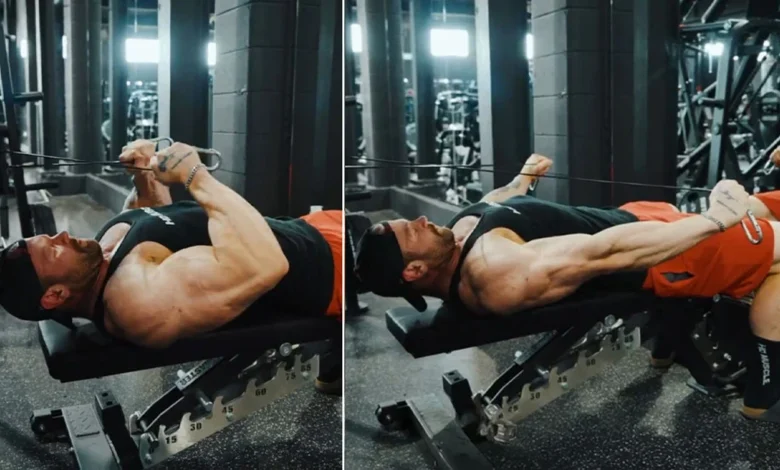
The pursuit of robust triceps development is a cornerstone of many strength training regimens, yet traditional methods often present inherent biomechanical challenges, particularly concerning spinal integrity and joint comfort. Weighted triceps extensions, a staple for targeting the three heads of this crucial arm muscle, are frequently performed in an overhead position, either standing or seated. While effective at stimulating the medial, lateral, and especially the long head of the triceps—the largest and most visible component of the upper arm—this vertical loading can impose considerable stress on the spine. Recognizing this pervasive issue, fitness and transformation coach Travis Smith has recently introduced a novel, horizontally-oriented solution: the Lying Triceps Cable Crossover, which promises significant triceps activation without compromising spinal health or elbow comfort.
The Enduring Challenge of Overhead Triceps Extensions
For decades, overhead triceps extensions have been celebrated for their capacity to stretch the triceps muscle effectively under load, a key stimulus for hypertrophy. Exercises like dumbbell overhead extensions or even barbell skull crushers are lauded for engaging all three heads of the triceps, with a particular emphasis on the long head due to its origin on the scapula (shoulder blade), which positions it optimally for stretch when the arm is fully flexed overhead. This deep stretch is critical because research indicates that muscles experience greater growth when trained at longer muscle lengths.
However, the efficacy of these traditional movements is often counterbalanced by their inherent drawbacks. When performed standing, maintaining a rigid core and neutral spine under heavy load becomes increasingly difficult, leading to compensatory movements that can strain the lower back. Even in a seated position, a vertical compressive force is still exerted on the spinal column, which, over time, can exacerbate pre-existing conditions or contribute to new discomfort, especially for individuals with lumbar spine sensitivities. The need to stabilize the torso against the force of gravity, particularly as the weight increases, diverts neural energy and muscular effort away from the primary target muscle—the triceps—and towards spinal erectors and core stabilizers. This diminished stability directly impacts the quality of muscle contraction and, consequently, the potential for growth.
Furthermore, specific variations like skull crushers, which involve lowering a barbell or dumbbells towards the head while lying on a bench, can place significant, direct stress on the elbow joint. The leverage and often rigid nature of free weights can lead to discomfort or even injury for individuals predisposed to elbow issues, such as tendonitis or joint impingement, especially during the eccentric (lowering) phase of the movement. This often forces individuals to either reduce the load, compromise form, or abandon the exercise altogether, limiting their triceps development options.
Travis Smith’s Innovative Horizontal Approach
In a recent demonstration shared via Instagram, fitness coach Travis Smith presented an ingenious alternative designed to circumvent these common issues: the Lying Triceps Cable Crossover. Smith’s core principle revolves around shifting the exercise from a vertical, gravity-dependent plane to a horizontal one, thereby alleviating spinal load and maximizing triceps isolation. "Lying on the bench locks your torso and shoulders in place," Smith explained, highlighting the immediate advantage of this supine position. "So, you can focus on producing as much force as possible with the triceps."
This innovative approach capitalizes on several biomechanical principles to optimize muscle growth and minimize injury risk:
-
Enhanced Stability: By lying supine on a flat bench, the torso and shoulders are fully supported and stabilized. This eliminates the need for spinal erectors and deep core muscles to work extensively to maintain posture against gravity, freeing up neural resources to concentrate solely on the triceps. Smith emphasized this point, stating, "Stability is one of the most underrated variables for muscle growth. The less energy spent stabilizing movement, the more you can put into the target muscle." This concept is well-supported in exercise science; a stable base allows for greater motor unit recruitment in the prime mover, leading to more effective muscle activation and growth.
-
Spinal Decompression: The horizontal plane of movement completely removes the vertical compressive load on the intervertebral discs of the spine. This makes the exercise an exceptionally back-friendly option, particularly beneficial for individuals with a history of lower back pain, disc issues, or those seeking to minimize cumulative spinal stress over their training career.
-
Constant Tension from Cables: Utilizing a cable station introduces a unique advantage: constant tension throughout the entire range of motion. Unlike free weights, where resistance can fluctuate depending on gravity and leverage (e.g., dumbbells may offer less resistance at the top of an overhead extension), cables provide consistent pull. This continuous loading ensures the triceps are under tension from the fully stretched position to the peak contraction, promoting greater time under tension and metabolic stress—both critical factors for muscle hypertrophy.
-
Joint-Friendly Execution: For individuals who experience elbow discomfort with traditional skull crushers or other direct triceps extensions, the Lying Triceps Cable Crossover offers a gentler alternative. The smooth, consistent resistance of the cables, combined with the ability to adjust the angle of pull, can be less jarring on the elbow joint. Smith explicitly addressed this benefit, concluding, "If regular skull crushers bother your elbows, this variation is the one for you."
Execution of the Lying Triceps Cable Crossover
To perform this exercise, Smith outlined a clear, actionable methodology:
- Setup: Position a flat bench directly in front of a cable crossover station. Ensure the bench is centered, and the pulleys are set to a relatively low to mid-level height, allowing for a natural line of pull.
- Positioning: Lie down on the bench with your head facing towards the cable pulleys. Your body should be centrally aligned with the cable station.
- Grip: With the cables on each side crossed over, grab each end using appropriate attachments, typically D-handles or carabiner clips for a comfortable grip. Ensure a secure hold.
- Starting Position: Begin with your elbows bent, fists up and positioned near your chest or shoulders, mimicking the top position of a traditional triceps extension but horizontally. Your upper arms should be relatively perpendicular to your torso, with elbows pointing towards the ceiling.
- Execution (Eccentric Phase): Initiate the movement by straightening your arms, extending the cables away from your body in a controlled arc. Focus on feeling a deep stretch in the triceps as you extend your arms fully. The movement should primarily occur at the elbow joint, with minimal shoulder involvement.
- Execution (Concentric Phase): Slowly and deliberately return to the starting position by bending your elbows, allowing the cables to pull your fists back towards your chest/shoulders. Maintain tension in the triceps throughout the entire movement.
- Range of Motion: While releasing the weight, it’s not necessary to move your fists past the shoulders. The key is to achieve a deep stretch in the triceps during the pulling (extension) portion of the movement and maintain control.
Smith recommends aiming for 2 to 3 sets with a weight that allows for 8 to 12 repetitions. This rep range is widely accepted in exercise science as optimal for promoting muscle hypertrophy, ensuring sufficient mechanical tension and metabolic stress.
Background Context: The Evolution of Triceps Training and Joint Health
The fitness landscape has witnessed a continuous evolution in exercise methodology, driven by a deeper understanding of biomechanics, physiology, and the long-term sustainability of training practices. Early bodybuilding focused heavily on sheer load and basic compound movements, often leading to a higher incidence of joint wear and tear. As exercise science matured, there emerged a greater emphasis on isolation, mind-muscle connection, and, crucially, injury prevention.
The triceps brachii, comprising about two-thirds of the arm’s muscle mass, is pivotal not only for aesthetic development but also for functional strength in pushing movements. Its three heads—the long head (originating from the scapula), and the lateral and medial heads (both originating from the humerus)—each contribute differently to elbow extension. Exercises that target the long head are particularly effective for overall triceps mass, and the overhead position is historically favored for this. However, the inherent limitations of this position have spurred innovators like Travis Smith to seek safer, equally effective alternatives.
The trend towards "joint-friendly" training is not new but has gained significant traction, especially with an aging fitness population and a greater awareness of longevity in athletic pursuits. Physiotherapists and rehabilitation specialists consistently advocate for exercises that minimize undue stress on vulnerable joints and the spine, particularly for individuals with pre-existing conditions or those returning from injury. Smith’s Lying Triceps Cable Crossover aligns perfectly with this modern paradigm, offering a method to achieve high-intensity muscle stimulation while safeguarding the body.
Broader Impact and Implications for Fitness
The introduction of exercises like the Lying Triceps Cable Crossover carries significant implications for various facets of the fitness industry:
-
Personal Training and Exercise Prescription: This variation expands the toolkit available to personal trainers. They can confidently prescribe a highly effective triceps exercise to clients who previously struggled with overhead movements due to back pain, shoulder impingement, or elbow discomfort. This increases the accessibility of comprehensive triceps training for a broader demographic.
-
Gym Design and Equipment Utilization: It encourages more creative and efficient use of existing gym equipment. Cable stations, often underutilized for specific isolation movements, prove their versatility. It reinforces the idea that innovation doesn’t always require new machinery but rather novel applications of current resources.
-
Long-Term Training Sustainability: For dedicated lifters and athletes, the ability to train heavy and effectively without consistently risking spinal or joint injury is paramount for a long and healthy training career. This exercise contributes to a philosophy of sustainable strength, allowing individuals to maintain intensity and progression for years, potentially decades, longer.
-
Influence of Social Media in Fitness Education: Travis Smith’s demonstration via Instagram highlights the growing role of social media platforms in disseminating fitness knowledge and innovative techniques. Coaches can reach a global audience, sharing practical solutions in real-time, fostering a dynamic and evolving fitness community. This rapid sharing of information helps push the boundaries of conventional training.
-
Refinement of Training Philosophy: Smith’s emphasis on "stability" as a key variable for muscle growth reinforces a more nuanced understanding of hypertrophy. It moves beyond simply "lifting heavy" to optimizing the internal environment for muscle contraction, emphasizing quality over brute force when appropriate. This shift benefits all levels of trainees, from beginners learning fundamental movement patterns to advanced athletes seeking marginal gains.
In conclusion, Travis Smith’s Lying Triceps Cable Crossover represents a thoughtful and scientifically grounded evolution in triceps training. By ingeniously shifting the plane of movement, it effectively addresses the long-standing challenges of spinal stress and joint discomfort associated with traditional overhead extensions, without sacrificing the intensity or efficacy required for significant muscle growth. It exemplifies how continued innovation, rooted in a deep understanding of human biomechanics, can make strength training safer, more inclusive, and ultimately, more sustainable for everyone. This exercise is poised to become a valuable addition to the repertoire of fitness enthusiasts and professionals alike, proving that effective muscle development can indeed be achieved while lying comfortably on one’s back.
To follow Travis Smith on Instagram for more fitness insights and demonstrations, click here.