When GLP-1 receptor agonists like semaglutide first entered the mass market in 2017, the fitness industry was gripped by a collective existential anxiety. Health and nutrition coaches, long accustomed to being the primary architects of their clients’ physical transformations, were forced to confront a reality where injectable medications could facilitate weight loss with a speed and efficiency that traditional behavioral interventions struggled to match. The question echoing through gyms and wellness studios was simple yet profound: "Is this drug going to steal my job?"
By 2026, the landscape has fundamentally shifted. Rather than an industry-ending threat, the proliferation of GLP-1 medications—now utilized by over one in ten American adults—has created a specialized subset of the fitness economy. As the initial stigma surrounding these medications wanes, a new consensus has emerged among health professionals: coaching is not obsolete; it is, in fact, more necessary than ever. The focus has moved from "coaching versus medication" to "coaching as a support system for medication."
A Chronology of the GLP-1 Shift
The trajectory of GLP-1 adoption is marked by three distinct phases. Between 2017 and 2020, these medications were largely relegated to the clinical treatment of type 2 diabetes. During this period, the broader public was largely unaware of the drugs, and fitness professionals viewed them as specialized medical interventions irrelevant to the general population.
The second phase, spanning 2021 to 2024, saw the "Ozempic effect" take hold. As off-label use for weight management surged, social media platforms and mainstream news coverage amplified the drug’s visibility. This led to a period of intense skepticism within the health coaching community. Many professionals feared that these drugs would encourage sedentary lifestyles and bypass the "hard work" of dietary discipline.
Now, in the 2026 climate, we have entered the "Integration Era." Health coaching organizations, such as Precision Nutrition, have pivoted to address the reality that millions of individuals are undergoing medical weight loss. The goal has shifted from debating the ethics of the medication to ensuring that those taking it do so safely, sustainably, and with the preservation of lean muscle mass.
Supporting Data and the Clinical Reality
The medical necessity for coaching in the context of GLP-1 use is supported by alarming data regarding body composition. Clinical observations indicate that, without intentional intervention, up to 40 percent of the total weight lost during GLP-1 therapy can be attributed to the loss of lean mass, rather than fat. This phenomenon is particularly concerning because muscle tissue is a primary driver of metabolic health, insulin sensitivity, and long-term functional mobility.
Furthermore, the "dropout rate" of these medications is significant. Studies suggest that approximately 50 percent of users discontinue GLP-1 therapy within the first 12 months. Reasons range from debilitating gastrointestinal side effects to the financial burden of high monthly costs. For these individuals, the cessation of the drug often leads to a rapid regain of weight—a "rebound effect" that occurs because the underlying behavioral habits were never established.

The Seven Archetypes of the GLP-1 Client
Professional coaching today requires a sophisticated understanding of where a client stands in their medical journey. Coaches must differentiate between the client who is "in the honeymoon phase" and the client who is "priced out."
- The Honeymooner: Often characterized by low initial coaching readiness, this client is experiencing rapid success with minimal side effects. They are often resistant to adding "work" like strength training. The coaching move here is not to intervene aggressively, but to build rapport and plant seeds for long-term sustainability, such as the future importance of muscle retention.
- The Ambivalent Candidate: These individuals are at a crossroads, weighing the decision to start medication. They often suffer from "weight bias" and moral self-judgment. Coaches can provide immense value here by helping the client use objective tools, such as the "4 Crazy Questions" framework, to identify their core values and fears regarding medical intervention.
- The Ready-to-Quitter: Facing the reality of nausea, fatigue, or constipation, these clients are often on the verge of abandoning their medical plan. Coaches play a vital role here by normalizing the side effects and helping the client conduct "experiments"—such as adjusting meal frequency or timing—while deferring medical dosage adjustments to their healthcare provider.
- The Muscle-Loss Risk: This client is losing weight rapidly but remains sedentary. The primary goal for the coach is to introduce the importance of resistance training and protein prioritization. Objective data, such as a DEXA scan, is often the most effective tool for moving this client from apathy to action.
- The Under-Fueler: In this scenario, the medication has suppressed the appetite to the point of malnutrition. The coach’s responsibility is to help the client establish a structured eating schedule, treating food as a physiological requirement rather than a pleasure-based activity.
- The Graduate: These clients have achieved their goals and are choosing to taper off the medication. The risk here is high. Coaches must work on "habit ruts"—the idea that consistent, neural-pathway-reinforcing habits will carry the client through the transition period once the chemical suppression of appetite is removed.
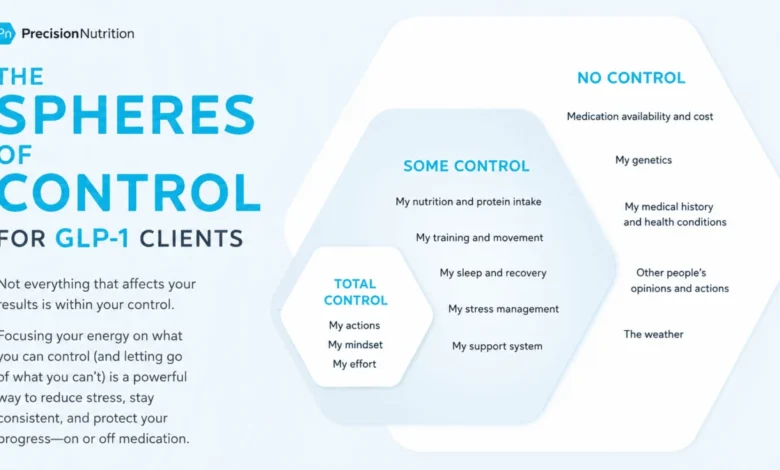
- The Priced-Out: Faced with the sudden inability to pay for medication, these clients often experience feelings of failure. Coaches must pivot to the "Spheres of Control" model, helping the client focus on diet, movement, and sleep—factors they can control—rather than the systemic failure of the insurance or pharmaceutical markets.
Implications for the Future of Wellness
The overarching implication of this transition is that the definition of a "coach" is evolving. As medical interventions become a standard component of obesity treatment, the coach’s role is increasingly becoming that of a "lifestyle architect."
The evidence suggests that lifestyle habits act as a buffer. Research indicates that individuals who integrate resistance training and high-protein intake while on GLP-1 medications are four times more likely to maintain their weight loss upon discontinuation compared to those who do not. This creates a clear, evidence-based value proposition for the coaching industry.
Furthermore, the industry is seeing a move toward specialized certifications. Organizations like the GLP Coaching Institute are formalizing the curriculum for professionals, focusing on the "Five GLP-1 Types"—Strength, Fuel, Fitness, Recovery, and Results. This shift suggests that the era of "one-size-fits-all" fitness coaching is ending, replaced by a nuanced, data-driven approach that respects the complexity of metabolic disease and the necessity of clinical collaboration.
Final Analysis: The New Promise of Coaching
Can a coach promise that a client will never regain weight? Absolutely not. Can a coach promise that a client will lose a specific number of pounds? No. However, the modern coach can promise something far more valuable: a roadmap for building the physiological and psychological foundations that withstand chemical changes.
The goal is to move the client from a state of external reliance—depending entirely on the medication—to a state of internal mastery. By establishing deep-seated habits while the medication provides the initial metabolic "headroom," coaches help clients create a "new normal." When the medication is no longer a factor, these clients will have successfully built an identity centered on health, movement, and nutritional discipline.
In the final assessment, the GLP-1 revolution has not rendered the health coach obsolete. Instead, it has stripped away the superficial aspects of the profession and forced a return to the fundamentals: human behavior, consistent habit formation, and the promotion of long-term health. The coaches who thrive in this environment will be those who can bridge the gap between medical science and daily practice, ensuring that when the medication journey ends, the health journey continues.