The Neuroscience of Forgiveness: Breaking the Cycle of Revenge and Addiction

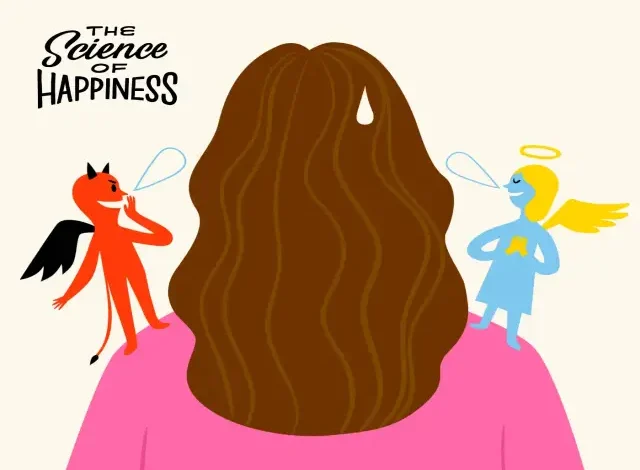
Groundbreaking research from the Yale School of Medicine is redefining our understanding of revenge, characterizing it not merely as a human emotion but as a powerful, addictive habit, and positioning forgiveness as one of the most effective neurobiological mechanisms to break its destructive cycle. This perspective, championed by James Kimmel Jr., an assistant clinical professor at Yale and co-founder of the Yale Collaborative for Motive Control Studies, offers profound implications for individual healing, mental health, and the pursuit of a less violent world. His work, detailed in his book The Science of Revenge: Understanding the World’s Deadliest Addiction and How to Overcome It, suggests that the urge for retribution operates on the same neural pathways as substance abuse, making forgiveness a vital "detox" for the brain and spirit.
A Personal Journey into the Science of Vengeance
James Kimmel Jr.’s foray into the neuroscience of revenge and forgiveness is deeply rooted in his own harrowing adolescence. Growing up on a farm in Central Pennsylvania, Kimmel endured years of escalating bullying from neighboring farm kids. What began as verbal taunts soon morphed into physical assaults, culminating in constant menace and psychological abuse. The violence reached a terrifying peak one night when a gunshot awakened his family, only for Kimmel to discover his beloved beagle, Paula, dead in her pen, shot in the head. Police investigation yielded no arrests, leaving Kimmel and his family with a profound sense of injustice and helplessness.
A few weeks later, another incident ignited a furious reaction. While home alone, Kimmel heard a vehicle stop outside, followed by a flash and an explosion—his family’s mailbox had been blown up. This act of aggression shattered what remained of his self-control. In a fit of blinding rage, Kimmel grabbed his father’s loaded handgun, jumped into his mother’s car, and pursued the perpetrators down a dark, narrow country road. He eventually cornered their truck against a barn on their farm. As the unarmed bullies emerged, squinting into his high beams, Kimmel had the "perfect setup" for the revenge he had fantasized about for years. Yet, in that critical moment, a sudden, powerful flash of insight stopped him. He envisioned two stark futures: one where he committed violence, leading to arrest, incarceration, and the death of his own identity; another where he pulled back. The immense cost of retribution became overwhelmingly clear, prompting him to retreat, put the gun down, and drive home. This harrowing experience became the catalyst for a lifelong quest to understand the compelling nature of revenge and the healing power of forgiveness.
The Legal System: "Selling Revenge to the Masses"
Kimmel’s initial path after this transformative night led him not to forgiveness, but to a professionalized form of retribution: law. He describes his initial motivation as seeking "revenge on discount," a legally sanctioned way to inflict pain on those who had wronged others. As a litigator, Kimmel recognized that the legal system, particularly in its punitive aspects, often functions as a societal mechanism for "legalized revenge," branded under the guise of "Justice." While acknowledging that this system prevents widespread street violence, he observed a disturbing pattern: both his clients and he, as their advocate, experienced "momentary bursts of pleasure" whenever they could "make a bad day for the other side" or "inflict pain."
This vicarious and direct engagement in retribution began to bleed into his personal life. Kimmel found himself seeking grievances and opportunities for retaliation at home, becoming an "avenger" with his own wife and children. The intense feelings of pleasure he derived from this process, coupled with a compulsive inability to disengage, led him to question if he was "hooked on something." The realization that he was exhibiting behaviors akin to addiction, culminating in a period of suicidal ideation, propelled him to seek a deeper, scientific understanding of his experiences. His journey from a legal professional to a researcher at the Yale School of Medicine, studying the very phenomenon that had shaped his life, was a series of fortuitous coincidences that opened the door to groundbreaking neuroscientific inquiry.
The Neuroscience of Revenge: A Brain on Addiction
Kimmel’s research, conducted with neuroscientists at Yale, revealed a startling parallel: the brain on revenge strikingly resembles a brain on drugs. This isn’t a mere metaphor; it’s a neurobiological reality observed through advanced imaging techniques like fMRI and PET scans.
When individuals are subjected to a grievance—a perceived wrong that elicits feelings of victimization—and then presented with an opportunity to retaliate, specific brain regions activate. The initial pain of the grievance triggers the anterior insula, a part of the brain involved in pain processing, empathy, and emotional awareness. This activation, however, seems to cue a desire for revenge within the brain’s reward circuitry. The key players in this "go circuitry" of addiction are the nucleus accumbens and the dorsal striatum. These regions are central to motivation, craving, and the experience of pleasure, and their activation in response to a perceived wrong and the anticipation of retribution indicates a powerful, compulsive drive.
Crucially, the prefrontal cortex (PFC), the brain’s "stop circuitry" responsible for executive functions, cost-benefit analysis, decision-making, and impulse control, appears to be significantly inhibited or "shut down" during revenge-seeking behavior. This deactivation impairs an individual’s ability to weigh the consequences of their actions, leading to impulsive and often self-destructive acts. This neural signature—activated reward pathways, a triggered pain network seeking resolution, and a suppressed inhibitory control center—creates a compelling picture of compulsive revenge seeking, fitting the clinical definition of addiction: "the inability to resist an urge or desire… despite knowing the negative consequences of doing so."
This neurobiological framework provides a powerful lens through which to view the pervasive nature of violence. Criminologists and behavioral scientists have consistently identified revenge-seeking as a primary motivation across a vast spectrum of violent acts, from intimate partner violence and youth bullying to gang warfare, violent extremism, police brutality, and even genocide. The adage "hurt people hurt people" finds profound neuroscientific validation here; the cycle of violence is often driven by individuals attempting to alleviate their own pain through the perceived justice of inflicting pain on others. Kimmel aptly terms revenge "the world’s deadliest addiction" due to its devastating global consequences.
Forgiveness: The Neurobiological Detox
If revenge is an addiction, then forgiveness, according to Kimmel’s research, is its neurobiological antidote—a powerful "detox" mechanism. Far from being merely a "soft spiritual practice," forgiveness has demonstrable physiological effects on the brain and body. Early studies on individuals in fMRI scanners show that when given a grievance and an opportunity to forgive instead of retaliate, specific changes occur:
- Pain Cessation: Forgiveness directly shuts down the anterior insula, the brain’s pain network. This means forgiveness actively stops the experience of emotional pain associated with the grievance, offering immediate relief.
- Reward Circuitry Deactivation: The "go circuitry" of addiction—the nucleus accumbens and dorsal striatum—is also quieted. This deactivation helps to break the compulsive craving and pleasure derived from revenge fantasies and actions.
- Prefrontal Cortex Reactivation: Crucially, forgiveness reactivates the prefrontal cortex. This restoration of executive function enhances decision-making, strengthens self-control, and allows for a more rational assessment of consequences, moving the individual away from impulsive, retaliatory behaviors.
These three neurobiological benefits—pain cessation, reduction of addictive cravings, and restoration of self-control—lead Kimmel to describe forgiveness as a "human superpower" or a "wonder drug." It’s a free, self-manufactured pharmaceutical, available 24/7, with profound implications for well-being.
The Practice of Decisional Forgiveness
Kimmel emphasizes that neurobiological forgiveness, or what psychologists refer to as "decisional forgiveness," does not require pardoning the aggressor or engaging in a conversation with them. It is an internal, self-directed act of healing. The perception that forgiveness is difficult or a sign of weakness, or that it absolves the wrongdoer, is a significant barrier. Instead, decisional forgiveness is about releasing oneself from the past’s grip, a means of personal liberation and self-care.
The immediacy and power of this internal shift are striking. Kimmel demonstrates that merely imagining what it would feel like to forgive a long-held grievance can induce a rapid sense of relief, a dissipation of tension, and a calming of the emotional storm. From a neuroscientific perspective, even this imaginative exercise momentarily stops pain, halts revenge fantasies, and activates the prefrontal cortex, providing immediate psychological and physiological benefits.
For Kimmel himself, forgiveness is a daily practice, a conscious choice to discharge grievances and move forward. He views revenge-seeking as an inherently backward-looking endeavor, chaining individuals to past hurts and preventing them from living productively in the present. Forgiveness, conversely, is about leaving the past in the past, allowing individuals to reclaim their present and future for fulfillment and joy.
Broader Implications and the Path Forward
The profound insights from Kimmel’s work carry significant implications across multiple societal domains:
- Public Health: By identifying revenge as a core driver of violence and an addiction, this research reframes violence as a public health crisis that can be addressed through interventions targeting the underlying neurobiological mechanisms. Promoting forgiveness education and practices could become a crucial component of violence prevention strategies.
- Criminal Justice Reform: The understanding that punitive systems can inadvertently feed the "revenge addiction" in society calls for a re-evaluation of current justice models. Restorative justice, which focuses on repairing harm and fostering reconciliation rather than solely on punishment, aligns more closely with the neurobiological benefits of forgiveness. Data showing that the length and severity of prison sentences often have little effect on recidivism further underscore the need for approaches that address the root causes of vengeful behavior.
- Mental Health Treatment: Forgiveness can be integrated as a powerful therapeutic tool in treating trauma, anger management issues, and even addiction. By providing a clear, neurobiologically grounded pathway to alleviate emotional pain and restore self-control, it offers a novel approach to mental wellness. Clinical psychologists and therapists could increasingly incorporate forgiveness interventions, leveraging its proven capacity to reduce stress, anxiety, and depression.
- Societal Conflict and Polarization: In an increasingly polarized world, the principles of forgiveness offer a pathway out of cycles of retribution, whether personal, political, or international. As Dacher Keltner mused, "Imagine what our world would look like… if people could just say the words, ‘I forgive.’" Understanding forgiveness as a personal, internal act of healing rather than a concession to an aggressor could empower individuals and communities to de-escalate conflicts and build bridges.
James Kimmel Jr.’s research at the Yale School of Medicine is transforming the conversation around revenge and forgiveness. By demonstrating that revenge is a neurologically addictive process and that forgiveness is a powerful, self-manufactured antidote, he provides a scientific foundation for ancient wisdom. This work empowers individuals with the knowledge that they possess an innate capacity to heal from past wrongs, reclaim their emotional well-being, and contribute to a more compassionate and less violent future. The choice to forgive is not a sign of weakness, but a profound act of self-control and liberation, a testament to the brain’s remarkable capacity for healing and transformation.