Jay Cutler vs. Big Ramy: The Enduring Debate on Bodybuilding Supremacy Rekindled on The Menace Podcast

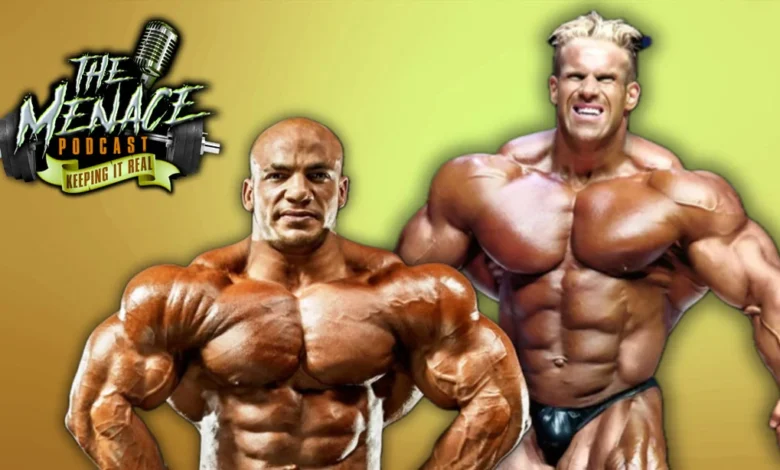
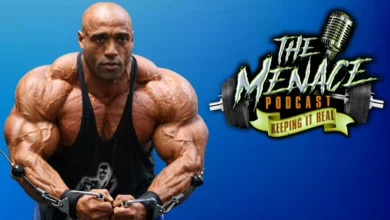
The landscape of professional bodybuilding, often characterized by its pursuit of peak human muscularity and conditioning, frequently sparks debates among fans, pundits, and former competitors regarding who stands as the sport’s ultimate icon. This ongoing discourse found a prominent platform on Episode 295 of The Menace Podcast, where host Dennis James, alongside seasoned panelists Milos Sarcev and Jose Raymond, delved into a compelling hypothetical matchup: Jay Cutler versus Big Ramy. The discussion aimed to ascertain which of these two titans of mass possessed the superior physique and overall competitive edge, particularly when considering their respective primes.
The Genesis of the Debate: A Podcast Discussion
The Menace Podcast, a respected voice in the bodybuilding community, regularly features in-depth analyses of current events, historical matchups, and the intricacies of competitive bodybuilding. Dennis James, a former IFBB professional bodybuilder known for his insightful commentary and extensive network, spearheads these discussions. He is joined by Milos Sarcev, a legendary bodybuilder and renowned coach celebrated for his innovative training methods, and Jose Raymond, an accomplished 212-division competitor known for his exceptional conditioning and candid opinions. Their collective experience provides a unique lens through which to evaluate the careers and physiques of bodybuilding’s elite.
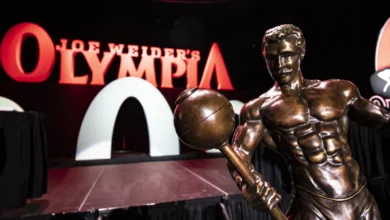
On this particular episode, the panelists revisited a pivotal moment in bodybuilding history: the 2013 Mr. Olympia, an event where Jay Cutler, a four-time Mr. Olympia champion, and Mamdouh "Big Ramy" Elssbiay, then a nascent professional, shared the stage. While the actual contest saw Cutler place sixth and Ramy eighth, the podcast discussion transcended mere historical results, instead focusing on a more abstract comparison of their peak physical forms and the perceived nuances of judging. The debate served as a testament to the enduring fascination with "fantasy matchups" that allow fans to dissect the strengths and weaknesses of different eras and body types.
A Clash of Eras: Jay Cutler’s Illustrious Career
Jay Cutler, born Jason Isaac Cutler on August 3, 1973, in Sterling, Massachusetts, carved out one of the most remarkable careers in professional bodybuilding. His journey began with a natural affinity for weightlifting, leading to his first overall win at the 1993 NPC Teen Nationals. Cutler quickly ascended the amateur ranks, earning his professional status by winning the 1996 NPC Nationals heavyweight and overall titles. He made his Mr. Olympia debut in 1999, placing 14th, but it was his consistent improvement and formidable mass that truly set him apart.
Cutler became synonymous with unprecedented size and dense muscle, particularly his signature "quad stomper" development, which gave him an undeniable presence on stage. He placed second to the legendary Ronnie Coleman for four consecutive years (2001, 2003, 2004, 2005) at the Mr. Olympia, a period that cemented his reputation as Coleman’s fiercest rival. This sustained challenge culminated in his historic victory at the 2006 Mr. Olympia, dethroning Coleman and ending his eight-year reign. This win was significant, marking a shift in the sport’s top echelon and proving that consistent pressure and gradual refinement could overcome even the most dominant champions.
Cutler continued his reign, securing the Sandow trophy in 2007 and 2009. His 2008 loss to Dexter Jackson was a momentary setback, demonstrating the fierce competition at the top, but he reclaimed the title in 2009, showcasing remarkable resilience and strategic off-season improvements. His fourth and final Mr. Olympia title came in 2010. By then, Cutler had firmly established his legacy as a mass monster with exceptional conditioning, stage presence, and a strategic approach to competition. His physique, characterized by broad shoulders, a relatively tight waist for his size, and unparalleled quad development, defined an era.
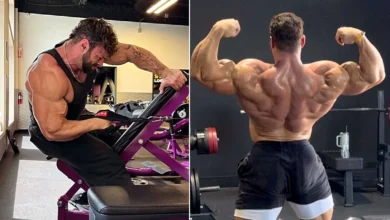
The 2013 Mr. Olympia marked a comeback attempt for Cutler after a brief hiatus from the sport following his 2011 runner-up finish to Phil Heath. At 40 years old, he aimed to prove his enduring relevance in a rapidly evolving landscape. While still possessing immense size and a recognizable silhouette, his physique at that specific show, as noted by many observers and revisited by the podcast panelists, was not at the absolute peak that defined his championship years.
The Egyptian Phenom: Big Ramy’s Meteoric Ascent
Mamdouh Elssbiay, universally known as Big Ramy, emerged from Kuwait, though he is of Egyptian descent, and quickly became one of the most talked-about bodybuilders of his generation. Born in 1984, Ramy’s journey into bodybuilding was unconventional. Originally working as a fisherman, his colossal natural frame was discovered, leading him to begin training at Oxygen Gym in Kuwait, a facility renowned for producing mass monsters.
Ramy’s amateur career was astonishingly brief and impactful. He won the 2012 IFBB Amateur Mr. Olympia in Kuwait City, earning his pro card with a physique that immediately garnered international attention for its sheer scale. Standing 5’10" and often competing at weights exceeding 300 pounds, Ramy pushed the boundaries of what was considered humanly possible in terms of muscle mass. His professional debut came swiftly at the 2013 Mr. Olympia, an event where expectations were astronomically high.
Throughout his early professional career, Ramy consistently showcased unparalleled width, thickness, and muscle bellies that seemed to defy anatomical limits. However, his primary challenge often lay in achieving the razor-sharp conditioning and back detail necessary to fully showcase his immense physique, especially in comparison to leaner competitors. Despite these conditioning hurdles, his sheer size alone was often enough to secure top placings. He steadily improved, earning back-to-back victories at the Mr. Olympia in 2020 and 2021, cementing his place in history as one of the sport’s ultimate mass monsters. These victories were particularly significant as they represented a triumph over previous conditioning issues, demonstrating that when Ramy brought his best package, he was virtually unbeatable due to his overwhelming size advantage.
The Fateful Encounter: Mr. Olympia 2013
The 2013 Mr. Olympia served as a fascinating crossroads for these two athletes. Jay Cutler was attempting to defy Father Time, seeking to add another Sandow to his collection after a competitive break. Big Ramy, on the other hand, was the sport’s newest sensation, making his highly anticipated professional debut on bodybuilding’s grandest stage. The juxtaposition of a seasoned, albeit slightly past-prime, champion against an ascendant, genetically gifted newcomer created an electrifying atmosphere.
The judges ultimately placed Jay Cutler in sixth position, while Big Ramy landed in eighth. This outcome became a focal point of discussion on The Menace Podcast. Jose Raymond, reflecting on the 2013 results, candidly stated that Cutler was "gifted that spot," implying that Ramy, despite his eighth-place finish, presented a more impressive physique on stage that day. Raymond specifically noted that the Egyptian bodybuilder was "significantly bigger and in better shape" than Cutler. Dennis James echoed this sentiment, observing that Ramy’s sheer presence and development "made Cutler look bad in a lot of poses," a stark commentary given Cutler’s legendary status.
This retrospective analysis by the panelists highlights a common discrepancy between official judging outcomes and the perception of many fans and experts. While judging criteria encompass symmetry, muscularity, conditioning, and overall presentation, the sheer impact of a bodybuilder’s "wow factor" can sometimes sway public opinion, even if not fully reflected in the scorecards. The 2013 contest, therefore, became a historical reference point for discussions about judging fairness, the evolution of physiques, and the challenge of comparing athletes at different stages of their careers.
Prime vs. Peak: An Analytical Comparison
The central question posed by The Menace Podcast was not about their 2013 encounter but rather a hypothetical "prime Jay Cutler versus peak Big Ramy." This requires a deeper dive into their defining physical characteristics and competitive strengths:
-
Size and Mass: In terms of sheer, overwhelming mass, Big Ramy undoubtedly holds the advantage. His frame allowed him to carry muscle at a density and volume rarely seen before or since. At his peak, Ramy presented a "cartoon character" physique, as Dennis James aptly described, pushing the limits of the Open division. Cutler, while a mass monster himself, was more conventionally proportioned for his size. Ramy’s deltoids, quads, and overall thickness were often unmatched.
-
Conditioning: This is where the comparison becomes more nuanced. Jay Cutler was renowned for his ability to bring consistent, granite-hard conditioning, especially during his championship years. His dryness and muscle separation were often exemplary, allowing his immense musculature to pop. Big Ramy, while capable of achieving incredible conditioning, particularly in his 2020 and 2021 Mr. Olympia wins, historically struggled with consistency in this department. When Ramy was "on," his conditioning was formidable, revealing striated muscle bellies across his massive frame. However, there were instances where his conditioning fell short, obscuring the detail of his size. A "peak" Ramy implies he hit his conditioning, making this a much closer contest.
-
Symmetry and Proportions: Cutler possessed a classic bodybuilding aesthetic despite his mass. His wide clavicles, balanced upper and lower body development, and relatively tight waist (for his size) gave him a flowing, symmetrical look. His "quad stomper" nickname was earned due to his quad sweep, which flared dramatically from his waist. Ramy, while possessing incredible width, sometimes struggled with achieving the same level of aesthetic flow. His sheer density could sometimes overwhelm symmetry, and critics occasionally pointed to his back development needing refinement relative to his front. However, Dennis James specifically lauded Ramy’s "width, then the waist, and then the f***ing flare in the quads," indicating that at his best, Ramy demonstrated exceptional proportional strength in key areas.
-
Muscularity and Detail: Cutler’s muscularity was characterized by dense, hard muscle with excellent separation. His biceps, triceps, and quad striations were legendary. Ramy’s muscularity was defined by thickness and fullness. His muscle bellies were often described as "bubble-guts" in his early years, but at his peak, these translated into an awe-inspiring display of dense, detailed muscle that commanded attention.
-
Posing and Stage Presence: Jay Cutler was a master of presentation. His confidence, experience, and ability to hit every pose with authority and conviction were part of his winning formula. He knew how to work the stage and command the judges’ attention. Big Ramy, while improving over his career, was often perceived as less dynamic in his posing compared to veterans like Cutler. His sheer size made him a spectacle, but his artistic presentation was sometimes overshadowed by his physical attributes.
Ultimately, the panelists leaned towards Big Ramy in a prime-vs-peak scenario. Dennis James emphatically asserted, "Apparently not," when asked if a prime Jay Cutler could beat a peak Big Ramy. He elaborated, "Those two were the widest bodybuilders I’ve ever seen. But the most impressive one, was Ramy, in my eyes. Just because the width, then the waist, and then the f***ing flare in the quads." This sentiment highlights the impact of Ramy’s unprecedented mass and structural advantages when fully conditioned.
The Evolution of the Open Division and Legacy
The debate between Jay Cutler and Big Ramy is more than just a hypothetical matchup; it represents a significant chapter in the ongoing evolution of the Open division in professional bodybuilding. Both athletes, in their own right, pushed the boundaries of size and conditioning. Cutler’s reign marked the peak of a "mass monster" era where incredible size combined with exceptional conditioning became the gold standard, effectively ending the more aesthetic-focused era that preceded it. Ramy then took this "mass monster" philosophy to its absolute extreme, demonstrating that even greater size was achievable, provided the conditioning could match.
The conversation sparked by The Menace Podcast reflects the constant re-evaluation of judging criteria and what constitutes the "ideal" physique. While some fans and judges advocate for a return to more classical aesthetics, the undeniable spectacle of athletes like Cutler and Ramy, with their awe-inspiring scale, continues to captivate audiences. Their careers illustrate the relentless pursuit of muscular perfection and the genetic and training advancements that have allowed bodybuilders to reach previously unimaginable levels of development.
Jay Cutler’s legacy is one of a relentless competitor who broke a dominant reign, consistently brought an excellent package, and proved that strategic planning and a strong work ethic could lead to multiple Mr. Olympia titles. Big Ramy’s legacy is defined by his groundbreaking size, a testament to raw genetic potential, and his eventual triumph in achieving the conditioning required to claim the sport’s highest honor. The podcast discussion underscores that while official placings provide a snapshot of a moment in time, the deeper analysis of an athlete’s peak form, potential, and impact on the sport continues to fuel passionate debate and shape the understanding of bodybuilding history.
For those interested in the full scope of this compelling discussion and further insights into the latest bodybuilding news, Episode 295 of The Menace Podcast is available on the Muscle & Fitness YouTube channel.