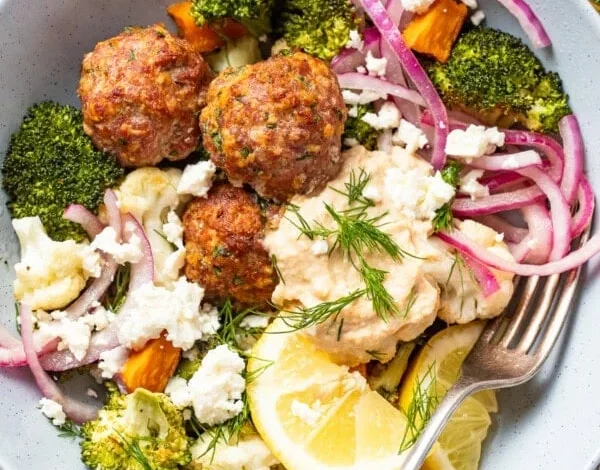
These high-protein Mediterranean meatball bowls, featuring juicy turkey meatballs, a medley of roasted vegetables including sweet potatoes, cauliflower, and broccoli, creamy hummus, and tangy pickled red onions, have emerged as a culinary obsession for home cooks seeking a flavorful, nutrient-dense, and convenient meal solution. This dish, inspired by popular Mediterranean fast-casual dining experiences, offers a grain-free approach to a satisfying dinner, prioritizing fiber and lean protein. Its meal-prep friendly nature further enhances its appeal for busy individuals and families.

The genesis of this recipe lies in the desire to replicate the vibrant and wholesome flavors of establishments like CAVA within the home kitchen. By streamlining the preparation process onto a single sheet pan, the dish minimizes cleanup while maximizing taste and nutritional value. The combination of tender, seasoned turkey meatballs with the caramelized sweetness of roasted sweet potatoes and the earthy notes of cauliflower and broccoli creates a robust foundation. This is further elevated by the creamy richness of hummus, a staple in Mediterranean cuisine, and the bright, acidic counterpoint of quick-pickled red onions, which add a pop of color and a refreshing tang to every bite.
A Focus on Health and Convenience
This particular iteration of the Mediterranean bowl champions a high-fiber, grain-free profile. By substituting traditional grains with a generous portion of roasted vegetables, the dish becomes a powerhouse of dietary fiber, essential for digestive health and sustained energy release. The use of lean ground turkey ensures a significant protein content, contributing to satiety and muscle maintenance, making it an ideal choice for those mindful of their macronutrient intake. The recipe is designed to be highly adaptable, catering to various dietary needs and preferences, and has quickly become a go-to for weekly meal preparation.

The author behind this popular recipe, Gina at Skinnytaste.com, highlights her personal connection to the dish, stating, "I was craving Cava, so I whipped up this turkey meatball bowl of my dreams! It has all my favorites from Cava, without having to leave the house. While testing this recipe, I had it many times and have never been more excited to eat the leftovers." This personal endorsement underscores the dish’s deliciousness and its ability to satisfy cravings with a healthier, homemade alternative.
Nutritional Profile and Benefits
A typical serving of these Mediterranean Meatball Bowls, comprising three meatballs and 1.5 cups of vegetables, provides approximately 489.5 calories, 33.5 grams of protein, 37 grams of carbohydrates, and 24.5 grams of fat. The significant fiber content, around 7.5 grams per serving, contributes to its high-fiber designation. This nutritional breakdown positions the dish as a well-rounded meal that supports energy levels and satiety without compromising on health goals. The inclusion of lean protein and abundant vegetables makes it a strategic choice for weight management and overall well-being.

Ingredient Breakdown and Preparation
The construction of these flavorful bowls hinges on a carefully selected set of ingredients, designed for both taste and ease of preparation. The core components include:
- For the Turkey Meatballs: Ground turkey, finely chopped onion, garlic, egg, almond flour or gluten-free breadcrumbs, dried oregano, dried parsley, salt, and black pepper. These ingredients are combined and formed into meatballs, ensuring a tender and flavorful result.
- For the Roasted Vegetables: Sweet potatoes, cauliflower florets, and broccoli florets. These vegetables are tossed with olive oil, salt, and pepper, and roasted until tender and slightly caramelized.
- For the Pickled Red Onions: Red onion, apple cider vinegar, water, sugar, and salt. This quick pickle method adds a vibrant color and a zesty tang that cuts through the richness of the other components.
- For Serving: Creamy hummus is a crucial element, providing a smooth, savory base that complements the other textures and flavors.
The preparation process is remarkably efficient, leveraging the convenience of a sheet pan. While the vegetables roast, the meatballs are typically baked simultaneously, allowing for a cohesive cooking process. The quick pickled red onions can be prepared concurrently, their bright acidity developing as the other elements cook. This integrated approach ensures that all components are ready to be assembled into a cohesive and satisfying bowl.

Step-by-Step Culinary Process
- Meatball Preparation: Begin by gently mixing the ground turkey with finely chopped onion, minced garlic, a binder like egg and almond flour (or gluten-free breadcrumbs), and a blend of dried herbs such as oregano and parsley. Season with salt and pepper. Form the mixture into uniformly sized meatballs.
- Vegetable Roasting: On a large baking sheet, toss cubed sweet potatoes, cauliflower florets, and broccoli florets with olive oil, salt, and pepper. Arrange them in a single layer to ensure even roasting.
- Simultaneous Baking: Place the seasoned meatballs onto the same baking sheet as the vegetables, or on a separate sheet if preferred, ensuring adequate space between items for optimal roasting. Bake in a preheated oven, typically around 400°F (200°C), until the meatballs are cooked through and the vegetables are tender and slightly browned. This usually takes approximately 25-30 minutes.
- Quick Pickled Onions: While the meatballs and vegetables are baking, prepare the pickled red onions. Thinly slice a red onion and combine it in a jar or bowl with a mixture of apple cider vinegar, water, a touch of sugar, and salt. Allow them to sit and marinate, developing their vibrant color and tangy flavor.
- Assembly: To serve, create a base in each bowl with the roasted vegetables. Top with several juicy turkey meatballs. Dollop a generous spoonful of creamy hummus alongside the meatballs. Garnish with the bright, pickled red onions.
Variations and Customization
The beauty of this dish lies in its versatility. For those seeking to further enhance its Mediterranean character, additions like Kalamata olives, chopped cucumber, or a sprinkle of fresh parsley can be incorporated. For a spicier kick, a pinch of red pepper flakes can be added to the meatball mixture or the roasted vegetables. If almond flour or gluten-free breadcrumbs are not readily available, regular breadcrumbs can be used, though this would alter the gluten-free status of the dish.
For individuals with specific dietary requirements or preferences, several modifications can be made:

- Dairy-Free: The recipe is naturally dairy-free, provided the hummus used does not contain any dairy additives.
- Vegetarian/Vegan: While the current recipe focuses on turkey meatballs, a vegetarian or vegan version could be created using plant-based protein sources like lentils, chickpeas, or a commercial meat substitute, adjusting the seasoning accordingly.
- Grain-Free Alternatives: For those who prefer to avoid even the minimal grains in some breadcrumbs, additional vegetables like zucchini or bell peppers can be roasted, or a base of cauliflower rice can be used.
Storage and Meal Prep Strategies
The Sheet Pan Mediterranean Meatball Bowls are exceptionally well-suited for meal prepping, allowing for healthy and delicious lunches or dinners throughout the week. All components can be stored in airtight containers in the refrigerator for up to four days.
For optimal meal prep:

- Separate Components: Store the roasted vegetables, meatballs, and pickled red onions in separate containers to maintain their individual textures and prevent sogginess.
- Hummus Storage: Keep the hummus separate and add it just before serving to preserve its creamy consistency.
- Reheating: Reheat the meatballs and vegetables in a microwave or oven until warmed through. The pickled onions are best served cold.
This strategic approach ensures that each meal component retains its quality and appeal, making weekday meals effortless and enjoyable.
Broader Culinary Context and Impact
The popularity of sheet pan meals and grain-free, high-protein dishes reflects a broader trend in contemporary home cooking. Consumers are increasingly seeking recipes that are not only delicious and visually appealing but also align with health-conscious lifestyles and demanding schedules. The Mediterranean diet, renowned for its emphasis on fresh ingredients, healthy fats, and lean proteins, continues to inspire culinary innovation, and this recipe effectively captures its essence in a convenient and accessible format. The success of such recipes also underscores the growing interest in recreating restaurant-quality meals at home, offering a cost-effective and often healthier alternative to dining out. The accessibility of ingredients and the straightforward preparation method make this dish a valuable addition to any home cook’s repertoire, promoting healthier eating habits without sacrificing flavor or enjoyment.