The Illusion of Breakthroughs: Examining the True Survival Benefits and Costs of Modern Chemotherapy

When the U.S. Food and Drug Administration (FDA) approves a new cancer treatment, the medical community and pharmaceutical companies frequently herald the milestone with terminology such as "game-changer," "breakthrough," and "innovative therapy." For patients facing advanced diagnoses, these labels carry profound emotional weight, signaling a robust defense against terminal illness. However, a rigorous examination of longitudinal clinical data reveals a stark discrepancy between marketing narratives and clinical realities. Aggregated analyses of new chemotherapy drugs approved over a decade-long period demonstrate that the average overall survival benefit provided by these agents is a modest 2.1 months.
This narrow margin of extended life raises critical questions regarding the financial burden, clinical efficacy, and transparency of communications between oncologists and vulnerable patients. As healthcare expenditures continue to soar and the pipeline of oncology drugs expands, policymakers, bioethicists, and clinicians are increasingly scrutinizing whether the astronomical costs of these treatments align with tangible improvements in patient longevity and quality of life.
The Chronology of Oncology Approvals and Postmarket Realities
The modern framework for drug approval relies heavily on expedited pathways designed to bring promising treatments to patients swiftly. Programs such as accelerated approval allow the FDA to greenlight therapies based on surrogate endpoints—such as tumor shrinkage or progression-free survival—rather than definitive evidence of overall survival or quality of life improvements. The underlying premise of this regulatory mechanism is that postmarket confirmatory trials will subsequently verify clinical benefit.
However, historical tracking of these postmarket studies reveals a systemic disconnect. When subsequent trials demonstrate that specific drugs offer no clinically meaningful benefit over a placebo or observation alone, the regulatory response is rarely corrective withdrawal. Data indicates that the vast majority of drugs failing to show survival benefits in confirmatory trials retain their FDA approval and remain commercially available.
Compounding this regulatory inertia is the pricing structure of these medications. Drugs failing to improve overall survival continue to command premium prices on the global market. In certain evaluations of high-cost oncology portfolios, the most expensive therapies—commanding upwards of $160,000 annually—failed to extend patient survival at all, while simultaneously degrading the patient’s remaining quality of life through severe systemic toxicities. This phenomenon forces patients to bear steep financial costs and physical suffering for negligible clinical returns.
Statistical Significance Versus Clinical Meaningfulness
A central challenge in modern oncology communication lies in the interpretation of clinical trial endpoints. Pharmaceutical companies frequently design large-scale Phase III trials capable of detecting statistically significant differences in survival endpoints. While these differences meet the mathematical criteria for statistical significance, they often translate into trivial gains in actual survival time.

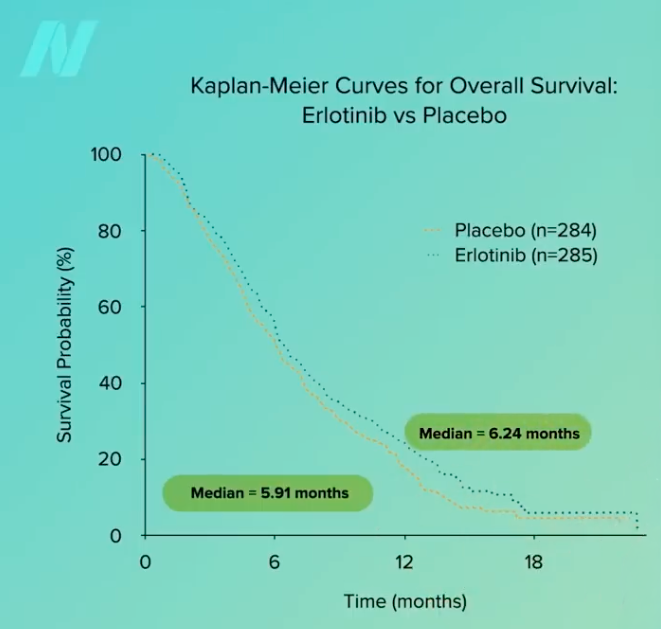
A classic case study often cited in medical literature involves a pivotal Phase III trial evaluating the addition of the targeted therapy erlotinib to gemcitabine for patients with advanced pancreatic cancer. While the trial successfully demonstrated a statistically significant extension in overall survival, the real-world difference was marginal. Patients receiving the combination therapy survived an average of 6.24 months, compared to 5.91 months for the control group receiving gemcitabine alone.
This represents an extension of approximately one-third of a month, or roughly ten days. Despite this minor gain, patients in the combination group endured a significantly heavier burden of adverse side effects and financial expense. Medical ethicists argue that utilizing broad statistical jargon—such as a "significant improvement in survival"—without explicitly quantifying the timeline can mislead patients. When individuals hear the word "survival," they generally anticipate months or years of extended life, not a matter of days.
Patient Expectations and Informed Consent
The communication gap between medical professionals and patients regarding terminal prognoses remains a significant ethical hurdle in oncology care. Empirical surveys consistently demonstrate that a substantial majority of patients with metastatic malignancies, such as lung or colorectal cancer, harbour misconceptions about the curative potential of their chemotherapy regimens.
Studies indicate that approximately three-quarters of patients undergoing chemotherapy for advanced metastatic cancers do not understand that their treatment is palliative rather than curative. While chemotherapy serves as the primary systemic intervention for these conditions, it is frequently administered to eke out additional weeks or months of life rather than to achieve remission.
Researchers attribute this misunderstanding not merely to over-optimism on the part of the patient, but to systemic deficiencies in informed consent discussions. When patients are led to believe a regimen offers a potential cure when it statistically does not, they are deprived of the autonomy to weigh the profound risks of cytotoxic therapy against modest and uncertain benefits. Interviews with cancer patients reveal diverse personal values: while some indicate that even a single week of extra life justifies the ordeal of treatment, others explicitly state they would decline therapy to preserve their remaining quality of life. Access to transparent data is essential for patients to make informed decisions aligned with their personal values.
The Cytotoxic Toll and Industry Framing of Adverse Effects
Most conventional chemotherapy agents are cytotoxic, meaning their primary mechanism of action involves destroying rapidly dividing cells. Because cancer cells divide uncontrollably, they are vulnerable to these agents; however, healthy rapidly dividing cells—such as those in the bone marrow, hair follicles, and the lining of the gastrointestinal tract—suffer collateral damage. This indiscriminate toxicity accounts for the severe adverse effects associated with chemotherapy, including peripheral neuropathy, irreversible cardiac damage, immunosuppression, and systemic debilitation.
Interestingly, surveys of oncologists and oncology nurses reveal a markedly lower personal willingness to accept intensive chemotherapy regimens for themselves compared to what they routinely recommend to patients, driven by an acute awareness of the associated toxicities.
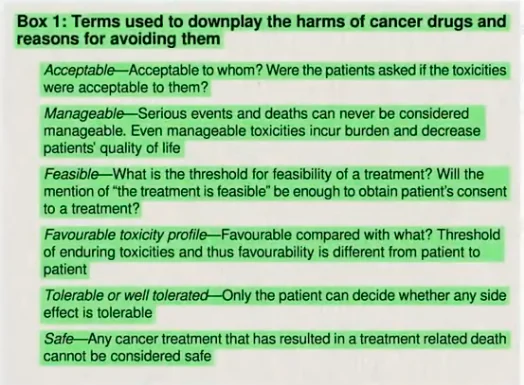
Compounding these physical risks is the linguistic framing employed in clinical literature and pharmaceutical reporting. Drug manufacturers frequently utilize euphemistic terminology to characterize severe adverse events in published studies. Terms such as "manageable," "acceptable," "feasible," "favorable," "tolerable," and "safe" routinely appear in top-tier medical journals to describe side-effect profiles.
A critical analysis of underlying clinical data often paints a vastly different picture, showing rates of serious or life-threatening adverse events that are multiples higher in treatment groups compared to control groups. Critics argue that events resulting in patient hospitalization or mortality cannot accurately be categorized as "manageable" or "acceptable," and that true transparency requires objective, plain-language reporting of trial harms.
Exceptional Successes Versus Broad Realities
Despite the sobering aggregate statistics surrounding common solid tumors, medical science has achieved monumental breakthroughs in specific, highly responsive malignancies. The paradigm of successful chemotherapy is perhaps best exemplified in the treatment of testicular cancer and Hodgkin’s lymphoma. In these specific cohorts, modern chemotherapeutic regimens have transformed previously fatal prognoses into highly curable conditions, offering long-term survival rates exceeding 50% to 80% at the five-year mark.
Conversely, for the most prevalent oncological diagnoses—including colorectal, lung, breast, and prostate cancers—the contribution of cytotoxic chemotherapy to five-year overall survival remains exceptionally low, estimated in various analyses to hover between 1% and 2% for metastatic presentations.
Implications for Future Policy and Clinical Practice
The widening gap between the high cost of cancer therapeutics and their modest clinical benefits has catalyzed broader policy discussions regarding value-based healthcare, regulatory standards, and drug pricing reform. Healthcare economists emphasize that continued reliance on surrogate endpoints without stringent postmarket verification of overall survival places an unsustainable financial strain on healthcare systems and individual patients alike.
Public health advocates and medical professionals advocate for a recalibration of clinical communication standards, ensuring that patients receive realistic, quantified estimations of survival benefits and honest disclosures of toxicity profiles prior to initiating treatment. Ultimately, fostering an environment of radical transparency respects patient autonomy, aligns medical interventions with individual end-of-life preferences, and directs scientific and financial resources toward verifiable clinical advancements and primary cancer prevention strategies.
Related posts: