
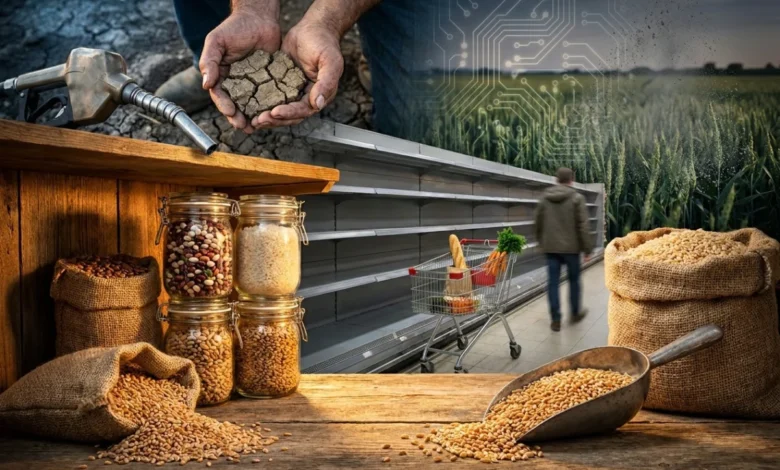
The Anatomy of a Supply Chain Contraction
The global food supply chain operates on a "just-in-time" model, which relies on high-velocity turnover and precise coordination between farmers, processors, and retailers. Recent data indicates that this model is experiencing critical friction. Wholesale inventory reports suggest that procurement orders for staple crops are increasingly being returned unfilled or severely rationed, with some projections for replenishment extending as far as 2027.
Unlike temporary shortages caused by weather events or localized labor strikes, the current situation is characterized by a "triple-threat" scenario: elevated input costs, administrative bottlenecks, and infrastructure fragility. Farmers are reporting that the high price of diesel—a primary input for both field machinery and long-haul transportation—is forcing a reduction in planting and harvesting acreage. When marginal costs exceed projected market returns, agricultural operations often scale back, leading to a direct decline in raw commodity output.
Chronology of Recent Disruptions
The current instability can be traced back to a series of compounding events that have eroded the resilience of the agriculture sector:
- Early 2024: Energy price volatility began to impact fertilizer production, particularly in Europe, leading to higher baseline costs for nitrogen-based agricultural chemicals.
- Late 2024 to Mid-2025: Wholesale distributors began signaling significant inventory gaps. Reports from mid-sized storage facilities indicated a steady drawdown of reserves that were not being replenished at standard historical rates.
- Third Quarter 2026: A series of cyber-related incidents targeting USDA administrative and loan-servicing systems highlighted the vulnerability of digitalized agriculture. The inability to process payments or secure bridge financing caused immediate cash-flow crises for independent agricultural operations.
- Current Status: Government agencies in several jurisdictions have begun issuing advisory notices regarding stockpile maintenance, marking a departure from previous years of relative complacency.
Technological Vulnerabilities and Cyber Risks
Modern agriculture is increasingly reliant on centralized digital networks to manage everything from irrigation systems to crop insurance and federal loan distribution. The recent USDA cyber intrusion serves as a case study for systemic risk. When digital payment gateways fail, the physical reality of the farm does not pause; livestock still require feed, and harvests must proceed according to biological, not digital, schedules.
Analysis of these events suggests that the "digitization of the farm" has created a single point of failure. When automated administrative systems go offline, small to mid-sized producers—who operate on thin margins—are forced to absorb the costs. If these outages persist, the result is often the liquidation of assets or the permanent cessation of operations, effectively accelerating the consolidation of the agricultural market and reducing the overall diversity of food suppliers.
Environmental and Military Policy Implications
Beyond market mechanics, physical policy decisions are impacting food security. The recent military authorization to proceed with detonation exercises involving large quantities of lead azide—a volatile compound—near major agricultural production zones in the American Midwest has raised concerns among environmental and public health experts.
The potential for lead-based particulate fallout raises significant questions regarding the long-term viability of soil and water sources in affected regions. Lead, being a persistent environmental contaminant, does not degrade; its presence in the food chain would necessitate rigorous testing and potential condemnation of harvests, further compounding existing supply shortages. While military officials categorize these exercises as essential for defense readiness, the intersection of such activities with prime, high-yield farmland presents a conflict between national security interests and the fundamental security of the domestic food supply.

Economic Projections and Famine Risk
Economic analysts focusing on agricultural commodities are increasingly utilizing the term "food inflation" to describe the current trajectory, but some suggest this label is insufficient. The emerging reality is a shift toward "scarcity-driven pricing," where the availability of nutrient-dense, whole-food commodities becomes the primary driver of cost rather than fuel or labor alone.
Historically, famine cycles begin with the erosion of the supply of high-quality, caloric-dense foods, while shelf-stable, highly processed foods remain available for longer periods due to their longer shelf life and standardized commodity inputs. If the current patterns of wholesale rationing continue, consumers may observe a divergence in the grocery aisle: processed goods remaining relatively stable in price and availability, while fresh grains, proteins, and produce become increasingly difficult to source at affordable price points.
Strategic Preparedness and Mitigation
In response to these systemic indicators, independent analysts and supply chain observers are advocating for a strategy of decentralized preparedness. The focus is shifting toward "distributed storage"—the concept that individual households and local communities should maintain a buffer of essential goods to mitigate the impact of centralized failures.
Expert recommendations for individual preparedness include:
- Prioritization of Staples: Shifting focus toward long-term storable whole grains, beans, and legumes, which offer higher nutrient density than processed alternatives.
- Rotation Management: Implementing a "first-in, first-out" inventory system to ensure that stored goods remain viable and fresh.
- Risk Diversification: Reducing reliance on single-source supply chains by engaging with local, smaller-scale producers when possible.
Analyzing the Official Response
To date, governmental responses have been largely focused on maintaining public confidence, though administrative warnings regarding stockpiling suggest a pivot in internal policy. The primary critique from industry observers is that government agencies are designed to manage the "system" as it currently exists, rather than preparing for a scenario where the system undergoes a period of prolonged, multi-factor failure.
As the 2027 threshold approaches, the focus for households and local businesses remains on the ability to survive periods of logistical disruption. The consensus among independent supply chain experts is that the most prudent course of action is to assume that the current logistical fragility is not a temporary anomaly, but a structural trend. By prioritizing the procurement of staple, shelf-stable foods and remaining informed on developments in agricultural policy and infrastructure, individuals can significantly reduce their exposure to the fluctuations of the centralized system.
Conclusion
The current food supply emergency is the result of decades of systemic optimization that prioritized cost-efficiency over redundancy. The compounding effects of high energy costs, administrative vulnerability, and environmental risk have created a scenario where the supply chain is operating with little to no margin for error.
While the prospect of severe, long-term shortages remains a topic of significant debate, the objective data—ranging from wholesale purchase order failures to the increasing frequency of infrastructure disruptions—suggests that the stability of the food supply can no longer be taken for granted. Preparedness is not merely a reactionary measure; it is a fundamental component of household risk management in an era of heightened global volatility. Whether the coming years result in a localized correction or a more sustained period of scarcity, the shift toward individual and local responsibility for food security represents a permanent change in the economic landscape.