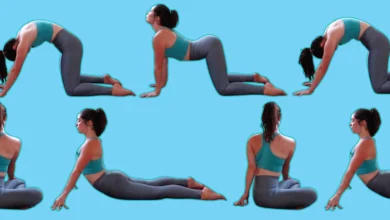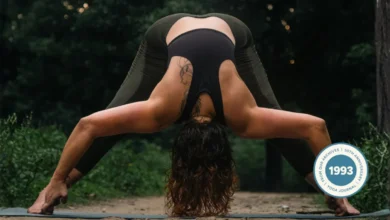
Overcoming the Gravity of Fear: A Comprehensive Journalistic Exploration of Yoga Inversions

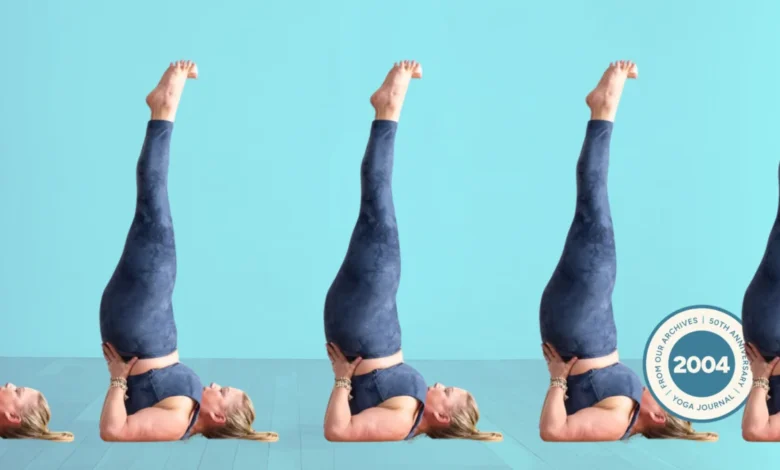
The human instinct for self-preservation typically rejects the notion of turning upside down. In daily life, bipedal locomotion keeps our feet planted firmly on the ground, making the prospect of inverting the body an inherently counterintuitive and often frightening endeavor. Yet, within the discipline of traditional asana practice, inversions such as Sirsasana (Headstand) and Sarvangasana (Shoulderstand) are regarded as foundational pillars rather than advanced acrobatics. Examining the mechanics, physiological implications, and psychological hurdles of these postures reveals why practitioners and instructors continue to advocate for their systematic integration into lifelong wellness regimens.
The Psychology of Inversion: Confronting Aversion and Embracing Perspective
The resistance to inversions is both universal and entirely natural. Because the central nervous system associates being inverted with a lack of control or potential danger, psychological apprehension often manifests long before a student attempts to lift their feet off the mat. Instructors frequently encounter practitioners who harbor deep-seated hesitations regarding head-and-neck-bearing postures.
However, overcoming this initial psychological barrier serves as a powerful catalyst for personal growth. Philosophically, inversions ask practitioners to literally and figuratively turn their worldview upside down. Psychologically, they challenge deep-seated survival biases, offering a controlled environment in which to confront and conquer fear. When an individual successfully navigates an inversion, the psychological payoff extends far beyond the yoga studio, translating into heightened self-efficacy and mental resilience in everyday life.
Anatomical Royalty: The King and Queen of Asanas
Within the taxonomy of yoga postures, Sirsasana and Sarvangasana occupy distinct positions of prominence, earning the moniker of the "king" and "queen" of asanas, respectively. Each pose elicits a unique physiological and energetic response, balancing opposing elements of the human constitution.
Sirsasana, the Headstand, is traditionally associated with the fire and air elements. It fosters qualities of action, alertness, focus, and dynamic creation. When executed with correct alignment, it stimulates circulation to the upper extremities of the body, invigorating the brain and engaging the upper back and shoulder girdle.
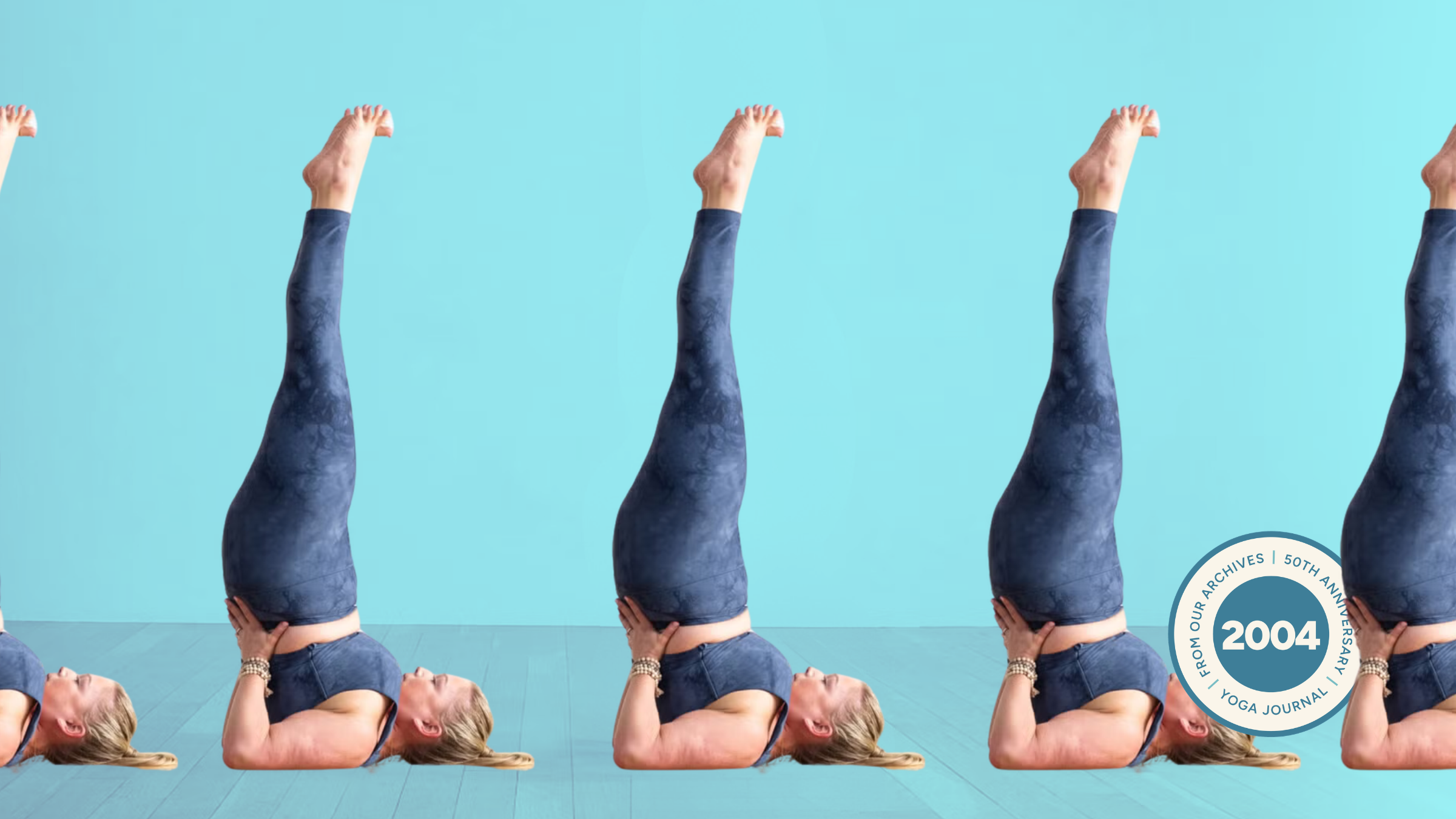
Conversely, Sarvangasana, the Shoulderstand, embodies the grounding stability of the earth and the reflective fluidity of water. It encourages the practitioner to pause, internalize, and cultivate a sense of deep calm and receptivity. Together, these two postures provide a balanced systemic stimulus that cannot be replicated by upright asanas alone.
Physiological Implications and Systemic Benefits
From a clinical and physiological standpoint, correctly executed inversions engage multiple biological systems. Proponents and practitioners point to several key impacts:
- Circulatory and Lymphatic Stimulation: Inversions alter standard gravitational pull, assisting venous return from the lower extremities back toward the heart and lungs, while encouraging the movement of lymphatic fluid.
- Endocrine and Immune Regulation: Traditional anatomical views hold that the pressure and positioning associated with inversions positively influence major endocrine glands, including the thyroid and parathyroid glands in Shoulderstand, thereby supporting metabolic and immune health.
- Decompression of the Spine: When weight is properly distributed—predominantly into the forearms and shoulders rather than the vulnerable cervical vertebrae—inversions can relieve vertical compression on the intervertebral discs, releasing chronic tension in the neck and back.
Despite these benefits, medical consensus and experienced instructors emphasize caution. Contraindications for inversions include acute neck injuries, uncontrolled hypertension, cardiovascular conditions, glaucoma or other serious eye problems, epilepsy, and menstruation. Mindfulness regarding individual physiological limits is paramount to preventing injury.
Step-by-Step Methodology: Preparing for Shoulderstand (Sarvangasana)
Mastering Sarvangasana requires meticulous attention to shoulder mobility and cervical spine safety. Prematurely placing the body into the full posture without adequate upper-body preparation places excessive, dangerous pressure on the seventh cervical vertebra (C7).
1. Upper Body and Chest Openers
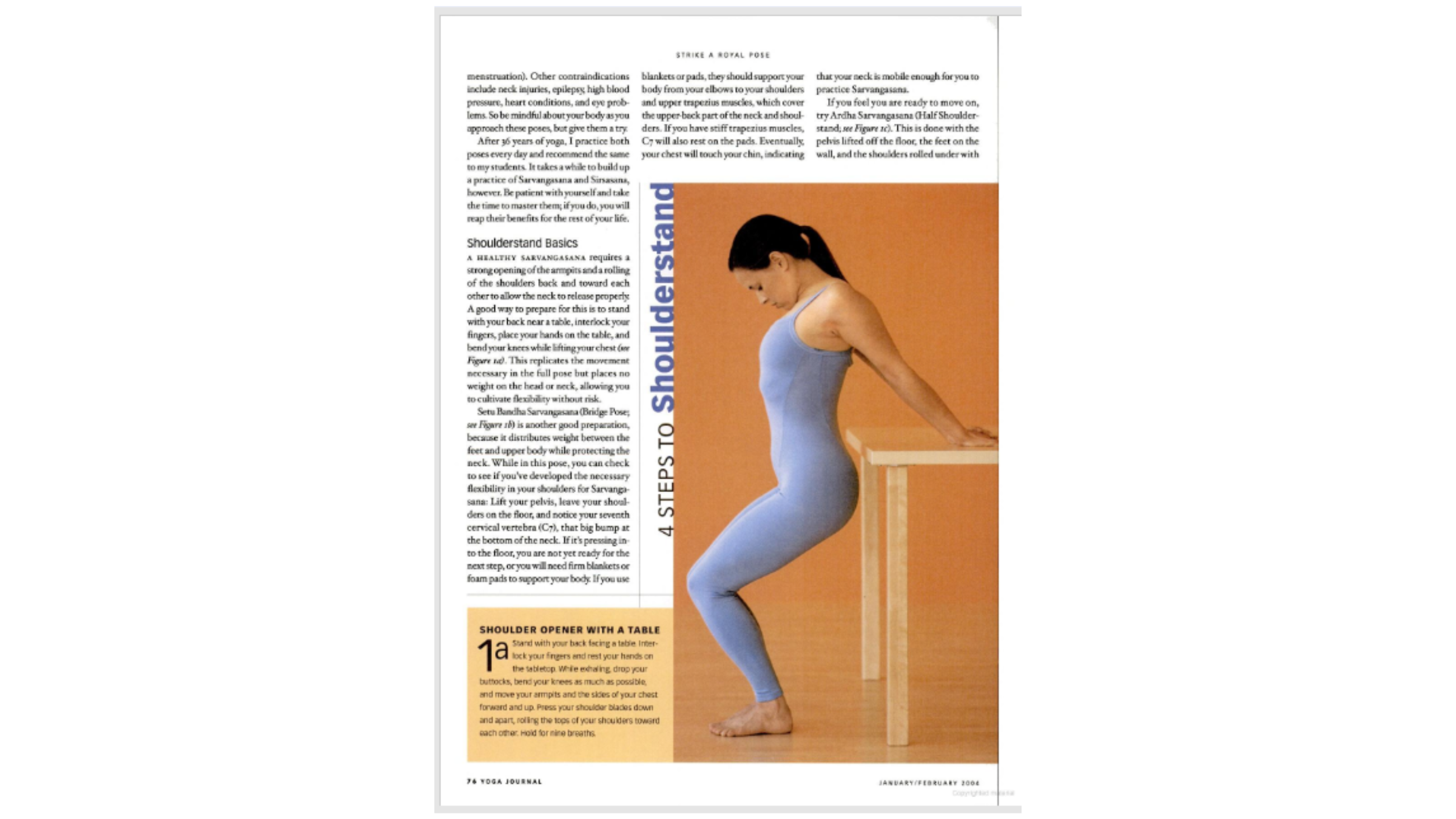
To cultivate the necessary opening in the armpits and rolling action of the shoulders, practitioners can utilize preparatory resistance exercises. Standing near a sturdy surface, interlocking the fingers behind the torso, and lifting the chest creates the requisite scapular retraction without placing any weight on the vulnerable neck structures.
2. Assessing Readiness with Bridge Pose (Setu Bandha Sarvangasana)
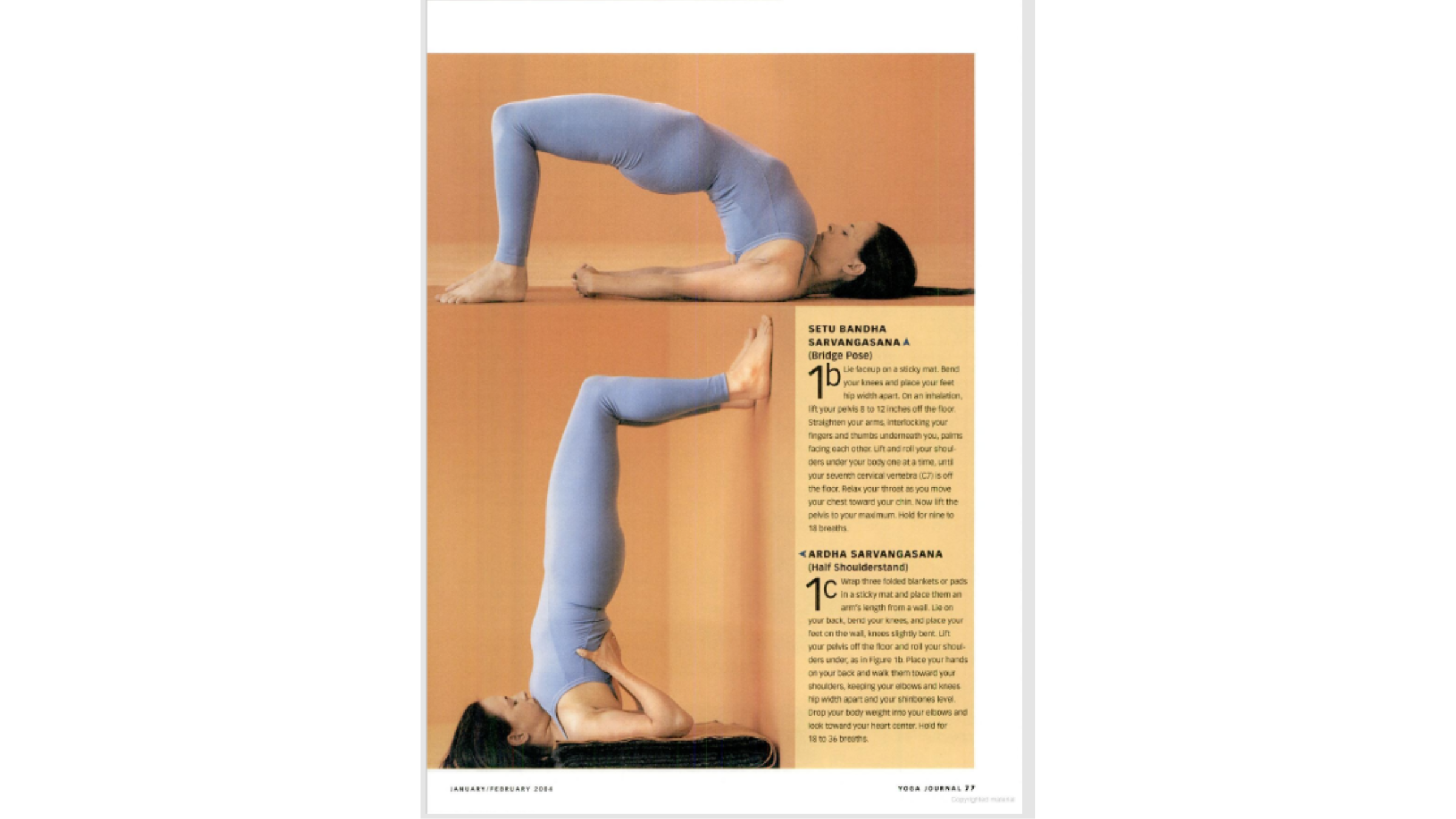
Bridge Pose acts as a diagnostic and preparatory tool. By lifting the pelvis while keeping the shoulders anchored to the floor, practitioners can evaluate the alignment and mobility of C7. If the large vertebra presses painfully into the floor without support, the shoulders lack the flexibility required for unassisted Shoulderstand.
3. Utilizing Supportive Props
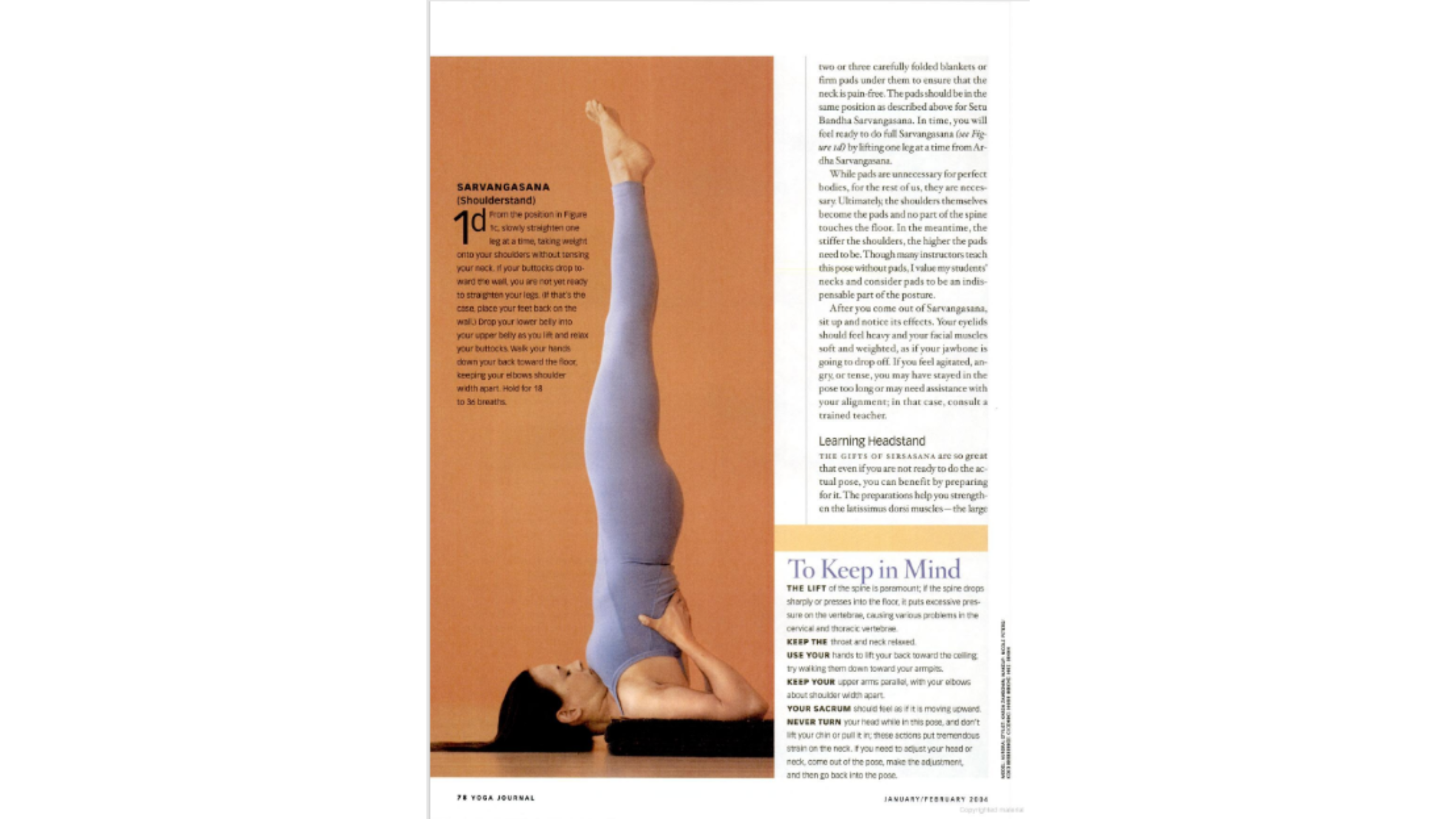
To bridge the gap between stiffness and safety, the use of firm blankets or foam pads placed beneath the shoulders, upper back, and upper trapezius muscles is strongly recommended. These props ensure that the neck remains free of direct compression, allowing the cervical spine to float slightly above the floor while the chest moves progressively closer to the chin.
4. Transitioning to Half and Full Shoulderstand
Once foundational strength and prop usage are established, practitioners advance to Ardha Sarvangasana (Half Shoulderstand) with the feet supported against a wall. Only after sustaining this alignment comfortably should one progress to full Sarvangasana, lifting one leg at a time and ensuring that the body weight rests squarely on the shoulders and upper arms rather than the neck. Post-practice assessment is crucial: a successful practice concludes with a sense of nervous system tranquility, indicated by heavy eyelids and a relaxed jaw, rather than agitation or tension.
Step-by-Step Methodology: Preparing for Headstand (Sirsasana)
Sirsasana requires an even greater degree of upper-body integrity, specifically targeting the latissimus dorsi and the stabilizing musculature of the shoulder blades. The primary objective in Headstand is to distribute approximately 90 percent of the body’s weight into the forearms, leaving only about 10 percent resting lightly on the head.
1. Upper Body Awareness in Downward-Facing Dog
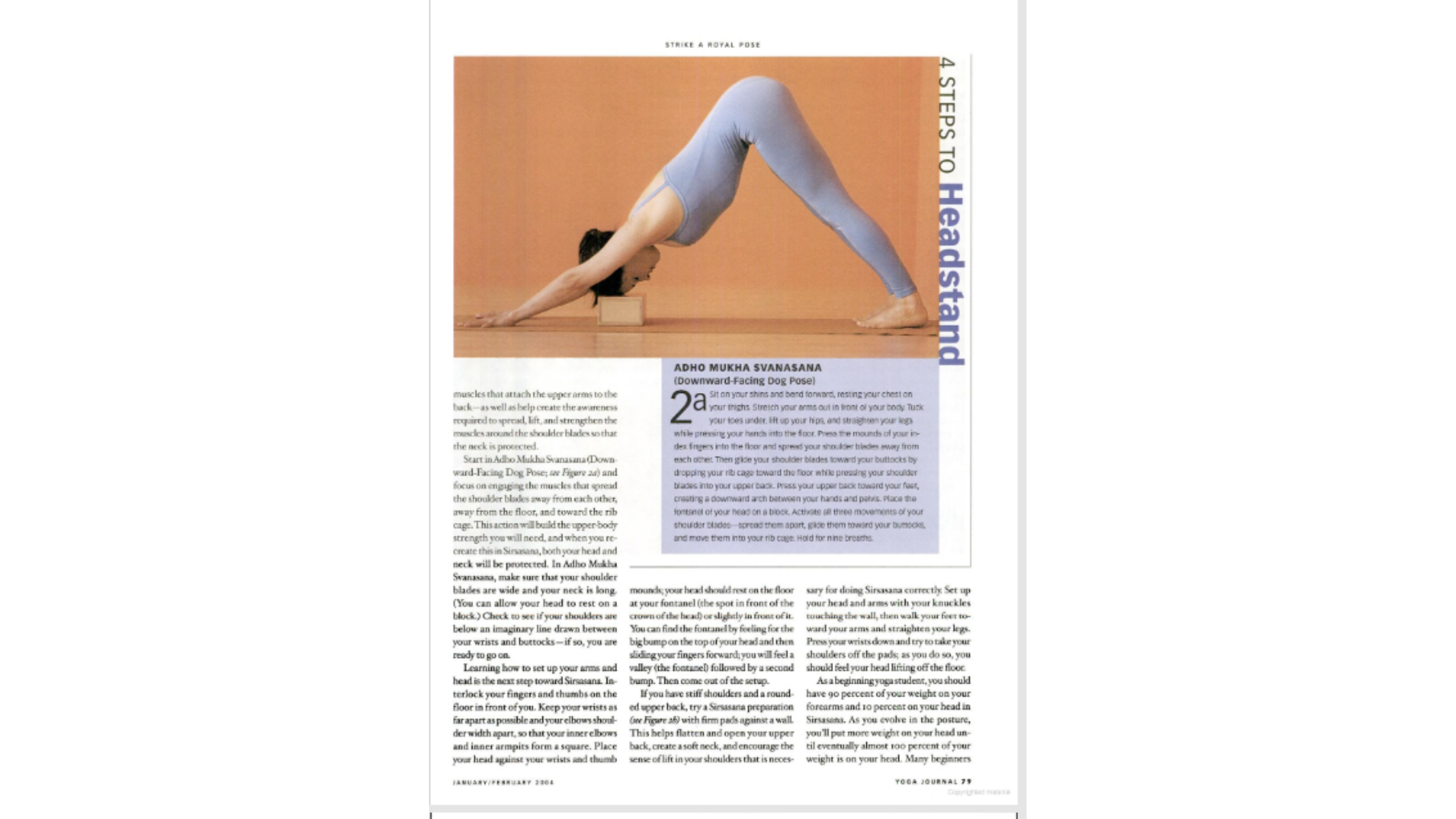
Adho Mukha Svanasana (Downward-Facing Dog Pose) serves as the foundational laboratory for Headstand preparation. Practitioners must focus on engaging the serratus anterior and shoulder girdle muscles, spreading the shoulder blades wide away from the floor and the spine. This action builds the upper-body scaffolding necessary to protect the neck during Sirsasana.
2. Arm and Head Foundation Setup
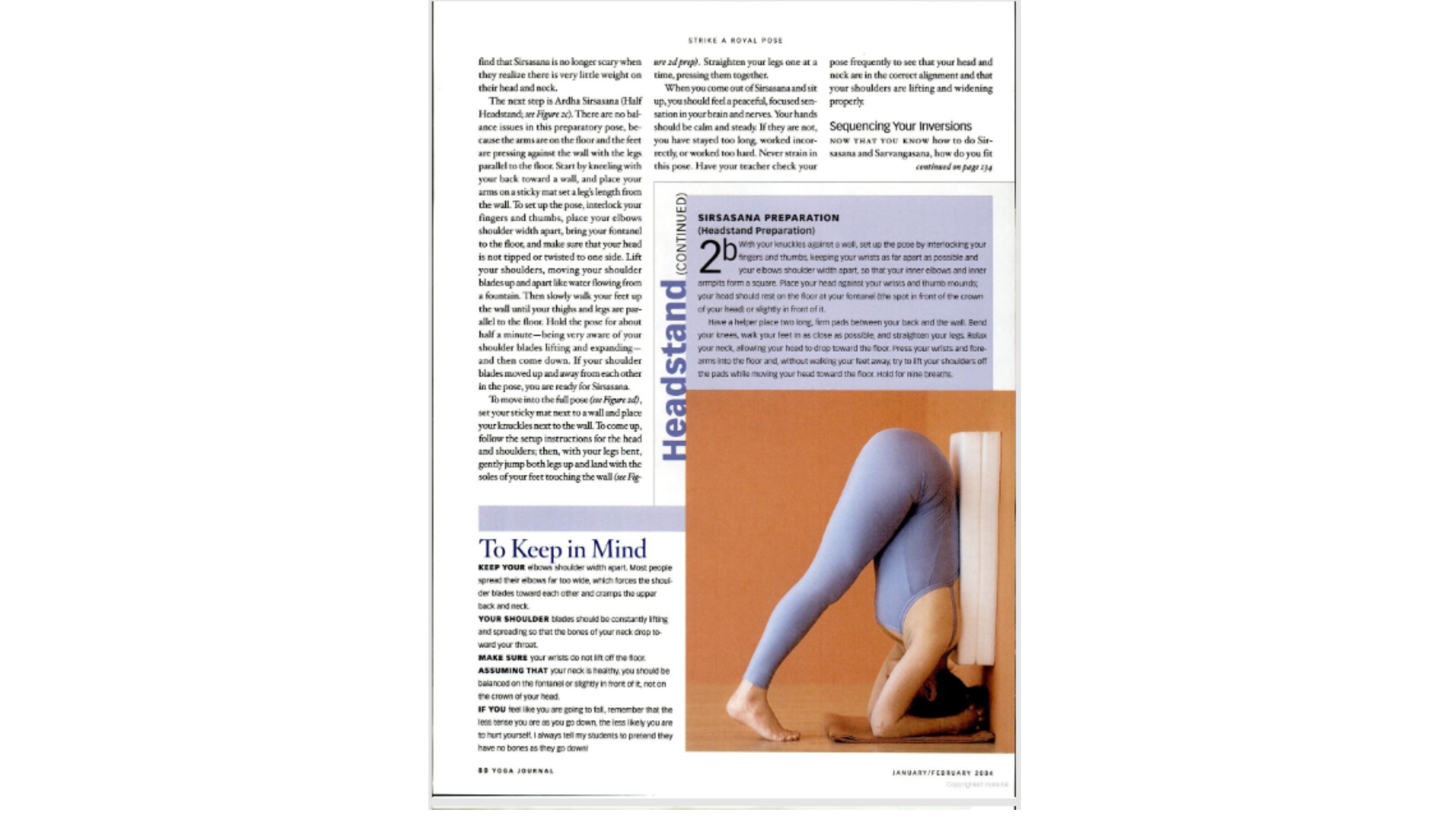
The mechanics of the base require precise geometric placement. Fingers are interlocked, elbows are measured precisely to shoulder-width apart, and forearms form a stable square. The head rests gently on the floor at or slightly forward of the fontanel—the soft spot located just forward of the crown of the head.
3. Wall-Supported Preparation (Ardha Sirsasana)
For students with tight shoulders or rounded upper backs, utilizing a wall for Half Headstand provides essential feedback. By placing the knuckles against the baseboard and walking the feet up the wall until the legs are parallel to the floor, the practitioner learns to press actively down through the wrists and lift the shoulders away from the floor, mitigating fear and correcting postural imbalances.
4. Elevation into Full Sirsasana
When transitioning into the full expression of the pose, practitioners maintain the established arm and shoulder framework, using a controlled, gentle hop from a bent-leg position to bring the body into vertical alignment. Continuous oversight by a qualified instructor is advised to ensure that the cervical spine remains uncompressed and the scapulae continue their upward and outward lift.
Broader Impact and Implications for Lifelong Wellness
The integration of inversions into a physical discipline like yoga offers a microcosm of how individuals can approach systemic challenges across the lifespan. By systematically breaking down complex, intimidating movements into manageable, anatomically sound progressions, practitioners learn to replace anxiety with informed physical awareness.
Whether engaged by a lifelong practitioner or an octogenarian stepping onto the mat for the first time, the deliberate practice of turning upside down fosters neuroplasticity, physical adaptability, and emotional resilience. Ultimately, the true value of Sirsasana and Sarvangasana lies not merely in the physiological stimulation they provide, but in their capacity to teach practitioners how to safely navigate vulnerability, dismantle long-held fears, and view the world from an entirely renewed perspective.