The 2026 Olympia Weekend Introduces the Fit Model Division as the Newest Standard in Physique Competition

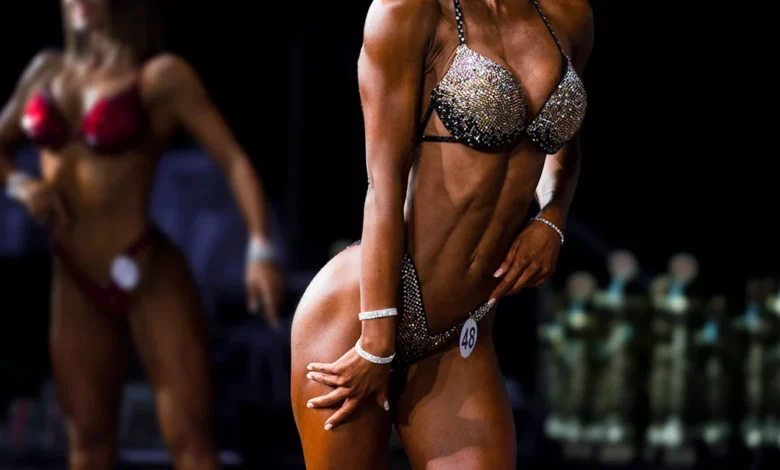
The 2026 Olympia Weekend in Las Vegas marks a significant milestone in the history of professional physique sports, as the International Federation of Bodybuilding and Fitness (IFBB) Pro League officially introduces the Fit Model division to its premier event. Held from September 24–27, this year’s competition includes the inaugural crowning of an Olympia Fit Model champion, an addition that reflects the federation’s ongoing efforts to diversify the athletic landscape of the sport. While the Olympia has evolved continuously since its inception in 1965, the introduction of Fit Model represents a deliberate strategic pivot toward a leaner, more accessible aesthetic, distancing itself from the trend of increasing muscularity that has defined other divisions over the past two decades.
A Chronology of Expansion
The evolution of the Olympia stage has been a decades-long process of fragmentation and specialization. When Larry Scott claimed the first title in 1965, the competition focused solely on open-class men’s bodybuilding. As the sport grew, the federation responded to shifting fitness trends and the desire for more diverse aesthetic standards. The inclusion of the Fit Model division brings the total number of professional divisions at the Olympia to 12: Open, 212, Classic, Men’s Physique, Bikini, Figure, Wellness, Fitness, Women’s Physique, Women’s Bodybuilding, Wheelchair, and now, Fit Model.
The developmental timeline of this new category began at the amateur level, where the National Physique Committee (NPC) introduced Fit Model in 2025. Following a successful trial period that tested the viability of the division among amateur athletes, the IFBB Pro League sanctioned professional contests in 2026. Its rapid integration into the Olympia qualification system signals a high level of institutional confidence in the category’s appeal to both competitors and the fitness industry at large.
Redefining the Judging Criteria
The technical requirements for Fit Model are distinct from those of the Bikini or Figure divisions, focusing on a balance that emphasizes an athletic, yet softer, physical appearance. According to the official IFBB Pro League guidelines, judges are instructed to prioritize a "fit" look that mirrors the standards of mainstream health and wellness media.
Key judging criteria include:
- Muscularity: Competitors must possess enough muscle mass to create a shaped, athletic silhouette, but they are explicitly required to have less muscle development than Bikini competitors.
- Conditioning: There is a specific prohibition against extreme leanness. The guidelines demand no visible glute-ham tie-ins and no hamstring separation.
- Proportions: The rules mandate less development in the legs, glutes, arms, and delts. While slight roundness in the deltoids is permissible, capped or overly defined muscles are considered a deduction.
- Midsection: The abdomen should appear fit and toned but must lack the high level of detail or "shredded" appearance seen in other physique classes.
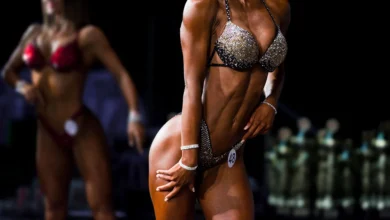
The federation has utilized the 2015 physique of three-time Bikini Olympia champion Ashley Kaltwasser as a visual benchmark for the desired Fit Model look. By referencing a past version of a high-level competitor, the IFBB is effectively setting a "ceiling" on the level of conditioning, aiming to capture a specific aesthetic that has arguably drifted toward higher intensity in the current Bikini division.
The Dynamics of Division Growth
The history of competitive bodybuilding suggests a recurring pattern: as a division gains popularity, the competitive field naturally pushes the limits of muscle mass and conditioning. This phenomenon, often referred to as "division creep," has been observed in every category from Women’s Bodybuilding to Classic Physique.
Classic Physique, which was introduced to provide an alternative to the massive proportions of the Open class, serves as a prime example of this trend. Today’s top-tier Classic competitors are significantly larger and more conditioned than the athletes who competed in the early years of the division. By introducing Fit Model, the IFBB is attempting to "reset the clock." The intent is to provide a competitive home for athletes who train with intensity but prefer an aesthetic that does not require the rigorous, contest-prep-heavy conditioning—such as extremely low body fat percentages—that characterizes the more advanced physique divisions.
Presentation and Athletic Standards
The presentation format for Fit Model is notably streamlined compared to the traditional "mandatory pose" routines found in Bodybuilding or Women’s Physique. Competitors are evaluated through a front and back pose, emphasizing overall symmetry, balance, and poise.
A departure from the high-glitter aesthetic of the Bikini division, the rules for Fit Model require plain-colored suits. This choice is intended to shift the focus away from the ornate, Swarovski-encrusted costumes that have become standard in professional Bikini and toward the structural integrity of the physique itself. Combined with the requirement of wearing heels, the presentation emphasizes an aesthetic that mirrors the expectations of the fashion and commercial modeling industries.
Industry Implications and Future Outlook
The introduction of Fit Model has sparked a necessary conversation regarding the accessibility of professional physique competition. Critics of the current landscape often point to the extreme nature of contest prep—which involves months of caloric restriction and intense cardiovascular training—as a barrier to entry for many otherwise fit women. Proponents argue that the Fit Model division serves as a bridge, allowing women to showcase a high level of fitness without the physical toll of extreme, competition-grade conditioning.
However, the primary challenge for the IFBB Pro League will be maintaining the integrity of the division’s standards. In the history of bodybuilding, the "standard" is often defined by the winner of the first few major contests. If the judging panel rewards competitors who lean toward a slightly harder or more muscular look during this inaugural Olympia, the entire field will inevitably adjust to match that winner in subsequent years.
If the division is to remain distinct from Bikini, the judges must adhere strictly to the guidelines that prioritize a softer, less-defined look. Failure to enforce these criteria could lead to a scenario where Fit Model eventually mirrors the evolution of the categories it was meant to supplement. This creates a recursive loop: if Fit Model eventually becomes too muscular, the federation may again be pressured to introduce a new, even lighter division to fill the void, a trend that underscores the constant tension between athletic progression and aesthetic preservation.
As the 2026 Olympia concludes, the industry will look to the inaugural winner not just as an athlete, but as the archetype for the future of the division. The judges’ decision in Las Vegas will serve as a precedent that will dictate the training and preparation strategies for thousands of amateur athletes looking to join the professional ranks. Whether the division succeeds in maintaining its identity as a "not-quite-bodybuilding" showcase depends entirely on the consistency of the judging standards and the willingness of the federation to hold the line against the inevitable push toward increased muscularity.
Ultimately, the addition of Fit Model is a testament to the Olympia’s status as a global platform that is sensitive to broader fitness trends. By formalizing this aesthetic, the IFBB is expanding its reach, inviting a new demographic of athletes to compete on the world’s most prestigious stage, and ensuring that the Olympia remains a central hub for the global fitness community for years to come.