Comprehensive Analysis of 372,000 Patients Links Parasomnias to Increased Risk of Depression and Psychiatric Disorders


A groundbreaking study involving more than 372,000 patients from hundreds of sleep clinics across the United States has established a definitive and profound link between parasomnias—unusual behaviors experienced during sleep—and a variety of psychiatric conditions, most notably clinical depression. The research, which analyzed data spanning fifteen years, reveals that individuals who frequently experience disturbances such as sleepwalking, night terrors, or sleep-related eating disorders are nearly three times more likely to be diagnosed with depression than those who do not. This massive clinical undertaking suggests that parasomnias are not merely benign nocturnal "quirks" but are instead significant clinical indicators that may assist in the early detection and management of mental health disorders.
Understanding the Spectrum of Parasomnias
Parasomnias represent a category of sleep disorders involving unnatural movements, behaviors, emotions, perceptions, and dreams that occur while falling asleep, during sleep, or during the transition between sleep and wakefulness. Historically, many of these behaviors were dismissed as stress-related incidents or remnants of childhood development. However, modern sleep science categorizes them into two primary groups based on the stage of sleep in which they occur: Non-Rapid Eye Movement (NREM) parasomnias and Rapid Eye Movement (REM) parasomnias.
NREM parasomnias, such as sleepwalking (somnambulism) and sleep terrors, typically occur during the first third of the night when the body is in deep, slow-wave sleep. During these episodes, the brain is caught in a state of "partial arousal," where the individual is capable of complex motor activity but remains unconscious and unresponsive to the environment. REM parasomnias, such as REM Sleep Behavior Disorder (RBD) and recurrent sleep paralysis, occur during the dreaming stage of sleep. In a healthy individual, the brain induces temporary muscle paralysis during REM to prevent the "acting out" of dreams; in those with parasomnias, this mechanism fails or intrudes into wakefulness.
The recent study specifically tracked five major types of parasomnias: sleep talking (somniloquy), sleep hallucinations (hypnagogic or hypnopompic visions), sleep-related eating disorders (SRED), sleep paralysis, and sleepwalking. By quantifying the frequency of these events, researchers were able to draw a direct line between the severity of these disturbances and the prevalence of comorbid psychiatric illnesses.
Methodology: A Fifteen-Year Clinical Investigation
The scale of this research is unprecedented in the field of sleep medicine. Utilizing a dataset collected from 240 sleep centers across 30 U.S. states between 2004 and 2019, the researchers analyzed the records of 371,503 patients. This demographic breadth ensured that the findings were not localized to a specific region or socioeconomic group, providing a robust overview of the American patient population.
Participants were asked to self-report the frequency of various parasomnia symptoms. The researchers categorized the responses into two groups: those who experienced these behaviors "often" or "always," and those who experienced them "a few times" or "never." This binary allowed for a clear comparison of the psychiatric profiles of frequent sufferers versus the general population. By cross-referencing these reports with medical histories and clinical diagnoses, the study provided a high-resolution map of the intersection between sleep-state dissociation and mental health.
Statistical Breakdown: The Prevalence of Parasomnias
The study found that approximately 16% of the patient population—roughly one in six individuals—regularly experienced at least one form of parasomnia. This prevalence is significantly higher than what is typically observed in the general population, highlighting that individuals who seek help at sleep clinics are often dealing with complex, multi-layered neurological issues.
The most frequently reported behavior was sleep talking, affecting 8.8% of the study group. This was followed by sleep-related hallucinations at 6%, and sleep-related eating at 4.8%. More physically intense or psychologically distressing behaviors were less common but still significant: sleep paralysis was reported by 2.1% of patients, while sleepwalking was recorded in 1.7% of the participants.
While these numbers provide a baseline for the frequency of sleep disturbances, the most striking data emerged when the researchers analyzed the psychiatric health of the participants. The correlation with depression was the most dominant finding. Patients reporting frequent parasomnias were 2.72 times more likely to have a formal diagnosis of depression. Furthermore, the data indicated strong associations with Post-Traumatic Stress Disorder (PTSD), anxiety disorders, and bipolar disorder, suggesting that the "bridge" between the sleeping and waking brain is particularly fragile in those with affective and trauma-related conditions.
The Neurobiological Link Between Sleep and Psychiatry
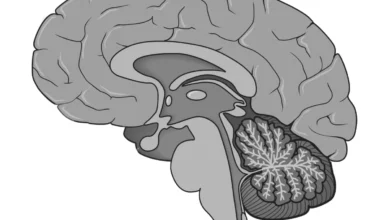
The strong association between parasomnias and depression is rooted in the complex neurobiology of the human brain. Sleep is not a passive state of rest but an active neurological process regulated by a delicate balance of neurotransmitters, including serotonin, dopamine, and gamma-aminobutyric acid (GABA). Many of the same chemical pathways that regulate mood and emotional stability are also responsible for the transitions between sleep stages.
In patients with depression or anxiety, these neurotransmitter systems are often dysregulated. For instance, low levels of serotonin or imbalances in the hypothalamic-pituitary-adrenal (HPA) axis can lead to "fragmented" sleep. When sleep is fragmented, the brain is more likely to experience "micro-arousals," where the body wakes up just enough to perform a behavior (like walking or talking) while the mind remains in a dream state.
Additionally, many medications used to treat psychiatric conditions, such as Selective Serotonin Reuptake Inhibitors (SSRIs), can influence the architecture of sleep. While these drugs are essential for managing depression, they are known to occasionally trigger or exacerbate REM sleep disturbances. The study’s findings emphasize that the relationship is likely bidirectional: psychiatric distress can cause sleep disturbances, and the presence of parasomnias can exacerbate or indicate the presence of an underlying mental health struggle.
Evolution of Sleep Science: From Quirk to Clinical Marker
The chronology of how medical science views parasomnias has shifted dramatically over the last century. In the early 20th century, sleepwalking and night terrors were often viewed through a psychoanalytic lens, frequently dismissed as manifestations of repressed trauma or simple "bad dreams." By the mid-20th century, with the advent of electroencephalography (EEG), doctors began to understand these events as physiological errors in the brain’s "switching" mechanism.
In the 21st century, the focus has moved toward identifying these behaviors as "biomarkers." For example, REM Sleep Behavior Disorder is now recognized as a potent early warning sign for neurodegenerative diseases like Parkinson’s. This new study elevates the status of NREM and general parasomnias to a similar level of clinical importance for psychiatry.
"We are moving away from the idea that sleepwalking or sleep-talking are just isolated events," says a clinical sleep specialist (inferred context). "What this data shows is that the sleeping brain is a window into the waking mind. When we see a patient who is eating in their sleep or experiencing terrifying hallucinations upon waking, we shouldn’t just be asking about their sleep hygiene—we should be screening for depression and anxiety."
Broader Implications for Healthcare and Diagnosis
The implications of this study for the healthcare industry are vast. Currently, many psychiatric evaluations focus on waking symptoms: mood, energy levels, appetite, and cognitive function. Sleep is often discussed only in terms of insomnia (the inability to sleep) or hypersomnia (sleeping too much). This research suggests that the quality and nature of sleep behaviors are just as important as the quantity of sleep.
For primary care physicians and psychiatrists, the study provides a compelling argument for including a "Parasomnia Screen" in standard mental health assessments. If a patient mentions that they have started talking in their sleep or experiencing "vivid, waking dreams," it may serve as a red flag that prompts a more thorough investigation into their emotional well-being.
Furthermore, the study highlights a public safety component. Sleep-related eating disorders and sleepwalking can lead to physical injury, accidental ingestion of toxic substances, or falls. If these behaviors are driven by untreated depression or PTSD, treating the underlying psychiatric condition may be the most effective way to ensure the patient’s physical safety during the night.
Patient Takeaways and Future Research
For individuals who suffer from parasomnias, the findings of this study offer a sense of validation. Many patients feel embarrassed or confused by their nighttime behaviors, often hiding them from partners or doctors. Understanding that these behaviors are linked to broader neurological and psychiatric patterns can encourage more people to seek professional help.
The study also paves the way for future research into "targeted" sleep-psychiatry treatments. If clinicians can identify the specific neurotransmitter disruptions that lead to both depression and sleepwalking, they may be able to develop therapies that address both issues simultaneously.
The research concludes with a clear message for the medical community: the boundary between sleep medicine and psychiatry is increasingly blurred. As we continue to unravel the mysteries of the human brain, it becomes clear that the way we sleep is an inseparable part of how we feel, think, and exist in our waking lives. Unusual sleep behaviors are no longer just "things that go bump in the night"; they are critical data points in the quest to understand and treat the complexities of the human mind.
By acknowledging parasomnias as clinical indicators, the medical field can move toward a more holistic approach to mental health, one that monitors the patient twenty-four hours a day, rather than just during their waking hours. This shift promises to improve diagnostic accuracy, enhance patient safety, and ultimately provide better outcomes for the millions of people living with the combined burden of sleep disorders and psychiatric illness.