Saudi pipeline that bypasses Hormuz comes under attack, raising stakes for oil prices

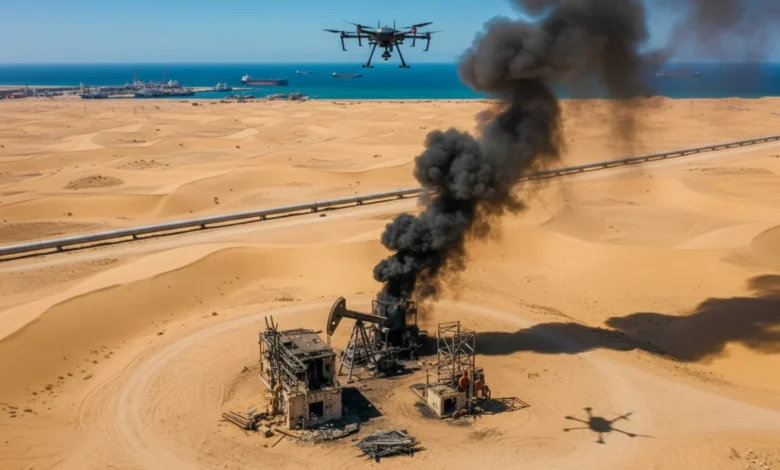
The delicate architecture of global energy security suffered a fresh tremor on Monday as Saudi Arabia’s critical East-West pipeline, a vital artery designed to bypass the volatile Strait of Hormuz, was targeted in a localized attack near Medina. While the Saudi Ministry of Energy reported that the incident resulted in only a "limited fire" and did not disrupt the flow of crude oil, the strike underscores a precarious shift in regional hostilities. This latest act of sabotage occurs against the backdrop of an unraveling truce and a broader, multi-front conflict that has effectively transformed Saudi Arabia’s strategic infrastructure into a high-stakes theater of war.
The East-West pipeline, or Petroline, spans approximately 1,200 kilometers, connecting the oil-rich Eastern Province to the Red Sea port of Yanbu. Historically, it served as a contingency measure for the kingdom. However, in the current geopolitical climate, where the U.S.-Israeli conflict with Iran has effectively shuttered the Strait of Hormuz—the world’s most significant oil chokepoint—this pipeline has evolved from a secondary option into a primary lifeline. The targeting of this facility is not merely an act of tactical harassment; it is an attempt to sever the kingdom’s final remaining tether to global energy markets.
A Chronology of Escalation: From Truce to Tension
The current instability finds its roots in the collapse of the fragile ceasefire between the Saudi-led coalition and the Houthi movement in July. Following the dissolution of this agreement, the frequency and precision of Houthi strikes have accelerated.
In September, the vulnerability of the East-West pipeline was laid bare when a drone strike, attributed to Iraq-based militias aligned with Tehran, forced a temporary cessation of operations. That incident served as a precursor to the current atmosphere of persistent aerial threats. Sunday’s attack on an Aramco tower in Riyadh, which resulted in structural shrapnel damage, preceded Monday’s pipeline strike by less than 24 hours. The subsequent issuance of safety warnings to Riyadh residents—advising them to shelter indoors and stay away from windows—marked a rare moment of public alarm in the Saudi capital, reflecting the gravity with which authorities are treating these incursions.
The operational rhythm of the conflict has moved into a near-daily cadence. Between early October and the present, the Saudi-led coalition has reported a staggering volume of hostile activity. King Khalid International Airport in Riyadh has been the target of approximately 20 missile and drone strikes within a ten-day window. These attacks have resulted in significant human cost, with estimates suggesting at least 17 fatalities and over 300 injuries, complicating the humanitarian situation and drawing the region deeper into a cycle of retaliation.
The Strategic Significance of the East-West Pipeline
To understand the economic anxiety currently gripping energy markets, one must look at the math of global transit. The Strait of Hormuz, a narrow waterway between Oman and Iran, typically handles approximately 20% of the world’s total oil consumption. With that maritime route under blockade, the East-West pipeline is the only viable path for the kingdom to export its daily production of roughly 10 million barrels.
The pipeline’s capacity, which exceeds 5 million barrels per day, is essential for maintaining global price stability. If this infrastructure were to sustain a catastrophic, long-term breach, the resulting supply shock would be immediate and severe. International energy markets, already jittery due to the broader Middle East conflict, are pricing in a "risk premium" that reflects the increasing difficulty of protecting fixed assets against asymmetric warfare. Drone and missile technology, which can be deployed with minimal infrastructure, has fundamentally changed the cost-benefit analysis of defending thousands of miles of desert pipeline.
Official Responses and Tactical Retaliation
The Saudi-led coalition has responded with a policy of targeted kinetic retaliation. On Monday, following the pipeline incident, coalition forces announced the destruction of three key facilities identified as centers for the assembly of missile components and the storage of propellant. These strikes, concentrated in and around the Houthi-held capital of Sanaa, represent a concerted effort to degrade the enemy’s logistical chain.
Major-General Turki al-Maliki, the spokesman for the Saudi-led coalition, has been the primary voice for the kingdom’s defense posture. Addressing the media on Tuesday, he confirmed the interception of two additional missiles aimed at Riyadh and a third targeting the southern provinces. These interceptions, while successful, highlight the sheer volume of ordinance being directed at the kingdom.
Conversely, the Houthi media apparatus, led by Almasirah television, has framed the coalition’s strikes as indiscriminate, citing the death of 44 individuals in a Sanaa province village over the weekend—a toll they claim includes over 20 children. This propaganda war serves to deepen the entrenchment of both sides, making a return to diplomatic negotiations increasingly remote.
Domestic Disruption and Public Sentiment
The impact of the conflict has moved beyond the halls of government and into the daily lives of Saudi citizens. The decision to revert to remote learning for schools in Riyadh on Monday served as a stark reminder of the "precautionary measures" now required for civil society. For families, the transition from in-person education to digital instruction—only days after the previous phase of closures ended—is a source of growing frustration and anxiety.
This domestic instability is a significant concern for the Saudi leadership. Maintaining a sense of normalcy in the capital is crucial for the kingdom’s internal stability. By disrupting the education system and forcing residents to remain indoors, the Houthi strategy appears aimed at eroding public confidence in the state’s ability to ensure security.
Global Economic Implications and Future Outlook
The broader economic implications of the conflict extend far beyond the borders of Yemen and Saudi Arabia. For American consumers, the current squeeze on oil supply translates directly into volatility at the fuel pump. As the primary, secondary, and tertiary export routes are challenged, the global market is forced to recalibrate, leading to unpredictable price swings that exacerbate inflationary pressures.
Economists are closely monitoring the situation to determine whether this represents a temporary spike or a long-term structural shift. If the conflict evolves into a war of attrition where key energy infrastructure is consistently targeted, the global economy may face a prolonged period of energy scarcity.
The political context is equally complex. While the United States and its allies have sought to distance themselves from the kinetic aspects of the conflict, the reality of the energy market ensures that Washington remains deeply invested in the outcome. With the U.S.-led efforts against Iranian influence having effectively neutralized the Strait of Hormuz as an export route, the reliance on the Saudi pipeline has created a single point of failure.
In the coming weeks, the focus will remain on the efficacy of Saudi air defense systems and the coalition’s ability to neutralize Houthi supply chains. The conflict has reached a stage where the traditional rules of engagement are no longer applicable. The pipeline attack near Medina is a clear indicator that the geography of the war has expanded, and the threshold for disruption has lowered. As international observers await the next move, the global energy market remains in a state of high alert, braced for the possibility that the "back door" to oil exports may not remain open indefinitely.
Ultimately, the events of the past few days serve as a grim testament to the vulnerability of modern energy infrastructure. The nexus of advanced drone warfare and long-standing regional grievances has created a landscape where the supply of essential commodities is perpetually held hostage to the next successful strike. For Saudi Arabia, the task is no longer just about projecting power in Yemen; it is about the existential necessity of shielding its energy arteries from a persistent and technologically adept adversary.