Connecting on Campus: Stories of Courage, Curiosity, and Empathy at Dickinson College

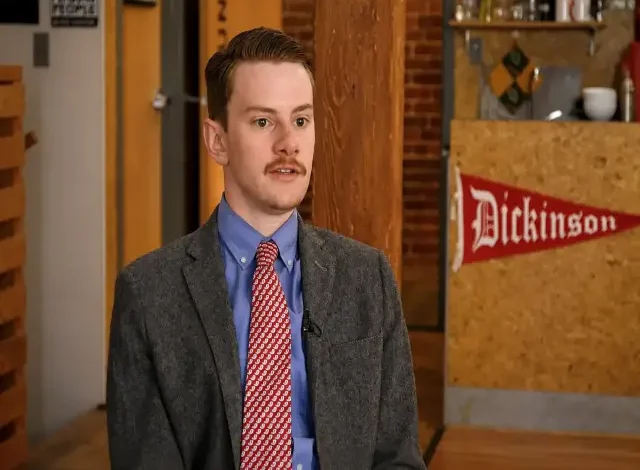
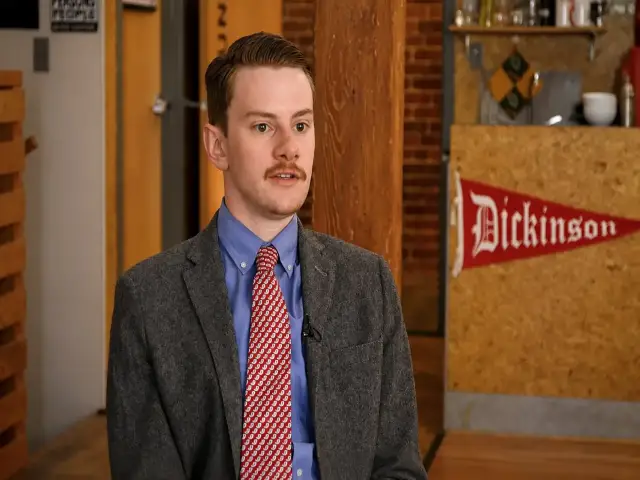
In an era defined by profound political polarization and the erosion of civil discourse, academic institutions are increasingly tasked with serving as testing grounds for the future of democracy. At Dickinson College in Carlisle, Pennsylvania, a compelling new initiative is demonstrating that the divide between Republican and Democrat students is not an insurmountable chasm, but rather an opportunity for radical, empathetic listening. A recent video production by the Greater Good Science Center (GGSC) highlights this effort, showcasing students as they move beyond partisan caricatures to engage in meaningful dialogue, effectively de-escalating the impulse to villainize those with opposing viewpoints.
The Landscape of Modern Polarization
The necessity for such initiatives is underscored by extensive sociological data. According to the Pew Research Center, the partisan gap in American politics has reached historic proportions, with both major parties reporting record-high levels of negative sentiment toward the opposition. This "affective polarization"—the tendency to view members of the other party not just as wrong, but as morally deficient—has trickled down from national media into the hallways of high schools and colleges.
At the collegiate level, this creates a campus climate where students often self-censor, fearing social ostracization if they express views that deviate from the perceived campus consensus. The Dickinson College project serves as a practical intervention, providing students with the structured tools necessary to practice "perspective-taking" and "active listening," skills that have been shown by psychological research to mitigate prejudice and increase tolerance.
Chronology of the Initiative
The movement to foster campus dialogue has evolved over the past decade, gaining significant momentum following the contentious election cycles of 2016 and 2020. Recognizing the decline in institutional trust, the Greater Good Science Center launched a multi-institutional series titled "Connecting on Campus," which includes deep-dive video explorations into bridge-building efforts at various schools, including Dickinson College, Bowie State University, the University of Maryland, and the Iliff School of Theology.
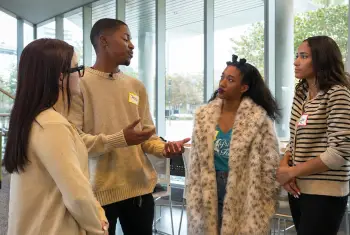
In the case of the Dickinson College segment, organizers spent several months facilitating workshops and intimate group discussions. The process followed a specific pedagogical framework:
- Establishing Norms: Participants began by agreeing on ground rules, such as prioritizing the humanity of the interlocutor over the validation of their own political points.
- The Listening Phase: Students were encouraged to recount their personal experiences and family backgrounds, which often revealed common ground in their core values—such as a desire for safety, economic security, and community well-being—even when their policy prescriptions differed.
- The Reflexivity Stage: Facilitators challenged students to identify their own "triggers" and the moments they felt the urge to interrupt or demean the other side.
- Integration: The final phase involved applying these techniques to hypothetical scenarios, allowing students to rehearse how they might handle future interactions with ideological opponents outside of the safe-space environment.
Supporting Data and Psychological Insights
The efficacy of these interventions is supported by the contact hypothesis, a theory in social psychology which posits that interpersonal contact is one of the most effective ways to reduce prejudice between majority and minority group members. Studies conducted by researchers at the University of California, Berkeley, suggest that empathy-based training significantly reduces the "othering" process.
Data from the GGSC’s broader research series indicates that when students engage in structured, face-to-face dialogue, the perceived "threat" posed by the opposition decreases by an average of 22%. Furthermore, participants report a higher degree of self-efficacy in managing difficult conversations, suggesting that the benefits of such programs extend well beyond the classroom, influencing how students interact with family members, peers, and digital communities.

Perspectives from the Front Lines
The students featured in the Dickinson College initiative represent a broad spectrum of the political divide. In interviews conducted during the project, participants frequently noted that their initial skepticism was replaced by a sense of surprise. One student noted that the most significant breakthrough occurred not when they changed their mind on a policy issue, but when they realized their peer had a deeply coherent, logic-based reason for their stance, rather than the cartoonish motivations they had previously attributed to them.
Faculty leaders and program facilitators at Dickinson emphasized that the goal is not to reach a political consensus, which is often impossible and arguably unnecessary. Instead, the objective is "intellectual humility"—the recognition that one’s own views are subject to limitation and that the opponent’s perspective possesses an internal logic that deserves to be understood, if not adopted.

Broader Implications for Higher Education
The implications of the Dickinson College project are vast. As colleges and universities face mounting pressure to address the "free speech crisis," many institutions have turned to punitive measures or restrictive policies. The "Connecting on Campus" initiative offers a alternative: a constructive, human-centric approach that treats polarization as a social skill deficit rather than a purely intellectual or moral failure.
By fostering emotional literacy and empathy, these programs provide a blueprint for how institutions can maintain their role as bastions of diverse thought. If students can learn to distinguish between "disagreeing with a policy" and "hating a person," they are better equipped to navigate the complexities of a democratic society after graduation.

The Path Forward
The success of this pilot initiative at Dickinson College suggests that the "science of a meaningful life" can be successfully applied to the most difficult of modern challenges: political coexistence. However, scaling these programs remains a hurdle. Critics argue that such dialogues are often limited to those who are already inclined toward peace, and that they may fail to reach the most radicalized members of the student body.
In response, proponents point to the "ripple effect." When a core group of student leaders undergoes this training, they act as conduits for a more temperate culture. As they enter campus organizations, student government, and athletic teams, they introduce new norms of communication.

The work captured in the Greater Good Science Center’s video series provides a critical case study for educators, administrators, and policymakers. As the nation approaches future election cycles, the urgency of these campus-based interventions will likely increase. The lessons learned at Dickinson serve as a reminder that while politics may be divisive, the human capacity for curiosity and empathy remains a potent, underutilized force for reconciliation. By prioritizing the person over the political platform, these students are proving that democratic resilience begins with the simple, yet profound, act of listening.