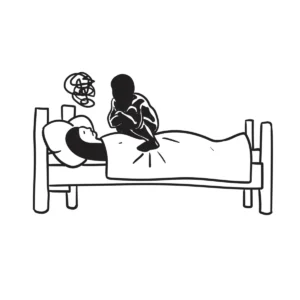
In the contemporary landscape of sleep medicine, clinicians are increasingly confronted with a diagnostic conundrum that transcends the efficacy of standard treatments. When patients present with comorbid insomnia and sleep apnea (COMISA), the medical community often relies on the term "hyperarousal" to categorize the persistent wakefulness that remains even after clinical interventions, such as Continuous Positive Airway Pressure (CPAP) therapy, have successfully addressed respiratory obstructions. While this terminology provides a linguistic bridge for describing physiologic and emotional activation, medical experts are now cautioning that such jargon may inadvertently serve as a "search-satisficing" trap, where clinicians cease their diagnostic inquiry prematurely under the assumption that the condition is fully understood.
The historical trajectory of sleep medicine has seen a shift toward more nuanced diagnostic frameworks. Since the 2010 introduction of the "Five Finger Approach" to clinical sleep medicine, specialists have been encouraged to look beyond single-pathway diagnoses. This framework prompts practitioners to evaluate circadian influences, pharmacologic effects, medical contributors, psychiatric factors, and primary sleep disorders. The emergence of the acronym COMISA has provided a shorthand for the high prevalence of patients suffering from both insomnia and obstructive sleep apnea (OSA). However, as research into the neurobiology of sleep deepens, the reliance on high-level diagnostic labels is being challenged by a call for a more granular, physiological investigation into the root causes of persistent sleep fragmentation.
The Neurobiological Puzzle of Iron Deficiency
One of the most persistent yet frequently under-diagnosed contributors to sleep instability is iron deficiency. Historically, iron status has been evaluated primarily in the context of Restless Legs Syndrome (RLS). The standard clinical narrative identifies the urge to move as the primary symptom, with Periodic Limb Movements of Sleep (PLMS) often appearing on polysomnography. Yet, recent research indicates that the role of iron extends far beyond motor control, influencing the fundamental neurochemistry of the central nervous system.
Iron is a critical cofactor in dopaminergic signaling and the regulation of neurotransmission. A particularly compelling area of study involves adenosine, a neuromodulator central to the homeostatic pressure that drives sleep. Research by Ferré and colleagues suggests that brain iron deficiency may induce a hypoadenosinergic state, effectively diminishing the brain’s ability to respond to the chemical pressure that signals the need for sleep. This implies that for some patients, "hyperarousal" is not merely a psychological state but a direct result of impaired inhibitory neurotransmission.
The diagnostic challenge is compounded by the fact that serum ferritin and standard hemoglobin tests are often poor proxies for iron status within the central nervous system. Studies, such as those conducted by Earley et al., have identified discrepancies where patients with idiopathic RLS show low cerebrospinal fluid ferritin despite normal systemic levels. This suggests that the medical community must refine its diagnostic thresholds. Current American Academy of Sleep Medicine guidelines now emphasize that iron studies should be conducted in patients with significant RLS symptoms, yet the broader application of this knowledge to non-specific insomnia cases remains a critical gap in clinical practice.
Iatrogenic Overventilation and Respiratory Control
A significant, and perhaps more controversial, factor in treatment-resistant insomnia is the phenomenon of iatrogenic overventilation. While CPAP therapy is the gold standard for treating OSA, its application can, in specific patient populations, introduce new respiratory instabilities. This occurs when the stabilization of the airway leads to an increase in ventilation, driving arterial carbon dioxide levels below an individual’s apneic threshold. This "iatrogenic hyperventilation" can trigger central respiratory events, resulting in sleep fragmentation and a sensation of breathlessness.
The prevalence of Treatment-Emergent Central Sleep Apnea (TECSA) is documented in approximately 8% of PAP titration studies conducted at lower altitudes. However, this percentage is known to increase significantly with elevation. For instance, studies have shown that the proportion of patients developing a central apnea index greater than five events per hour can rise from roughly 10% at low altitudes to nearly 40% at elevations around 7,000 feet.

The implications for clinical practice are profound. Physicians are now being urged to move beyond the "one-size-fits-all" approach to pressure settings. Research, including a 2025 study by Noah et al., suggests that adjusting inspiratory pressure—specifically setting it lower than expiratory pressure—can significantly mitigate central events in susceptible individuals. Furthermore, the choice of interface plays a role; oronasal masks have been shown to increase upper airway collapsibility, potentially requiring higher pressures that inadvertently exacerbate ventilatory overshoot. These findings underscore a critical takeaway: the treatment itself must be considered as a variable in the patient’s ongoing physiological state.
Adaptive Neuroplasticity and Long-Term Sedative Use
The third pillar in the investigation of persistent sleep disturbance is the long-term impact of hypnotic medications. For decades, benzodiazepines and related sedative-hypnotics have been prescribed for chronic insomnia. While these medications are effective in the short term, the human brain is an adaptive biological system. Prolonged exposure leads to down-regulation of GABA-A receptors, effectively changing the brain’s baseline neurochemistry.
This adaptive neuroplasticity helps explain why patients often experience "rebound" symptoms or withdrawal-induced hyperarousal when attempting to taper off medication. In many cases, these symptoms are misinterpreted as a resurgence of the original insomnia disorder, leading to the clinical conclusion that the patient requires indefinite pharmacological support. However, current data suggests that the nervous system requires significant time to undergo functional recovery after the cessation of sedative use.
The 2025 joint clinical practice guidelines for benzodiazepine tapering recommend a gradual, individualized approach, often involving a reduction of 5% to 10% every few weeks. This process, often paired with Cognitive Behavioral Therapy for Insomnia (CBT-I), is designed to address the conditioned arousal that accompanies the transition away from medication. It is essential for clinicians to distinguish between physiological dependence and substance use disorder; the former is a predictable, biological adaptation to long-term exposure and requires a clinical management strategy that prioritizes gradual withdrawal and behavioral support.
Implications for Future Clinical Standards
The current discourse surrounding COMISA and hyperarousal serves as a wake-up call for the sleep medicine community. The overarching conclusion from recent clinical investigations is that these labels, while useful for billing and general classification, should not be mistaken for a comprehensive explanation of a patient’s condition.
The movement toward a more physiological approach—one that rigorously evaluates iron metabolism, respiratory control stability, and the long-term impact of pharmacotherapy—marks a shift from "search-satisficing" toward true clinical precision. By framing "hyperarousal" as a diagnostic question rather than an endpoint, practitioners can better identify the hidden, modifiable factors that prevent patients from achieving restorative sleep.
The path forward requires a higher degree of clinical curiosity. Whether it involves monitoring oxygen saturation at altitude, re-evaluating the neurochemical consequences of long-term sedation, or investigating the nuances of central nervous system iron levels, the data suggests that the solutions to chronic insomnia are often hidden in the details of the patient’s underlying physiology. As the field evolves, the standard of care must inevitably move toward a more integrated model, ensuring that the treatment plan is as dynamic and adaptive as the nervous system it intends to stabilize. In the final analysis, identifying these root causes is the only way to move beyond the limitations of current diagnostic terminology and offer meaningful, long-term relief for those who continue to struggle in the wake of standard interventions.