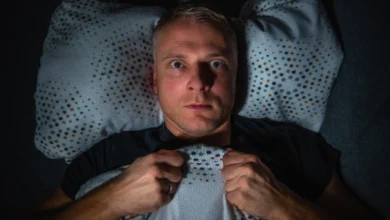
Clinical Trial at Mass General Brigham Reveals Solriamfetol Effectively Combats Fatigue in Early Morning Shift Workers with Shift Work Disorder


A groundbreaking clinical trial led by researchers at Mass General Brigham has demonstrated that solriamfetol, a wake-promoting medication currently used for narcolepsy and sleep apnea, significantly improves alertness and functional performance in individuals working early morning shifts. The study, published in the journal NEJM Evidence, marks a pivotal moment in circadian medicine, as it represents the first formal clinical trial specifically targeting the millions of workers who begin their duties between 3 a.m. and 7 a.m. While overnight "graveyard" shifts have long been the focus of sleep research, the early morning demographic represents the most common form of non-standard scheduling, yet these workers have remained largely underserved by medical interventions until now.
The Biological Conflict of Early Morning Labor
Shift work disorder (SWD) is a chronic condition characterized by excessive sleepiness during work hours and insomnia when the individual attempts to sleep. For those starting their day in the pre-dawn hours, the biological challenge is acute. The human body is regulated by a circadian rhythm, an internal 24-hour clock managed by the suprachiasmatic nucleus in the brain. This clock is primarily synchronized by light and darkness, signaling the brain to release melatonin in the evening and cortisol in the morning.
When a worker wakes up at 3 a.m. to commute to a job, they are attempting to operate at a physiological "circadian trough"—the period when body temperature is at its lowest and the drive for sleep is at its peak. First author Kirsi-Marja Zitting, PhD, an investigator at the Mass General Brigham Department of Medicine, noted that these workers face a "double burden." Not only must they fight the biological urge to sleep while performing potentially dangerous tasks, but they also struggle to achieve restorative sleep later in the day when the environment is loud, bright, and out of sync with their internal needs.
Roughly 25% of the global workforce operates on a non-traditional schedule. However, many people who start work at 4 a.m. or 5 a.m. do not categorize themselves as "shift workers." They may view themselves as simply having an early start, yet their brains and bodies suffer the same metabolic, cognitive, and cardiovascular stresses as those working midnight shifts. This lack of self-identification often prevents individuals from seeking medical help for the severe fatigue and cognitive fog they experience.
Trial Design and Methodology
The clinical trial, registered as NCT04788953, was a randomized, double-blind, placebo-controlled study designed to evaluate the efficacy and safety of solriamfetol (marketed as Sunosi) specifically for early morning shift workers. The researchers recruited 78 adults who had been diagnosed with shift work disorder and were consistently working shifts starting between 3 a.m. and 7 a.m.
The participants were divided into two groups: one receiving solriamfetol and the other a placebo. The dosage was administered on workdays over a four-week period. To measure the drug’s impact accurately, the researchers utilized the Maintenance of Wakefulness Test (MWT), a gold-standard assessment in sleep medicine. During the MWT, participants are placed in a quiet, dimly lit, and low-stimulation environment and asked to remain awake for as long as possible. This test effectively simulates the "monotony" of certain work environments—such as long-haul driving or monitoring security screens—where the risk of "micro-sleeps" is highest.
In addition to objective laboratory tests, the study incorporated the Clinician Global Impression of Change (CGI-C) and Patient Global Impression of Change (PGI-C) scales. These metrics allowed both medical professionals and the workers themselves to report on how the medication affected their daily functioning, productivity, and overall quality of life.
Findings: A Significant Boost in Alertness
The results of the four-week trial were definitive. Participants who took solriamfetol showed a statistically significant increase in their ability to remain awake during the MWT compared to the placebo group. The improvement was not merely a marginal increase in wakefulness; it was described by senior author Charles A. Czeisler, PhD, MD, as "clinically meaningful."
Beyond the lab results, the subjective data revealed that workers on solriamfetol felt more capable of handling their professional responsibilities. They reported fewer errors, improved concentration, and a greater ability to manage the complexities of their jobs. Crucially, the medication did not appear to significantly interfere with the participants’ ability to fall asleep once their shift ended and they returned home. This distinguishes solriamfetol from older stimulants or high doses of caffeine, which often have a "tail" of activation that prevents restorative sleep, thereby exacerbating the cycle of exhaustion.
Solriamfetol operates as a dual dopamine and norepinephrine reuptake inhibitor (DNRI). Unlike traditional amphetamines, it has a lower potential for abuse and a more stable pharmacokinetic profile, making it a viable long-term option for managing the chronic nature of shift work disorder.
The Safety and Economic Implications of Fatigue
The implications of this study extend far beyond the laboratory. Sleep deprivation and shift work disorder are major contributors to public safety risks and economic losses. According to data from the National Highway Traffic Safety Administration (NHTSA), drowsy driving is responsible for thousands of fatalities and hundreds of thousands of injuries annually. For an early morning shift worker, the "commute of shame"—driving home while the body is screaming for sleep—is often the most dangerous part of the day.
In the workplace, the costs of SWD are equally staggering. Fatigue-related productivity losses in the United States alone are estimated to cost employers billions of dollars each year. More importantly, the risk of workplace accidents increases exponentially when workers are fatigued. Historical analysis of major industrial disasters, including the Three Mile Island nuclear accident and the Exxon Valdez oil spill, has frequently identified sleep deprivation and circadian misalignment among the staff as primary contributing factors.
By providing a tool to maintain alertness during the hours of 3 a.m. to 11 a.m., solriamfetol offers a potential safeguard for essential services. Early morning shift workers include hospital staff, emergency responders, transit operators, bakers, and logistics personnel who keep the "just-in-time" economy functioning. Improving their alertness is a matter of both personal health and collective public safety.
Historical Context and Research Gaps
For decades, the medical community focused almost exclusively on the "night shift"—the 11 p.m. to 7 a.m. window. Medications like modafinil and armodafinil were tested and approved primarily with these workers in mind. However, demographic data shows that the "early start" population is significantly larger than the "overnight" population.
The Mass General Brigham study addresses what Dr. Czeisler calls a "major gap" in clinical literature. "Until now, no clinical trial had tested a treatment for shift work disorder in early-morning shift workers," he stated. This oversight has left a massive portion of the workforce to rely on self-medication through excessive caffeine consumption or nicotine, neither of which addresses the underlying circadian disruption effectively.
Chronology of the Study and Future Directions
The trial was initiated in early 2021, with the primary data collection occurring over the subsequent years. The funding for the research was provided by a combination of Jazz Pharmaceuticals, Axsome Therapeutics, and the Brigham and Women’s Hospital Center for Clinical Investigation. Following the successful four-week results, the research team has moved toward broader investigations.
While the current findings are promising, the researchers emphasized that the study was limited in duration and scope. The participants were generally healthy adults without significant comorbidities. Therefore, the long-term effects of daily solriamfetol use for shift work disorder remain a subject for future inquiry.
The team at Mass General Brigham is currently enrolling participants for a follow-up clinical trial. This next phase will focus on overnight shift workers, with the goal of securing broader regulatory approval for solriamfetol as a treatment for all forms of shift work disorder. If successful, this could lead to a shift in how occupational medicine approaches the health of non-traditional workers.
Conclusion and Broader Impact
The study’s publication in NEJM Evidence highlights the growing recognition of circadian health as a pillar of modern medicine. As society moves toward a 24/7 operational model, the biological limits of the human brain remain unchanged. Tools that help bridge the gap between our evolutionary programming and our modern economic demands are becoming increasingly essential.
For the millions of people who wake up while the world is still dark, this research offers more than just a clinical result; it offers validation. It acknowledges that the struggle to stay alert at 4 a.m. is not a failure of willpower or "motivation," but a biological reality. With the advancement of treatments like solriamfetol, the "hidden biological cost" paid by essential workers may finally begin to decrease, leading to a safer, more productive, and healthier workforce.
The research team, which includes notable experts such as Jeanne F. Duffy and Stuart F. Quan, continues to advocate for better workplace lighting, more flexible scheduling, and medical interventions that respect the complexity of the human sleep-wake cycle. As this trial moves into its next phases, the medical community remains hopeful that shift work disorder will transition from a poorly managed occupational hazard to a treatable medical condition.