Bridging the Gap: How Consumer Wearable Trackers and AI Are Reshaping the Future of Modern Medicine

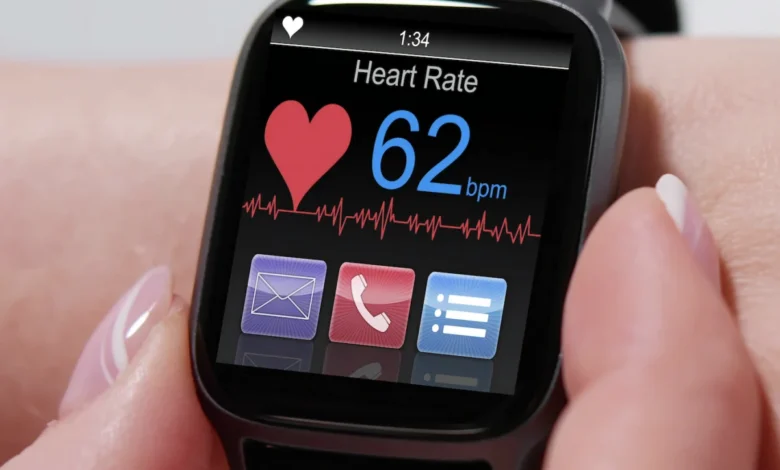
In the 1960s, biophysicist Norman J. “Jeff” Holter revolutionized cardiology by commercializing a portable electrocardiogram—a device that would permanently alter how physicians monitor heart conditions. Prior to the invention of the Holter monitor, evaluating a patient’s cardiac health relied heavily on standard in-clinic electrocardiograms, creating a profound diagnostic vulnerability known as sampling bias. A traditional ECG captures only a fleeting snapshot of cardiac activity during a brief medical examination, often failing to detect cryptic, intermittent arrhythmias or transient palpitations. By allowing patients to be continuously monitored outside the sterile confines of a hospital, Holter’s innovation ushered in a new era of ambulatory healthcare. This shift anticipated a future where vital physiological tracking could occur organically in daily life, quietly surfacing warning signs before they escalated into acute medical emergencies.
Decades later, the descendants of Jeff Holter’s pioneering device have proliferated into a massive global market of consumer-grade health and wellness trackers. Today, the landscape of wearable technology is bifurcated into two distinct tracks: medical-grade diagnostic devices designed strictly for clinical settings, and consumer wellness products manufactured by ubiquitous tech brands such as Fitbit, Samsung, Garmin, and Oura. However, rapid technological advancements are systematically blurring the boundaries between these categories. A growing wave of hardware and software innovations is successfully bridging the divide between consumer lifestyle gadgets and actionable clinical biomarkers, forcing the medical establishment to rethink how it ingests, evaluates, and acts upon continuous streams of self-tracked health data.
The Evolution of Continuous Monitoring and Over-the-Counter Diagnostics
The convergence of consumer technology and clinical diagnostics is rapidly accelerating across multiple fronts. A prominent example is Dexcom’s Stelo, the first over-the-counter continuous glucose monitor cleared by the United States Food and Drug Administration (FDA). By bringing a traditionally prescription-based metabolic monitoring tool directly to consumers, the device has empowered individuals without diabetes to observe real-time blood sugar fluctuations. Similarly, software ecosystems like Apple’s HealthKit framework now aggregate disparate health records, complex laboratory results, and third-party wearable data into a single centralized dashboard. Meanwhile, fitness technology platforms like WHOOP have announced strategic partnerships with clinical diagnostic laboratories such as Quest Diagnostics to integrate continuous biometric metrics directly with clinical-grade blood testing.
As consumer-generated health data increasingly mirrors clinically measured biomarkers, the medical community faces an urgent imperative. Regulators, software developers, and healthcare providers must establish rigorous, standardized criteria for determining when decentralized biometric signals are sufficiently accurate, interpretable, and clinically useful to guide medical interventions. Without clear validation protocols, the flood of decentralized data risks overwhelming clinical capacity rather than improving patient outcomes.

Regulatory Shifts and Federal Initiatives in Digital Health
Recognizing the paradigm shift toward consumer-driven preventive medicine, federal regulatory bodies are aggressively updating their oversight frameworks. In January, during the Consumer Technology Association’s annual CES convention, then FDA Commissioner Marty Makary announced that the agency was actively revising its regulatory guidance for wearable technologies and artificial intelligence-enabled medical devices. The stated goal of these updates is to accelerate the speed to market for innovative digital health tools while maintaining robust safety standards.
In tandem with these regulatory adjustments, the Centers for Medicare and Medicaid Services (CMS) and the FDA have launched two critical pilot programs: ACCESS and TEMPO (Technology-Enabled Meaningful Patient Outcomes). These initiatives are designed to facilitate insurance reimbursement for verified wearable devices that measurably improve health outcomes for patients managing chronic conditions such as hypertension, diabetes, and clinical depression. Under the TEMPO pilot, select digital health devices can achieve distribution and real-world data collection pathways without being subjected to the cumbersome regulatory hurdles traditionally required for legacy medical hardware.
Concurrently, the federal Advanced Research Projects Agency for Health (ARPA-H) launched a dedicated initiative known as Delphi. This ambitious federal program aims to supercharge the development of low-cost wearable and ingestible biosensors capable of continuously tracking physiological parameters that have historically evaded non-invasive monitoring, including circulating hormones, complex immune markers, and therapeutic drug concentrations. Together, these regulatory and research tailwinds signal a definitive transition for wearables from casual lifestyle accessories to recognized components of preventive clinical care.
Clinical Benefits Versus Validation Challenges
The widespread adoption of consumer health trackers offers undeniable public health advantages. Countless individuals have credited smartwatch notifications with saving their lives after prompting them to seek urgent medical evaluation for previously unrecognized atrial fibrillation. Furthermore, the commercialization of continuous glucose monitors has fundamentally transformed metabolic health literacy, allowing users to draw direct real-time connections between their dietary intake, physical exertion, sleep architecture, stress levels, and systemic glucose patterns. Clinical research has also linked the utilization of consumer wearables to sustained increases in daily physical activity across diverse demographics.

Despite these transformative benefits, a glaring discrepancy remains between the validation standards demanded of traditional laboratory diagnostics and those applied to consumer wellness devices. Traditional hospital laboratories operate under strict federal oversight mandated by the Clinical Laboratory Improvement Amendments (CLIA) and rigorous accreditations from organizations like the College of American Pathologists. Proprietary laboratory-developed tests must undergo exhaustive in-house and clinical validation before being cleared for patient care.
In contrast, consumer wearables frequently rely on proprietary algorithms that generate composite wellness metrics—such as "sleep scores" or "readiness indexes"—rather than reporting isolated concentrations of standard clinical biomarkers. While a consumer sleep tracker may reliably detect sleep onset and morning wake times, its accuracy in differentiating complex sleep stages remains questionable. Similarly, metrics like heart rate variability (HRV) can vary significantly across different hardware brands, and because HRV does not universally correlate with a specific pathology in isolation, clinicians cannot reliably utilize it for direct diagnostic purposes.
Population-Scale Screening and the Realities of False Positives
The challenges of translating consumer data into clinical care were vividly demonstrated in a landmark Apple Watch study supported by the manufacturer. Researchers enrolled nearly 419,300 adult participants to evaluate a smartwatch application designed to detect irregular cardiac pulses. Over the course of the study, more than 2,000 participants received automated irregular pulse notifications. However, when those notified individuals subsequently sought clinical evaluation, atrial fibrillation was clinically confirmed in only about one-third of the cases.
This landmark study illustrates both the immense promise and the operational pitfalls of population-scale screening. While wearables can successfully identify at-risk individuals across massive cohorts without requiring immediate in-person consultations, the high prevalence of false positives places a heavy burden on clinical infrastructure. A wearable alert must not function merely as an anxiety-inducing notification; rather, it must serve as an efficient bridge to verified clinical triage, risk stratification, and meaningful behavioral modification.
The Complicating Role of Artificial Intelligence

The integration of artificial intelligence into healthcare further complicates the interpretation of wearable data. Patients are increasingly turning to consumer-facing AI chatbots for preliminary health guidance, while physicians are adopting generative AI tools to streamline clinical documentation, assist with differential diagnoses, and support decision-making.
In theory, advanced large language models are uniquely equipped to synthesize the massive volumes of continuous data generated by modern wearables. In practice, however, AI systems run the risk of confidently misinterpreting poorly standardized biometric signals, amplifying false-positive alerts, and driving unnecessary patient anxiety and utilization in an already strained healthcare system. To be clinically effective, AI must act as a reliable "patient sidekick"—proactively identifying negative physiological trends and ensuring that vulnerable patients do not fall through the cracks of the healthcare continuum.
Urgent Privacy Concerns and the Regulatory Gap
Beyond clinical accuracy, the exponential growth of consumer wearable data raises profound privacy and security concerns. The vast majority of biometric data collected by commercial fitness trackers and smart rings is explicitly excluded from protection under the Health Insurance Protection and Accountability Act (HIPAA), which governs data handled within traditional healthcare environments.
Consequently, consumer health data can often be aggregated, anonymized, and sold on open data broker markets. This unregulated commerce creates alarming vulnerabilities; commercial data purchasers, employers, insurance underwriters, or even law enforcement agencies could potentially exploit wearable telemetry to infer highly sensitive personal attributes, including chronic stress levels, emotional states, and intimate daily behavioral patterns such as sleep and wake cycles.
Legislative recognition of these gaps has been slow but steady. Previous congressional proposals, such as the SMARTWATCH Data Act, sought to restrict the commercial sale and unregulated sharing of consumer health information without explicit user consent. More recent legislative efforts, including the introduction of the Health Information Privacy Reform Act, aim to extend robust, HIPAA-like privacy safeguards to health-related data harvested outside conventional clinical facilities. Policymakers are increasingly realizing that robust data protection is a mandatory prerequisite for public trust in digital health.

Toward a Decentralized and Accountable Future
Despite valid concerns regarding algorithmic opacity, false positives, and data privacy, the overarching momentum of wearable health technology remains overwhelmingly positive. By granting individuals direct agency and an unprecedented window into their own internal physiology, these tools possess the extraordinary potential to intercept chronic diseases long before they manifest overt clinical symptoms.
If the future of medicine is destined to be decentralized—distributed across the billions of consumer devices worn on our bodies daily—it must be constructed with the same rigorous commitment to scientific validation, transparency, interpretability, and clinical accountability that has guided diagnostic pathology for over a century. By holding consumer biometrics to high standards of evidence, modern medicine will honor the enduring legacy of Jeff Holter, whose foundational philosophy remains as vital today as it was in the 1960s: human physiology should never be judged by a single isolated snapshot, just as a prudent engineer would never evaluate an entire mountain of ore by testing a single rock.