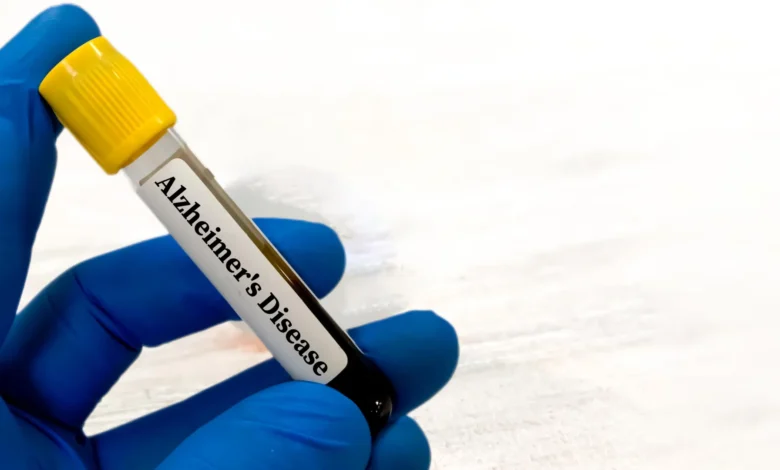
A simple, minimally invasive blood test could soon revolutionize how clinicians predict the onset of Alzheimer’s-related cognitive decline, offering patients a window of opportunity years before any noticeable memory loss or cognitive impairment occurs. In a landmark international study spearheaded by researchers at the Mass General Brigham Neuroscience Institute, scientists discovered that older adults exhibiting elevated levels of a specific blood biomarker face a starkly increased probability of developing cognitive impairment. According to the findings, individuals with very high concentrations of this biomarker carry a 38 percent chance of developing cognitive impairment within a five-year timeframe. Over a ten-year horizon, that estimated risk escalates to 78 percent, providing an unprecedented capability to look into the physiological future of the aging brain.
The findings, which were unveiled at the Alzheimer’s Association International Conference and simultaneously published in the prestigious medical journal JAMA, mark a monumental shift in neurodegenerative research. By harnessing the predictive power of blood plasma, medical science is moving closer to an era where neurological risk assessment could become as routine, accessible, and actionable as checking blood pressure or cholesterol levels.
Unlocking the Predictive Power of p-tau217
At the core of this breakthrough is phosphorylated tau 217, commonly referred to as p-tau217. Tau proteins are naturally occurring structures that help stabilize the internal skeleton of nerve cells in the brain. However, in Alzheimer’s disease, these proteins undergo pathological changes, detaching from microtubules and clumping together into neurofibrillary tangles. The phosphorylation of tau at specific amino acid sites—specifically threonine 217—serves as a primary molecular indicator that this neurodegenerative process has begun.
While the presence of amyloid-beta plaques has long been the gold standard for diagnosing Alzheimer’s pathology via positron emission tomography (PET) scans or cerebrospinal fluid analysis, these diagnostic methods are often expensive, invasive, and restricted to specialized memory clinics. The recent federal clearance of a diagnostic test measuring p-tau217 has democratized access to biomarker detection, shifting the scientific community’s focus from mere detection to robust prognostication. The central question lingering over the field has been whether these blood assays can accurately forecast future cognitive decline in individuals who currently exhibit normal cognitive function.
A Rigorous Global Investigation
To address this pressing clinical uncertainty, an international consortium of researchers pooled data from six distinct observational studies and clinical trials spanning North America, Japan, and Australia. This massive collaborative effort yielded a diverse cohort of 2,684 older adults who demonstrated completely normal cognitive function upon entering their respective studies.
The research framework combined baseline blood draws—which were rigorously analyzed for p-tau217 concentrations—with baseline PET brain scans to map out initial neurobiological health. To capture the dynamic evolution of cognitive health, participants underwent standardized, annual follow-up assessments that meticulously monitored changes in episodic memory, executive function, and other vital cognitive domains.
The longitudinal depth of the compiled data is particularly striking. Some participants were originally enrolled as early as 2004, while the most recent follow-up evaluations extended into early 2025. Over the course of these extensive tracking periods, approximately 478 participants eventually transitioned from normal cognitive function to clinically detectable cognitive impairment.
When investigators cross-referenced these clinical outcomes with the initial baseline blood test results, a clear and undeniable pattern emerged. Higher circulating levels of p-tau217 strongly correlated with an accelerated trajectory toward cognitive impairment. The statistical models revealed that individuals positioned in the highest biomarker tier faced a 38 percent risk of impairment within five years, escalating to 78 percent over a decade. Nevertheless, the research team exercised academic caution, noting that the ten-year estimates relied on substantially smaller datasets as participants dropped out or reached study completion, rendering long-term projections less definitive than their medium-term counterparts.
Superiority Over Conventional Risk Indicators
One of the most clinically significant revelations of the study is that p-tau217 provides predictive value that far exceeds traditional neurodegenerative risk factors. Even after researchers statistically controlled for the presence of amyloid-beta plaques—the hallmark protein aggregates traditionally visualized via costly PET imaging—p-tau217 maintained a powerful, independent association with subsequent cognitive decline.
Furthermore, the biomarker’s prognostic capability transcended known genetic predispositions, such as the presence of the APOE4 allele, which is widely recognized as the strongest genetic risk factor for late-onset Alzheimer’s disease. By offering prognostic insights that neither genetics nor amyloid imaging alone can capture, a standard blood test could soon equip primary care physicians and neurologists with a multifaceted risk profile for individual patients.
Dr. Rachel F. Buckley, a cognitive neuroscientist at the Mass General Brigham Neuroscience Institute and lead author of the study, emphasized the uniqueness of the methodological approach. "This is a critical step toward better understanding what p-tau217 can tell us about a person’s risk for cognitive impairment," Dr. Buckley stated. "What really sets this work apart is that it estimates an individual’s level of risk for cognitive impairment. We harmonized data across six cohorts, creating a large and varied data set, and still found consistent results showing how p-tau217 informs risk over time."
Rather than simply identifying the presence of underlying Alzheimer’s pathology—a reality that can induce significant psychological distress without offering actionable solutions—the research translates complex biological phenomena into concrete probabilities of developing clinical symptoms over defined temporal windows.
The Clinical Dilemma: Why Screening Is Not Yet Recommended
Despite the enthusiasm surrounding the study’s statistical power, the research team has issued a firm and unambiguous cautionary message: blood tests for p-tau217 are not currently recommended for routine Alzheimer’s risk screening in asymptomatic individuals.
The primary rationale behind this conservative clinical stance is the current absence of widely available, disease-modifying interventions tailored for otherwise healthy people who are flagged as being at high risk. Medical science has made monumental strides in developing monoclonal antibodies that clear amyloid-beta plaques, but these treatments are predominantly approved for patients already exhibiting mild cognitive impairment or mild dementia.
Dr. Reisa Sperling, a neurologist at the Mass General Brigham Neuroscience Institute and senior corresponding author of the study, elaborated on the current limits of clinical application. "We do not yet have disease-modifying treatments for people who find out they are at high risk for developing cognitive impairment due to Alzheimer’s disease, which is why we don’t recommend currently available blood tests for asymptomatic individuals," Dr. Sperling explained. "Today, our medical advice would remain the same regardless of test results: exercise regularly, maintain a healthy diet, and prioritize sleep and overall wellness."
However, Dr. Sperling underscored that the clinical landscape is poised for rapid transformation. As ongoing clinical trials evaluate whether early therapeutic intervention can halt or delay the disease before symptoms surface, the demand for precise risk stratification will soar. "The preventive care landscape could change rapidly if ongoing trials of disease-modifying therapies prove beneficial. In the future, these tests could help identify those who might benefit most from these treatments. Our long-term goal is to get us to where cholesterol testing is in predicting your risk of a heart attack."
Methodological Limitations and Future Directions
While the study boasts an impressive aggregate sample size and geographic diversity, the authors acknowledged several methodological limitations. The cohort participants, drawn from specialized research registries and clinical trials, may not fully mirror the demographic, socioeconomic, and racial diversity of the broader global population. This potential selection bias necessitates caution when generalizing the risk percentages to historically underrepresented communities.
Additionally, the analytical models focused primarily on intermediate timeframes rather than lifetime risk projections. Moving forward, investigators stress the imperative for larger, more ethnically diverse cohorts and extended follow-up durations to refine the precision of individual risk algorithms.
Broader Implications and the Future of Alzheimer’s Prevention
The ultimate horizon for this research lies in preventive medicine. Just as cardiovascular medicine shifted from treating acute myocardial infarctions to managing cholesterol and hypertension decades before a heart event occurs, neuro-experts envision a parallel paradigm for brain health.
By identifying individuals who harbor preclinical Alzheimer’s pathology, clinical trials can enroll participants best suited for testing preventative therapeutics. "Today, p-tau217 can help identify people at high risk for future Alzheimer’s dementia for participation in prevention trials," Dr. Sperling noted. "As these trials move forward, individualized estimates, including the biomarker’s prognostic value, could guide earlier treatment and monitoring decisions."
As research accelerates and clinical trials test the efficacy of early interventions, blood-based biomarkers like p-tau217 are poised to transition from investigative tools to indispensable instruments in clinical neurology. Until that transition is complete, the medical consensus remains rooted in lifestyle modification and active participation in clinical research, ensuring that science advances safely toward a future where Alzheimer’s disease can be intercepted before it ever begins.