A recent recall of APAP devices has been classified as Class I after a firmware issue was found to cause unexpected shutdowns.

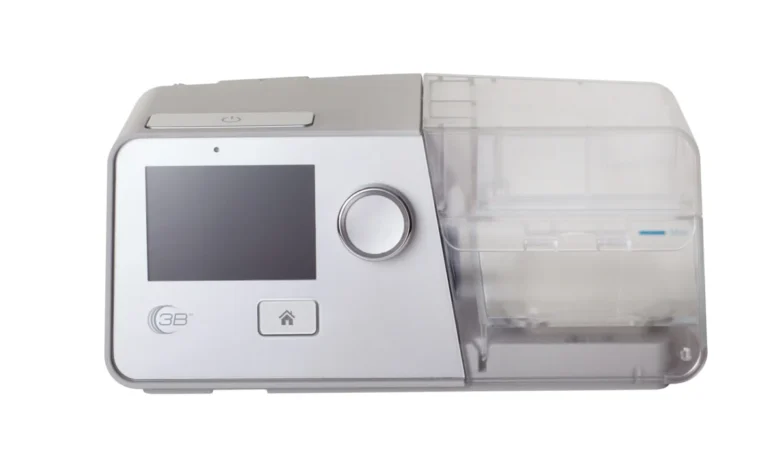
The United States Food and Drug Administration (FDA) has officially designated a recall of 20,160 Luna G3 APAP (Model LG3600) units as a Class I recall, the most serious category reserved for situations where there is a reasonable probability that the use of a device will cause serious adverse health consequences or death. The recall, initiated by the manufacturer BMC Medical Co. Ltd., stems from a critical firmware defect identified in version G3-2.00.76, which can trigger automatic system failures during operation.
The Technical Nature of the Firmware Defect
The issue resides in the core software architecture of the Luna G3, a device commonly used by patients suffering from obstructive sleep apnea (OSA) to maintain open airways during sleep. According to technical documentation provided by the FDA, the defect manifests under specific, high-intensity usage conditions. If the device is required to operate simultaneously under high pressure, a high respiratory rate, and high peak flow, the firmware fails to process the operational load, resulting in an "Error" message displayed on the device’s interface.
Following this error prompt, the device initiates an automatic, forced shutdown. For a patient relying on positive airway pressure therapy to prevent sleep apnea episodes, this failure results in an immediate cessation of the life-sustaining treatment. The sudden loss of therapy can lead to complications such as oxygen desaturation, fragmented sleep, and in severe cases, respiratory distress. While BMC Medical has reported that no serious adverse events or deaths have been linked to this specific software glitch to date, the Class I classification reflects the high potential risk inherent in a device that functions as a critical medical intervention for breathing support.
Chronology of the Recall and Mitigation Efforts
The timeline of this incident reveals a complex series of manufacturing and remediation efforts. The impacted units were manufactured during a six-week window between September 11, 2024, and October 18, 2024. These units were then distributed across the United States between October 29, 2024, and July 6, 2026.
BMC Medical initially attempted to rectify the issue through a proactive firmware update. Between October and December 2024, the company coordinated with its primary U.S. importer, React Health, to install firmware version G3-2.00.77 on units held within warehouse inventories. The goal was to eliminate the unstable G3-2.00.76 version before the devices reached end-users.
However, subsequent internal auditing following the report of the recall revealed a significant lapse in the supply chain. The company discovered that up to 196 units had bypassed the update process entirely, effectively placing potentially compromised hardware into the hands of patients. The realization that these units remained in the field, despite the known firmware vulnerability, necessitated the formal FDA-monitored recall process.
Identifying Affected Devices
Given the potentially life-threatening nature of the firmware failure, patients currently using the Luna G3 APAP are being urged to verify the status of their devices immediately. BMC Medical has provided a standardized procedure for users to confirm whether their unit is part of the affected batch.
The identification process requires the patient to locate the unique serial number, which is printed on the label located at the rear of the device chassis. Once the serial number is secured, the user must navigate to the official BMC Medical inquiry webpage. By entering the serial number into the "Serial Number (SN)" field and selecting "Check My Device," the system returns the specific firmware version installed on that unit.
If the system identifies the device as running firmware version G3-2.00.76, users are instructed to stop using the device immediately. Because this is a critical medical device, patients should not attempt to wait for a software patch to be pushed remotely; rather, they should contact their durable medical equipment (DME) provider or reach out directly to React Health to arrange for a full device replacement.
Official Responses and Industry Context
The recall of the Luna G3 highlights the growing reliance on software-controlled medical devices and the associated risks that accompany "Internet of Things" (IoT) integration in healthcare. As CPAP and APAP machines move toward more sophisticated, software-driven therapy delivery, the complexity of the code increases, leaving more room for latent errors that may not appear until the device is under extreme operational stress.
React Health, as the U.S. importer for BMC Medical, has assumed the responsibility of coordinating with healthcare providers and patients to facilitate the exchange of the 196 potentially defective units still in circulation. In statements provided to regulatory authorities, the company emphasized that while the probability of the error occurring is low—given that it requires a specific intersection of high-pressure and high-flow settings—the risk to patient safety is unacceptable.
Medical professionals and sleep specialists have expressed concern over the incident, noting that the psychological impact on patients—many of whom rely on these devices to manage chronic conditions—can be significant. Sleep apnea treatment requires consistent, uninterrupted therapy. A sudden device failure can cause a patient to abandon treatment, leading to a return of debilitating symptoms such as excessive daytime sleepiness, cognitive impairment, and increased cardiovascular strain.
Broader Implications for Medical Device Regulation
This Class I recall serves as a case study for the FDA’s ongoing efforts to regulate software in medical devices (SiMD). As the medical industry trends toward faster release cycles for firmware updates, the margin for error narrows. The fact that the issue was identified during an update process underscores the importance of robust quality control systems in the manufacturing process.
The FDA’s role in this recall is to ensure that the dissemination of information reaches all levels of the supply chain. By classifying this as a Class I event, the agency ensures that the recall is treated with the highest level of urgency. For the 196 affected units, the path forward is clear: replacement is mandatory. The remaining units in the 20,160-device batch that were successfully updated to version G3-2.00.77 are considered safe and continue to meet regulatory standards for efficacy and performance.
Guidance for Patients and Caregivers
Patients who are unsure of their device’s status should take a conservative approach. If a patient experiences any "Error" messages or unexpected shutdowns, they should immediately document the incident and contact their prescribing physician.
While the manufacturer has provided an online portal, the complexity of verifying firmware for elderly patients or those with limited technical literacy remains a challenge. Consequently, the FDA recommends that DME providers proactively reach out to their patient databases to ensure that those using the Luna G3 are aware of the recall.
Moving forward, the incident is likely to prompt a review of how firmware updates are verified and validated by manufacturers before, during, and after distribution. The failure to catch the 196 units during the warehouse upgrade phase represents a breakdown in tracking that may lead to stricter oversight regarding how "repaired" or "updated" medical devices are logged and released into the commercial market.
As the healthcare sector continues to digitize, the intersection of cybersecurity, software stability, and patient safety will remain a primary focus for the FDA. For now, the priority remains the removal of the defective firmware version from the sleep apnea treatment ecosystem to prevent any adverse health outcomes for those utilizing the Luna G3 APAP. Patients should remain vigilant and prioritize the verification of their device, even if it was purchased or serviced recently.