The modern dietary landscape has been increasingly polarized by a heated debate surrounding the role of vegetable and seed oils in human health. From viral social media discourse to the promotion of restrictive protocols like the carnivore diet, these oils—frequently derived from crops like soy, corn, canola, and sunflower—have been branded as "toxic sludge," "motor oil," and the "hateful eight." While critics argue that these oils are an industrial-era invention responsible for a surge in chronic diseases, nutrition scientists maintain that the reality of the situation is far more nuanced, rooted in the complex chemistry of food processing rather than a simple binary of "good" or "bad."
The historical timeline of vegetable oil consumption provides essential context for this controversy. Prior to the 20th century, human fat consumption was primarily derived from animal sources—butter, lard, and tallow—or naturally fatty fruits and nuts like olives, coconuts, and walnuts. The industrial revolution, coupled with advances in food engineering, enabled the mass extraction of oils from seeds that were previously considered impractical for fat production. By the mid-1900s, vegetable oils were aggressively marketed as heart-healthy, cholesterol-lowering alternatives to saturated animal fats. This shift was supported by early clinical studies that suggested replacing saturated fats with polyunsaturated fats could lower serum cholesterol. However, the subsequent rise in ultra-processed food consumption has complicated this narrative, as many of these refined oils are now embedded in a food supply that is calorie-dense and nutrient-poor.
At the heart of the anti-seed oil movement is the concern over how these oils are produced. Unlike olive or avocado oil, which can be extracted through simple mechanical pressing, seeds such as corn, soy, and canola possess a relatively low fat density. To extract oil, manufacturers utilize multi-step industrial processes involving chemical solvents like hexane, high-heat deodorization, and bleaching. Critics argue that this heavy processing compromises the integrity of the fatty acids, potentially leading to oxidation and the creation of inflammatory compounds. Furthermore, the concern regarding trans-fatty acids—a byproduct of certain high-heat industrial processes—has been a major public health focus. The Food and Drug Administration (FDA) took decisive action on this in 2018, effectively banning the addition of partially hydrogenated oils to the food supply, signaling a major regulatory shift in response to established health risks.

Despite the vocal opposition, many nutrition researchers emphasize that the "toxicity" label is an exaggeration. The primary issue may not be the oils themselves, but rather their ubiquity in the modern diet. Refined vegetable oils are the backbone of the ultra-processed food industry, appearing in everything from crackers and chips to frozen dinners and salad dressings. A landmark 2019 review published in the journal Circulation analyzed the health impacts of various fats and concluded that replacing saturated fats with polyunsaturated fats—specifically those found in vegetable oils—is associated with a reduced risk of cardiovascular disease. The consensus among mainstream health organizations, such as the American Heart Association, remains that these oils are not inherently dangerous when consumed as part of a balanced diet, though they are often markers of a diet high in processed foods.
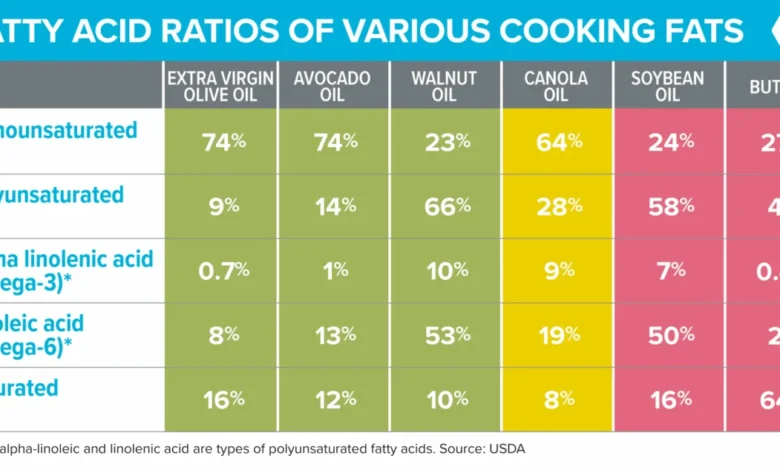
One of the most contentious points in this debate is the ratio of omega-6 to omega-3 fatty acids. Critics argue that the modern Western diet is heavily skewed toward omega-6s, which they claim promotes chronic systemic inflammation. While it is true that the typical American diet contains significantly more omega-6 than omega-3, recent literature has challenged the idea that this imbalance is the primary driver of disease. Harvard Health and other academic institutions have noted that healthy omega-6 fats, such as those found in walnuts and seeds, are actually associated with improved heart health outcomes rather than harm. The distinction lies in the food matrix: an omega-6-rich walnut comes packaged with fiber, polyphenols, and minerals, whereas refined soybean oil in a fast-food fryer does not.
In the head-to-head comparison of cooking fats, extra-virgin olive oil (EVOO) consistently emerges as the gold standard in nutritional research. A long-term study conducted in Southern Italy, involving over 22,000 participants, demonstrated that individuals with the highest intake of olive oil experienced a 20 percent lower mortality rate over 13 years compared to those with the lowest intake. The high concentration of monounsaturated fatty acids and protective polyphenols in EVOO provides stability under heat, debunking the long-standing myth that it is unsuitable for cooking. While EVOO is a superior choice for health, practical considerations like cost and flavor profiles often lead consumers to alternatives. Expeller-pressed canola oil, for instance, serves as a budget-friendly, neutral-flavored alternative that, while more processed than EVOO, remains a better option than many highly refined, solvent-extracted counterparts.
The implications for public health are clear: the focus should be on the overall dietary pattern rather than demonizing single ingredients. The rise in metabolic diseases, including obesity, type 2 diabetes, and cardiovascular conditions, is more strongly correlated with the consumption of ultra-processed, calorie-dense foods than with the specific type of cooking oil used at home. For the average consumer, replacing refined oils and ultra-processed snacks with whole-food sources of fat—such as avocados, nuts, seeds, and high-quality olive oil—is a scientifically sound strategy.

Health organizations and clinical dietitians generally advocate for a "whole-food first" approach. This involves checking labels for ingredient lists that contain minimal, recognizable items rather than a long string of additives and refined oils. Limiting the consumption of deep-fried, restaurant-prepared, or shelf-stable processed foods will naturally reduce one’s exposure to the most heavily refined oils without requiring a restrictive or fear-based approach to nutrition.
Ultimately, the debate over seed oils reflects a broader societal anxiety regarding the industrialization of the food supply. While the concerns about oil processing and the lack of protective nutrients in refined oils are scientifically grounded, the leap to labeling them as "toxic" lacks sufficient evidence in the context of a healthy, whole-food-based diet. The most prudent path for the health-conscious individual is to prioritize the quality of the food matrix—favoring minimally processed, nutrient-dense ingredients—and to use high-quality fats like extra-virgin olive oil where possible, while recognizing that the occasional use of refined oils in a diet rich in plants and whole foods is unlikely to pose a significant health risk. In the complex world of nutritional science, the most consistent advice remains to move away from processed items and toward the fundamental ingredients that have sustained human health for generations.