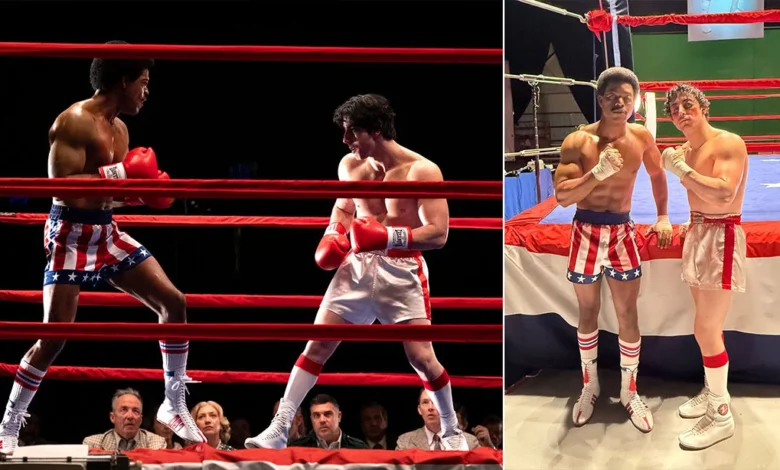
The physical transformation required for cinematic portrayals of iconic historical figures often demands extreme dedication, but actor Stephan James faced a unique paradox while preparing for his role as the late Carl Weathers in the upcoming biographical film I Play Rocky. While many actors approach such roles by attempting to mirror the sheer mass of their counterparts, James opted for a strategic aesthetic adjustment, shedding 20 pounds to achieve a more defined, athletic silhouette that effectively captured the essence of the legendary Oakland Raider-turned-actor.
The film, which chronicles the meteoric rise of Sylvester Stallone and the production of the 1976 Academy Award-winning classic Rocky, highlights the pivotal casting of Weathers as Apollo Creed. For James, an actor already familiar with the rigors of athletic performance—having previously portrayed track-and-field icon Jesse Owens in the 2016 film Race—the challenge was to bridge the gap between his own physique and the imposing 6’2”, 220-pound frame of the late screen legend.
The Strategic Approach to Physique Transformation
When James was cast, he weighed approximately 200 pounds and initially contemplated a traditional "bulking" phase. However, consultation with his training staff led to a pivot in strategy. By focusing on body fat reduction rather than adding raw mass, James was able to accentuate his existing muscular structure. This approach relies on the principle that lower body fat percentages increase skin tightness and muscle separation, creating the visual illusion of greater width and scale. By dropping to 180 pounds through a caloric deficit, James achieved a V-taper that made his shoulders and chest appear more prominent, effectively mimicking the classic, chiseled look of a heavyweight boxer.
This methodology is well-regarded in professional bodybuilding circles. By reducing subcutaneous fat, the definition of the pectorals, deltoids, and abdominal muscles becomes more pronounced. For an actor on screen, this "shredded" look often projects a more powerful image than simple bulk, as it highlights the functional, explosive nature of a professional athlete.
A Rigorous Two-Month Chronology
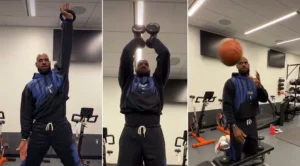
The timeline for this physical overhaul was compressed, leaving James with only eight weeks to prepare. This period was characterized by a grueling dual-track regimen. Mornings were dedicated to intensive cardio and strength training, designed to sustain muscle mass while burning through fat stores. The afternoons were reserved for technical boxing instruction.
The training was comprehensive, requiring James to master not just the aesthetics of a boxer, but the mechanics. He spent extensive hours refining his footwork, learning the technical nuances of punches, and memorizing complex fight choreography. The inclusion of high-intensity boxing drills served as the primary catalyst for his rapid weight loss, as the sport is one of the most demanding forms of metabolic conditioning available. For James, who admitted he was "not big on cardio" prior to the project, the process was an immersive education in the discipline required to portray a man who transitioned from the professional football field to the squared circle of cinema.
Contextualizing the Legacy of Carl Weathers
The late Carl Weathers, who passed away in 2024, is widely regarded as one of the most significant figures in action cinema history. His portrayal of Apollo Creed remains a touchstone for character-driven athleticism. Weathers brought a level of charisma, intelligence, and physical dominance to the role that redefined the "opponent" archetype in sports films.
James has expressed a profound sense of responsibility regarding this portrayal. Beyond the physical requirements, he emphasized the importance of honoring the barriers Weathers broke during his career. As a prominent voice for diversity in the film industry—through his work with his brother, Shamier Anderson, at The Black Academy—James views the role as a tribute to a pioneer. He has noted that Weathers paved the way for Black actors to be cast as leading men with depth, emotional intelligence, and vulnerability, rather than one-dimensional archetypes.
Production and Industry Implications
The casting of I Play Rocky has generated significant anticipation, with the official trailer already amassing over 20 million views. The film, which features Anthony Ippolito as a young Sylvester Stallone, is scheduled for a U.S. theatrical release on November 20. Industry analysts suggest that the project’s success hinges on the chemistry between the two leads and their ability to capture the authentic, grit-filled atmosphere of mid-1970s Hollywood.
The technical accuracy of the boxing scenes in the film is expected to be a major point of discussion. By investing in professional-level training, James and his co-stars are attempting to replicate the kinetic energy that made the original Rocky films so impactful. The reliance on actual boxing training—rather than relying solely on visual effects or simplified stage combat—aligns with a modern trend toward increased authenticity in sports-related biopics.
Analysis of the "Illusion of Size"
From a physiological and aesthetic perspective, James’s decision to cut weight highlights a common misconception in Hollywood casting. There is a frequent belief that "bigger is better" when portraying athletes. However, in the case of Carl Weathers, his stature was characterized by a lean, athletic frame rather than the bulky aesthetic of a modern powerlifter.
By prioritizing definition, James likely succeeded in creating a more accurate representation of a mid-1970s athlete. During that era, training protocols were less focused on extreme muscle hypertrophy and more on functional agility and conditioning. By dropping to 180 pounds, James matched the agility and posture associated with the period-specific version of Weathers, reinforcing the theory that the silhouette is often more important than the scale weight when translating a real-life figure to the screen.
Broader Impact and Future Outlook
The commitment demonstrated by James and the production team to capture the minutiae of the 1976 Rocky production reflects the current cultural appetite for behind-the-scenes narratives. As audiences continue to show interest in the origins of cinematic history, films like I Play Rocky serve as both entertainment and historical documentation.
For Stephan James, the role serves as a significant milestone in his career. It requires a synthesis of physical endurance, historical research, and dramatic acting. If the initial audience reception is any indication, the emphasis on authenticity—from the boxing training to the physical transformation—will likely be cited as a core strength of the production.
As the release date approaches, the focus remains on how the film balances the technical demands of the boxing scenes with the human story of two men—Stallone and Weathers—who were about to change the trajectory of their lives and the landscape of the sports movie genre forever. The dedication shown by James suggests that I Play Rocky will be more than just a nostalgic retelling; it will be an exploration of the labor, both physical and professional, that goes into creating an enduring legacy in film.