Unlocking Decades-Old Leukemia Drug Mysteries: How a Non-Enzymatic Protein Discovery Rewrites Cancer Pharmacology

For more than seventy years, the pharmaceutical compound 6-thioguanine (6-TG) has served as a cornerstone in the therapeutic arsenal against leukemia. Developed during an era of foundational breakthroughs in chemotherapy, 6-TG has saved countless lives, particularly among pediatric patients battling acute lymphoblastic leukemia. Its clinical profile is exceptionally well-documented, and its pharmacokinetics are taught in medical schools worldwide. Yet, despite its venerable history and decades of real-world application, the precise molecular mechanisms governing patient response remain elusive. Medical researchers have long wrestled with a fundamental clinical paradox: why do some malignant cells succumb rapidly to the cytotoxic assault of 6-TG, while others develop a resilient shield, withstanding the drug’s lethal effects?
An international consortium of researchers has now provided a compelling answer that challenges conventional pharmacological paradigms. A collaborative team spearheaded by the CeMM Research Center for Molecular Medicine of the Austrian Academy of Sciences—working in partnership with the University of Oxford, the Weizmann Institute of Science, and the University of Dundee—has identified an unexpected cellular determinant in 6-TG sensitivity: a protein known as NUDT5. This breakthrough not only illuminates the intricate micro-machinery of cancer cell survival but also highlights the immense power of next-generation chemical biology techniques to uncover biological secrets that have remained hidden for generations.
The Evolution of Cancer Pharmacology: Beyond Enzymatic Inhibition
To understand the significance of the recent NUDT5 discovery, one must examine the traditional methodology of drug design. For decades, the pharmaceutical industry has operated under a standard assumption: proteins function primarily as enzymes, acting as biological catalysts that drive specific chemical reactions. Consequently, the conventional approach to modulating protein function involves the creation of small-molecule inhibitors designed to block an enzyme’s active site, thereby halting its catalytic activity.
However, recent advancements in cellular biology have revealed that many proteins possess multifaceted roles that extend far beyond simple catalysis. A landmark study published earlier this year in the journal Science, originating from the Kubicek and Huber laboratories, demonstrated that NUDT5 plays a vital structural role inside the cell. Rather than operating strictly as a chemical catalyst, NUDT5 can function as a molecular scaffold, helping to organize cellular metabolism and structural architecture.
When the research teams began investigating how cells process and respond to 6-TG, they initially hypothesized that NUDT5’s enzymatic activity played a direct role in drug metabolism. They assumed that blocking the enzyme’s catalytic function would alter the cell’s vulnerability to the leukemia medication.
"We initially expected that NUDT5 would influence 6-TG through its enzymatic activity," says co-first author Tuan-Anh Nguyen from CeMM. "Instead, we found that inhibiting the enzyme had little effect. What mattered was whether the protein itself was present."
This realization shifted the trajectory of the investigation, steering the scientists away from conventional inhibition strategies and toward a revolutionary technique known as targeted protein degradation.
Targeted Protein Degradation: A Paradigm Shift in Chemical Biology
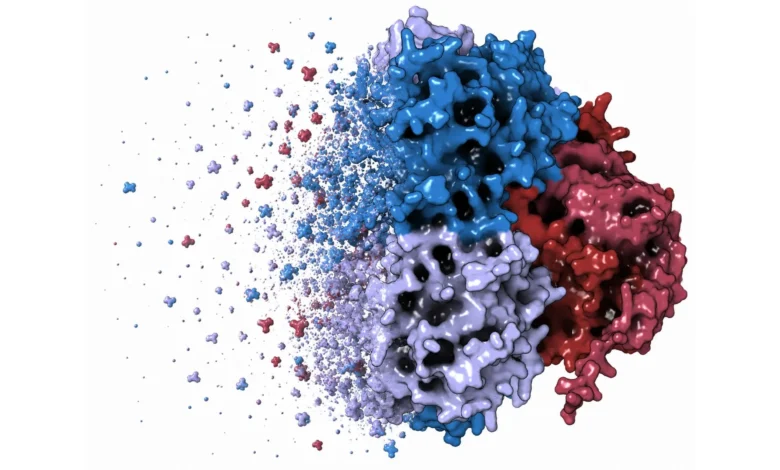
To test whether the physical presence of NUDT5—rather than its catalytic function—dictated cellular response to 6-TG, the researchers needed a methodology capable of completely removing the protein from the cellular environment without merely blocking its active site. Traditional inhibitors leave the structural framework of the protein intact, but targeted protein degradation techniques orchestrate the complete dismantling and elimination of the protein molecule by hijacking the cell’s own natural recycling machinery.
This sophisticated strategy required cutting-edge medicinal chemistry. Anne-Sophie Marques, a first author of the paper whose work at the University of Oxford contributed heavily to the findings, noted the collaborative effort required to achieve this technological leap.
"We developed a cell-based platform to accelerate the discovery of NUDT5 degraders," Marques explains. "This platform helped guide the medicinal chemistry efforts that ultimately produced dNUDT5, our most active degrader."
The medicinal chemistry program, led by the Huber laboratory at the Centre for Medicines Discovery at the University of Oxford, successfully engineered a collection of highly selective NUDT5 degraders. Simultaneously, the team synthesized matched control compounds capable of binding securely to NUDT5 without triggering its destruction. This meticulous dual approach allowed the researchers to conduct rigorous comparative analyses, juxtaposing the effects of conventional NUDT5 inhibitors against those of true protein degraders.
The empirical data yielded a stark and undeniable dichotomy. When the researchers applied conventional inhibitors to block NUDT5’s enzymatic activity, the cells’ reaction to 6-TG remained unchanged. However, when the team deployed dNUDT5 to completely purge the cells of the NUDT5 protein, a profound protective effect emerged. The cells were shielded from the toxic, cell-killing properties of the leukemia drug in a direct, dose-dependent manner. Parallel genetic knockout experiments yielded identical conclusions, confirming that the physical presence of the protein—and not its catalytic work—governed the cellular fate.
"Chemical degraders give us a way to separate what a protein does as an enzyme from what it does as a physical presence in the cell," notes Professor Kilian Huber of the University of Oxford, co-corresponding author of the study. "In this case, that distinction was decisive: removing NUDT5 revealed biology that conventional inhibitors missed."
Unraveling the Cellular Machinery: NUDT5 Versus NUDT15
As the experimental data accumulated, the research team began mapping out the broader biochemical network governing thiopurine drug responses. Their investigations uncovered a fascinating and complex interaction between NUDT5 and another related protein, NUDT15.
For years, clinical pharmacologists have understood that NUDT15 plays a critical role in how human bodies process thiopurine drugs, with certain genetic variations in NUDT15 predisposing patients to severe toxicity or altered drug clearance. However, the discovery of NUDT5 introduces a complementary yet opposing force within the cellular ecosystem.
While the reduction or loss of NUDT15 renders cells hypersensitive to the toxic effects of 6-TG, the elimination of NUDT5 yields the exact opposite phenotype, making cells significantly more resistant to the treatment. This push-and-pull dynamic suggests that cells rely on a finely tuned balance between these two proteins to navigate the physiological stress induced by thiopurine medications. The proteins utilize entirely distinct, independent mechanisms to steer cellular destiny in divergent directions, highlighting the profound complexity of intracellular pharmacology.
Ludwig Bauer, another first author of the study, recalls the moment the physiological data solidified. "As the results came in, it became immediately clear that the dNUDT5 was protecting cells from 6-thioguanine toxicity in a dose-dependent manner. That was an incredibly exciting moment for the entire research team."
For Stefan Kubicek, Principal Investigator at CeMM and co-corresponding author, these findings represent a fundamental shift in how biomedical researchers should approach intracellular target identification.
"Our results show that proteins can have important biological functions that are completely independent of their enzymatic activity," Kubicek emphasizes. "By removing NUDT5 rather than simply inhibiting it, we were able to uncover a hidden layer of biology that helps determine how cells respond to a clinically important drug."
Broader Implications for Cancer Therapeutics and Modern Pharmacology
While the discovery of NUDT5’s scaffolding role and its interaction with 6-TG does not immediately translate into a brand-new clinical treatment on hospital shelves, its broader implications for cancer research and drug development are profound.
For decades, pharmaceutical pipelines have prioritized the discovery of enzyme inhibitors. Thousands of drug discovery programs across the globe focus almost exclusively on blocking active sites, assuming that shutting down a protein’s catalytic function is sufficient to alter disease pathways. The CeMM and Oxford collaboration demonstrates that this assumption can lead researchers to overlook critical biological phenomena. By embracing targeted protein degradation as both a research tool and a therapeutic modality, scientists can expose structural and non-enzymatic functions that remain entirely invisible to conventional pharmacology.
Furthermore, understanding the nuanced interplay between NUDT5, NUDT15, and thiopurine drugs could eventually pave the way for more personalized approaches to leukemia treatment. As clinicians strive to optimize chemotherapy regimens and minimize adverse side effects, mapping the complete network of cellular resistance factors provides a vital roadmap for predicting patient responses before therapy even begins.
The successful execution of this multidisciplinary study also underscores the importance of international scientific collaboration, drawing upon the specialized expertise of institutions across Austria, the United Kingdom, and Israel. The project’s rigorous methodology was made possible through the generous financial backing of prestigious research funding bodies, including the European Research Council (ERC) under the European Union’s Horizon 2020 research and innovation program, the Austrian Science Fund (FWF), the Vienna Science and Technology Fund (WWTF), the Marie Skłodowska-Curie Actions Postdoctoral Fellowships program, the Innovative Medicines Initiative 2 Joint Undertaking (IMI2 JU), the Wellcome Trust, Merck Sharp & Dohme Corp., and Janssen Pharmaceutica NV.
As modern medicine continues to push the boundaries of molecular biology, studies like this remind the scientific community that even the oldest, most familiar drugs still harbor deep secrets. By looking beyond traditional paradigms and adopting innovative technological frameworks, researchers continue to decode the microscopic complexities of human disease, bringing humanity one step closer to safer, more precise, and ultimately more effective cancer therapies.