The Cheapest Food You’ll Ever See: Why I Believe a Global Food Shock Is Coming by 2027

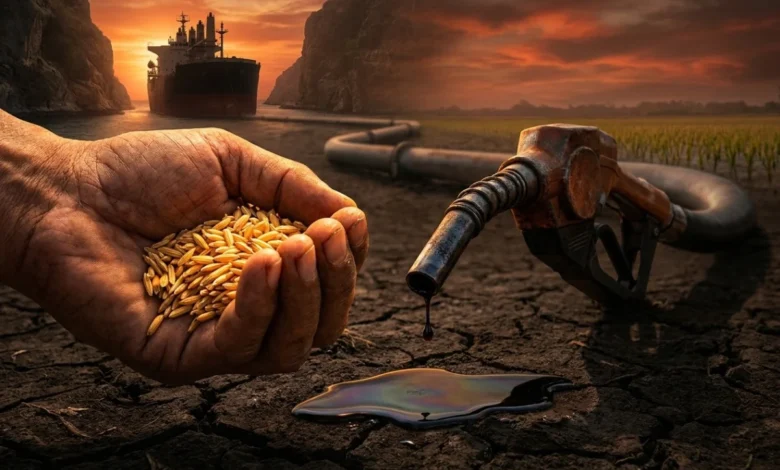
The global food supply chain is currently undergoing a structural realignment that experts suggest could result in a prolonged period of food insecurity and hyper-inflation by 2027. Recent data from logistics providers and global financial institutions indicate that the era of inexpensive, abundant food is drawing to a close, driven by a convergence of energy volatility, geopolitical instability, and supply chain fragility. As wholesale costs for essential commodities continue to climb and inventory levels for long-term shelf-stable goods reach historic lows, economists and supply chain analysts are increasingly citing a "compounding storm" of variables that threaten the stability of the global food market.
The Anatomy of a Supply Chain Crisis
At the core of the current instability is a marked reduction in the availability of raw commodities. Procurement records from major distributors show that inventory volumes for essential inputs—such as cacao, grains, and freeze-dried nutrients—have experienced double-digit declines. This contraction is not merely a reflection of seasonal fluctuation; rather, it is indicative of a systemic failure in the arteries of global trade. When wholesale providers report a 75% to 86% reduction in available inventory, it signals that the mechanisms of production and distribution are failing to keep pace with demand.
Historically, food prices have benefited from stable energy costs and predictable international trade routes. However, the current landscape is defined by what financial analysts at JPMorgan describe as the "Five Ws": War, Weather, Warehousing, Water, and Waste. These factors, acting in concert, create a scenario where traditional hedging strategies employed by large agribusinesses are becoming less effective. The shift from a "just-in-time" delivery model to a "just-in-case" model is inflating costs at every stage, from the farm gate to the supermarket shelf.
Chronology of Escalating Food Insecurity
The path toward a projected 2027 food shock can be traced through several critical turning points in recent years:
- 2020–2021: The pandemic-induced supply chain disruptions highlighted the fragility of global logistics, leading to the first significant post-2000 increase in food inflation.
- 2022–2023: Geopolitical conflicts in Eastern Europe and the Middle East began to exert significant pressure on fertilizer production and international shipping routes, particularly through the Black Sea and the Strait of Hormuz.
- 2024: Global diesel prices, a primary driver of agricultural production and transportation costs, reached record highs in multiple regions, forcing governments to consider emergency interventions like the Defense Production Act.
- 2025–2026 (Projected): Analysts anticipate a structural tightening of agricultural inputs, specifically nitrogen-based fertilizers, which will result in reduced crop yields globally.
- 2027 (Projected): This year is identified by various industry observers as the likely inflection point where the cumulative effect of these pressures will translate into acute, sustained scarcity and price volatility.
The Energy-Food Nexus
The most significant bottleneck in modern agriculture is the dependence on fossil fuel derivatives. Nitrogen fertilizer, the engine of modern crop yields, is produced largely through natural gas processing. When natural gas prices spike or supply chains are obstructed by conflict, the cost of farming increases exponentially. Furthermore, the transportation of these commodities relies heavily on diesel fuel.
Data from the International Energy Agency (IEA) suggests that the loss of refining capacity in conflict zones may not be easily mitigated. With reports of damage to key refineries and the closure of maritime chokepoints, the global fuel supply is expected to remain constrained for the foreseeable future. This "refining squeeze" creates a floor for food prices that is significantly higher than pre-2020 levels. Even if food production remains constant, the increased cost of moving goods—refrigeration, trucking, and maritime shipping—ensures that the price of essential staples will continue to rise.
Global Fertilizer Bottlenecks and Famine Risk
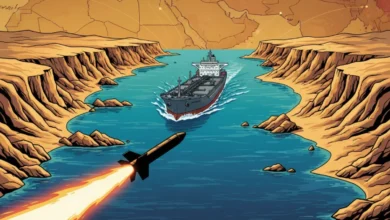
The geopolitical significance of the Strait of Hormuz cannot be overstated. As a critical artery for energy and fertilizer precursor chemicals, any sustained obstruction in this region sends shockwaves through the global agricultural sector. For subsistence farmers in developing nations, the inability to access affordable fertilizer is a binary event: they either skip a planting cycle, or they plant with significantly lower expectations of yield.
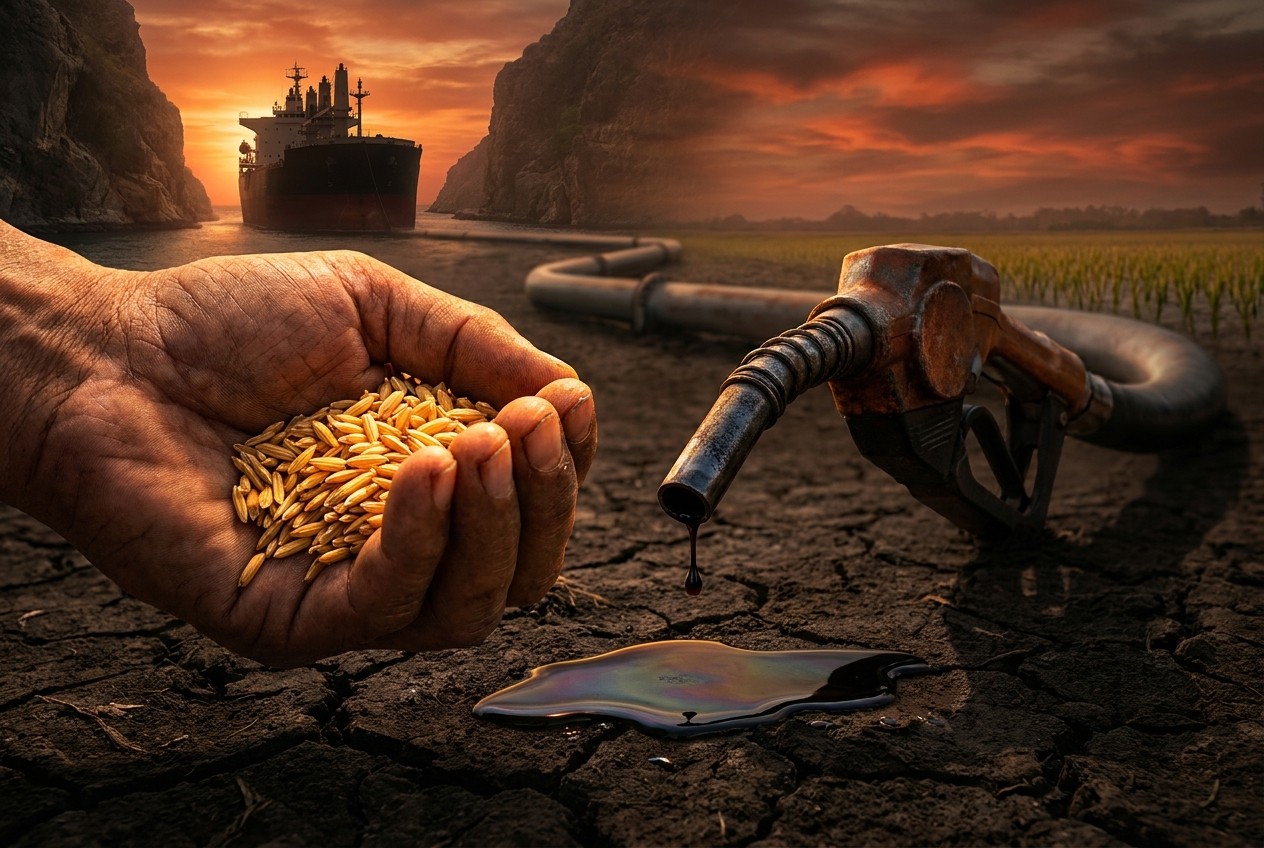
The implications for global food security are profound. Experts warn that a reduction in fertilizer application will inevitably lead to lower crop yields in major breadbasket regions. In a world with a growing population and minimal slack in the global food reserve system, even a minor drop in production can trigger massive price spikes. This is particularly dangerous for nations that rely heavily on food imports. If the cost of calories exceeds the purchasing power of the most vulnerable populations, the result is often civil unrest and mass migration, further destabilizing the global order.
Official Responses and Economic Outlook
Major financial institutions, including UBS and JPMorgan, have issued reports suggesting that global food inflation will remain "structurally higher" than the historical average of 2.5%. This assessment contradicts the hopes of many policymakers that price pressures will return to pre-pandemic norms. Instead, the current analysis suggests a paradigm shift where volatility becomes the new baseline.
Government responses have thus far been focused on emergency management. Discussions regarding the use of the Defense Production Act to boost domestic refining capacity underscore the gravity of the situation. However, critics argue that such measures are stop-gap solutions that do not address the underlying structural issues, such as the diversification of supply chains or the transition to more localized agricultural production.
Broader Implications for Consumers
For the average consumer, the era of inexpensive, readily available food is likely ending. The trend toward "shrinkflation"—where manufacturers reduce package sizes while maintaining or increasing prices—is expected to intensify. Furthermore, as the supply chain tightens, shoppers should anticipate more frequent "out-of-stock" notifications for specific food categories.
The economic reality is that food prices are a lagging indicator of energy and production costs. Consequently, the inflation currently observed in the grocery aisle is likely only the beginning of a broader trend. As wholesale costs rise, retailers will be forced to pass these expenses on to the end-user. In an environment where disposable income is already stretched by housing and utility costs, the rising price of food will likely necessitate a significant change in household budgeting and consumption patterns.
The Pivot to Self-Reliance
In response to these systemic challenges, a growing number of experts and organizations are advocating for a return to localized food security. This involves a multi-faceted approach:
- Diversification of Supply: Individuals are encouraged to move away from sole reliance on centralized commercial retailers for essential nutrition.
- Skills Acquisition: There is a renewed emphasis on the practical aspects of food production, including small-scale gardening, seed saving, and home preservation techniques.
- Strategic Stockpiling: The importance of maintaining a buffer of shelf-stable, nutrient-dense foods is being re-evaluated as a necessary hedge against supply chain shocks.
- Community Resilience: The development of local food networks—such as community gardens, farmers’ markets, and direct-to-farm purchasing agreements—is being touted as a method to insulate households from the volatility of global commodities markets.
Ultimately, the anticipated food shock of 2027 represents a critical test for modern civilization. The centralized systems that have provided relative abundance for the past several decades are proving to be increasingly vulnerable to external shocks. As geopolitical tensions, energy constraints, and climate variability continue to intersect, the ability of individuals and communities to provide for their own basic needs will likely become a primary marker of resilience in the coming decade. The transition to this new reality is already underway, and those who prioritize preparation and localized autonomy may be better positioned to navigate the challenges that lie ahead.
Related posts: