Pope Leo XIV’s Calculated Absence: Navigating a Pontificate Beyond American Politics

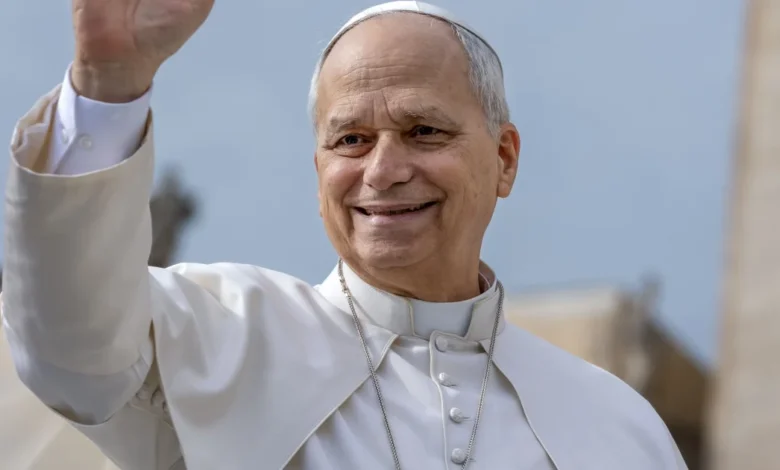
Pope Leo XIV ascended to the papacy under an unprecedented global spotlight, his American birth in Chicago immediately sparking widespread speculation about an imminent visit to the United States. Vatican observers and international media had anticipated a swift "homecoming" for the first pontiff from American soil, with some reports even suggesting a September sojourn timed to coincide with United Nations events. However, the Holy See decisively ended the speculation in February, announcing that no trip to the United States is planned for 2026, Pope Leo XIV’s first full year in office. This official statement, delivered with unusual directness, signifies more than a mere itinerary adjustment; it signals Pope Leo XIV’s deliberate intention to steer his pontificate away from being solely defined by his birthplace or by the prevailing political currents in Washington.
The Vatican’s carefully worded declaration, while specifically addressing 2026, carries broader implications for the duration of Donald Trump’s presidency. The pontiff has consistently articulated a vision centered on peace, unity, and human dignity, and his chosen international engagements reflect this ethos. His public pronouncements on issues such as war and immigration have notably diverged from the rhetoric emanating from the Trump White House. This divergence, coupled with his strategic travel choices, suggests that a U.S. visit during Trump’s term would likely be perceived as a political framing rather than a pastoral necessity, potentially distorting the essence of his office.
The Vatican’s Unambiguous Stance on Travel Plans
The initial announcement from the Holy See was characterized by its clarity and early timing, a departure from the Vatican’s often nuanced diplomatic language. On February 8th, Matteo Bruni, Director of the Holy See Press Office, stated unequivocally, "no U.S. trip is planned for 2026." This directness was significant. Had the Vatican offered a more ambiguous response, speculation could have persisted for months, allowing American political expectations to coalesce around a potential visit. By issuing a clear statement so early in Pope Leo XIV’s tenure, the Vatican effectively preempted such developments, signaling a desire to establish the pontiff’s independent agenda before external political forces could imprint their own narrative.
This decisive move stands in contrast to a long-standing modern tradition. Pope John Paul II, for instance, made seven pastoral visits to the United States. Pope Benedict XVI undertook a significant six-day tour in 2008. Pope Francis made history with his 2015 visit, becoming the first pontiff to address a joint session of the U.S. Congress. Given this precedent, a visit from Pope Leo XIV, born in Chicago, seemed almost a foregone conclusion. Such a trip would have offered a powerful narrative of an American son returning to the global stage as Pope, generating immense media attention and emotional resonance. However, Pope Leo XIV appears to have consciously opted against this readily available symbolic payoff, recognizing that a U.S. visit would carry implications far beyond the religious sphere.
A Packed Itinerary, Not a Quieter Year
The decision to forgo a U.S. trip in 2026 is not indicative of a desire for a less demanding papal schedule. On the contrary, Pope Leo XIV’s calendar for the year is robust and geographically diverse. He is scheduled to visit Monaco in March, embark on a major tour of Africa from April 13th to April 23rd, and then travel to Spain in June. Furthermore, Reuters has reported that Peruvian bishops anticipate a strong possibility of a papal visit to their nation later in 2026. This potential visit to Peru is particularly noteworthy, as it represents a significant part of Pope Leo XIV’s personal and pastoral history. He dedicated decades of his life to missionary work in Peru, served as the Bishop of Chiclayo, and officially became a Peruvian citizen in 2015.
The deliberate omission of the United States from this initial itinerary, therefore, is not a consequence of inaction or a less demanding schedule. Instead, it appears to be a result of carefully considered priorities. Pope Leo XIV is actively shaping the narrative of his first full year as pontiff, choosing where his message will resonate most profoundly. This strategic approach suggests that he views a U.S. visit under the current political climate as a potential distraction or distortion of his core mission.
Leo XIV’s Defined Role: "I Am Not a Politician"
The second crucial element in understanding Pope Leo XIV’s approach lies in his own words and public stances. During a papal flight to Algeria, following pointed public criticism from Donald Trump, Pope Leo XIV articulated a sentiment that encapsulates his broader strategy: "I am not a politician." He further stated his intention not to engage in a debate with the president, while reaffirming his commitment to speaking out against war and advocating for peace, dialogue, and multilateralism. This declaration is pivotal. It signals that while Pope Leo XIV is not shying away from moral engagement or conflict, he is resolutely refusing to be cast in a partisan role. His aim is to uphold the integrity of the papacy, preventing it from becoming merely another participant in partisan disputes.
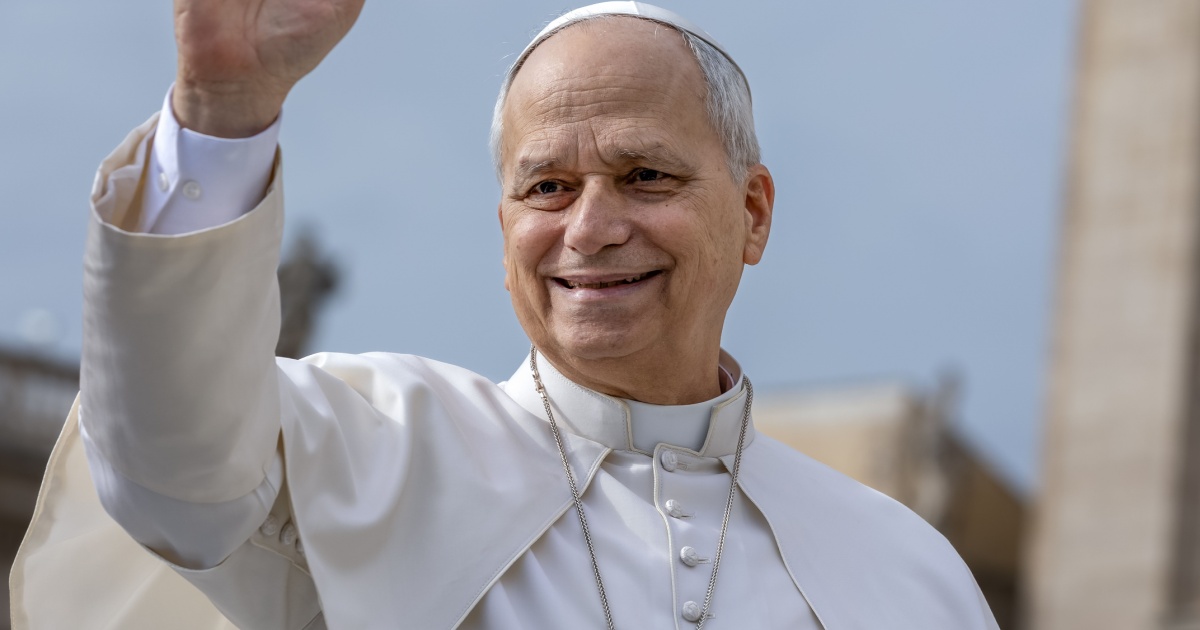
This stance is consistent with his inaugural homily, where he emphasized that the mission of Peter rests on "Love and unity," and that the Church’s authority derives from the charity of Christ. He cautioned against the use of force or power to compel adherence, underscoring that the papal office should persuade through witness, conscience, and service, rather than through dominance, branding, or ideological theater. A visit to the United States during the current political climate, he evidently believes, would inevitably compromise this vision, with the very imagery of such a trip potentially overshadowing the message he seeks to convey.
A Moral Framework for Global Engagement
Pope Leo XIV’s public teachings consistently reinforce this moral framework. In his address to the diplomatic corps in January, he reflected on a world fractured by tensions and conflicts. His 2026 World Day of Peace message called for an "unarmed and disarming" peace, illustrating his conception of moral leadership not as coercion backed by fear, but as a form of witness that de-escalates conflict and transcends vengeance. This universal pastoral approach stands in stark contrast to the potential spectacle of a papal visit to the U.S., which would almost certainly be absorbed into the daily political struggles for advantage, potentially pulling the pontiff into precisely the kind of contest he has vowed to avoid.
American bishops have recognized this dynamic and have publicly supported the Pope’s stance. Archbishop Paul Coakley noted that "Pope Leo is not his rival," while Bishop James Massa clarified that the Pope’s pronouncements are not personal opinions but rather "preaching the Gospel" as the pastor of the universal Church. These statements serve as a crucial defense, aiming to protect the papacy from being framed within a partisan context before such a perception solidifies. A U.S. tour during Trump’s presidency would undoubtedly intensify this challenge, with every papal appearance potentially interpreted through a political lens.
Divergent Views on Migration and War: The Core of the Divide
The ideological distance between Pope Leo XIV and Donald Trump is rooted in fundamental differences in substance, particularly concerning migration and war. Pope Leo XIV’s message for the 2025 World Day of Migrants and Refugees explicitly warned that an overemphasis on "limited communities" undermines shared responsibility, multilateral cooperation, and global solidarity. He contextualized the migratory crisis within a broader landscape of war, injustice, and environmental degradation, offering a moral reading that directly challenges a political approach that views migration primarily through the prism of national strength and exclusion.
During the Jubilee of Migrants, Pope Leo XIV powerfully asserted that "human dignity must always come first," urging Catholics to welcome migrants with hospitality, compassion, and solidarity, transcending stereotypes and prejudices. This emphasis places the treatment of migrants at the very core of Christian witness, a stance that directly confronts one of Donald Trump’s defining political battlegrounds. A papal visit under such circumstances would inevitably transform from a pastoral event into a national confrontation, given the moral urgency Pope Leo XIV has attached to the issue.
His public comments regarding the United States have been even more direct. In November 2025, he described the treatment of some migrants in America as "extremely disrespectful" and lent his support to the U.S. bishops’ immigration statements. Crucially, he distinguished between open borders and the imperative of humane treatment, stating that while nations have a right to control their borders, all individuals, regardless of legal status, must be treated with dignity through a just and humane system. This position stands in stark contrast to the often forceful and exclusionary rhetoric associated with Trump’s policy proposals.
The issue of war has further deepened this divide. During the April 2026 conflict, Pope Leo XIV reiterated his commitment to speaking against war while promoting dialogue and multilateralism. U.S. bishops responded by clarifying that the Pope was applying the Church’s just war tradition, not engaging in independent foreign policy. This clarification highlighted how quickly the Pope’s moral teachings had become a contested political issue. Consequently, any U.S. visit would carry a different weight, potentially becoming a focal point for broader political debates, with media outlets and political surrogates using Church teachings as electoral ammunition.
A Visit Whose Narrative Belongs to Others
The current political climate in the United States presents a significant challenge to the idea of an independent papal visit. Donald Trump has already engaged in public criticism of Pope Leo XIV, and Vice President JD Vance has suggested the Vatican should confine itself to moral pronouncements and allow the president to dictate American policy. Trump’s refusal to apologize after the Pope’s criticism of the war further underscores the potential for a highly charged encounter. Pope Leo XIV, in contrast, has consistently sought to de-escalate, redirecting attention towards his pastoral priorities such as his Africa trip, the teachings of Saint Augustine, coexistence, and peace.
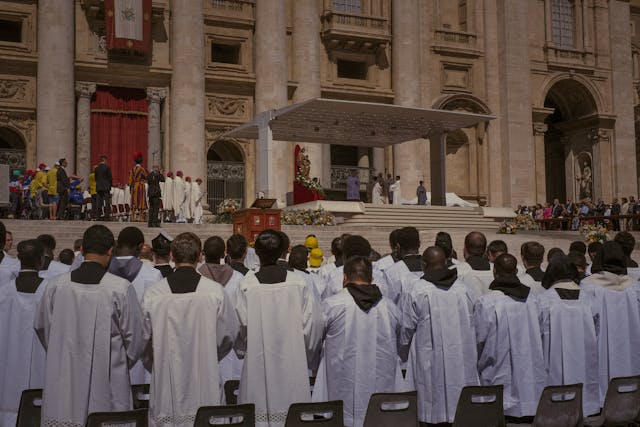
This dynamic reveals a fundamental tension: one side seeks confrontation, while the other consistently redirects the conversation toward moral witness. A papal trip to the United States would invariably provide the former side with a larger platform, potentially transforming every papal event into a component of a broader partisan spectacle.
In such an environment, virtually every aspect of a papal visit would likely be politicized. A meeting with Donald Trump would be scrutinized as a political endorsement or rejection. A homily on migration would be perceived as a direct rebuke to certain policies, while an omission of the topic could be interpreted as a capitulation. The same would apply to discussions of war, race, poverty, border policy, or crime. Pope Leo XIV’s intention to preach the Gospel and minister to Catholics could be overshadowed by the nation’s political machinery, forcing every gesture into a pre-existing national narrative. The visit, in essence, would cease to belong to the Pope and would instead become a subject of public argument, a scenario Pope Leo XIV has actively sought to avoid since assuming the pontificate.
Shaping Attention Beyond Grievance and Retaliation
Pope Leo XIV appears acutely aware of this potential for narrative capture. Following the initial wave of criticism from the White House, he strategically utilized his Africa trip to emphasize different themes. On his flight from Algeria to Cameroon, he spoke of Saint Augustine, the pursuit of God, interfaith dialogue, and mutual respect. His visit to the Great Mosque of Algiers served as a testament to the possibility of peaceful coexistence among people of different faiths. In Cameroon, he invoked Augustinian political philosophy, urging leaders to serve their people out of duty, not a desire for power. These pronouncements were not random; they offered a clear moral alternative to the charged rhetoric of nationalist spectacle, demonstrating a preference for fostering dialogue and understanding over grievances and retaliation.
This strategic absence may ultimately serve to protect Pope Leo XIV’s message more effectively than a presence would. A visit to the United States at this juncture risks having his message interpreted through the lens of Trump’s political agenda from the outset. By maintaining a distance, he preserves control over the narrative of his travels and his words, denying Trump the opportunity to leverage conflict or forced cordiality for political gain. For a pontiff who consistently identifies as "not a politician," this restraint is not an act of timidity but a form of deliberate governance. It safeguards the universal nature of the office from being diminished into a role within a domestic political drama. This strategic approach helps explain why the papal itinerary continues to unfold across other global regions while Washington awaits a potentially different kind of engagement.
A Pontificate Built on Mission and Global Solidarity
Pope Leo XIV’s travel itinerary reveals a deliberate strategy to build a pontificate centered on mission, global solidarity, and attention to neglected regions, rather than American political discourse. His most extensive journey in 2026 is the Africa tour, encompassing Algeria, Cameroon, Angola, and Equatorial Guinea. The planned visit to Spain and the likely trip to Peru further illustrate this focus. Africa represents Pope Leo XIV’s commitment to peace, coexistence, and the Church’s presence beyond traditional Western centers. Peru, his adopted homeland, underscores his deep pastoral biography and personal connection to a region he served for decades.
The geography of his pontificate is thus actively communicating where he wishes attention to be directed: towards areas of significant missionary need, ongoing conflict, and the peripheries of global power, rather than towards easily generated headlines. This outward-looking map is not inherently anti-American; rather, it signifies an anti-captivity stance, a refusal to be bound by expectations that do not align with his universal pastoral mission.
While the Vatican has officially ruled out a U.S. trip only for 2026, the pattern of Pope Leo XIV’s actions and statements strongly suggests a prolonged period of distance during the current U.S. presidential term. He has bypassed the immediate opportunity for a homecoming, strategically framed his office against partisan rivalry, and adopted public positions on migration and war that diverge significantly from Trump’s priorities. His travel itinerary further reinforces this direction. These are not isolated incidents but rather a consistent trajectory, both geographically and morally. Collectively, they indicate that a U.S. visit during Trump’s presidency is likely to be postponed, perhaps indefinitely, until a more opportune moment for a truly pastoral engagement arises.
The fundamental reason Pope Leo XIV appears to be avoiding a trip to the United States during Trump’s term transcends mere personality clashes. A visit, under current conditions, risks drawing the papacy into a spectacle he distrusts, potentially obscuring his core message of peace, human dignity, and solidarity. It would invite American political combat to define a universal office, a scenario he has actively sought to prevent. Pope Leo XIV’s initial months in office have demonstrated a clear desire for the freedom to speak as Pope, not as a participant in Washington’s daily political theater. Therefore, his absence from the U.S. itinerary appears less like hesitation and more like deliberate governance, safeguarding the papacy’s message and mission by choosing its ground rather than accepting the ground chosen by others.