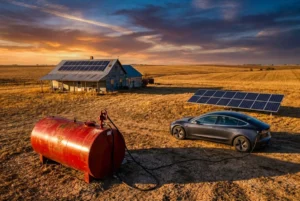
The recent milestone in San Francisco, where average diesel prices surpassed the $8 per gallon threshold, marks a historic inflection point in the American energy landscape. For the first time in U.S. history, a major metropolitan market has seen commercial fuel costs reach this level, triggering widespread concern regarding the sustainability of the national supply chain. While seasonal fluctuations and geopolitical tensions are often cited as primary drivers of fuel volatility, the current escalation reflects a confluence of structural capacity constraints, shifting global trade patterns, and the ongoing transition within the domestic energy sector.
A Chronology of Supply Chain Strain
The trajectory toward this price point did not occur in a vacuum. The timeline of the current diesel crunch began to solidify nearly two years ago as the global economy rebounded from pandemic-era lockdowns. By late 2022, U.S. distillate inventories—which include diesel and heating oil—fell to their lowest levels since 1951.
In 2023, the situation was compounded by a series of refinery outages across the Gulf Coast, which accounts for over 50% of U.S. refining capacity. These maintenance issues, coupled with a concerted shift in capital expenditure toward renewable energy infrastructure, left the market with little margin for error. By mid-2024, logistical bottlenecks in the Strait of Hormuz, a critical artery for global oil transit, created further uncertainty. When Iranian naval maneuvers signaled potential disruptions to maritime commerce, oil futures reacted sharply, creating a "risk premium" that immediately manifested in domestic pump prices.
Refining Capacity and Inventory Dynamics
A critical factor in the current crisis is the contraction of U.S. refinery capacity. According to data from the U.S. Energy Information Administration (EIA), the total number of operational refineries has declined steadily over the past decade. As domestic facilities shuttered or underwent conversions to produce renewable diesel—a process that often results in lower net output volumes—the buffer between demand and supply narrowed significantly.
Industry analysts highlight that the United States currently maintains a precarious level of distillate reserves. At various points in the last quarter, national reserves have dipped toward the 25-day threshold, a level that energy experts define as "critically low." When reserves reach this range, the system loses its ability to absorb even minor shocks, such as a localized refinery fire, a pipeline maintenance shutdown, or a sudden spike in regional demand. This lack of elasticity is why San Francisco, a market sensitive to regional supply logistics and high taxation, became the first to breach the $8 mark.
Economic Implications for Essential Services
The broader economic impact of elevated diesel prices is far-reaching, primarily because diesel is the essential propellant for the "middle mile" of the American economy. Unlike gasoline, which is largely consumed by personal passenger vehicles, diesel fuels the heavy-duty transportation sector.
- Logistics and Food Security: Over 70% of all freight in the United States is moved by truck. As fuel costs increase, these expenses are passed directly to the consumer in the form of higher "transportation surcharges" on groceries, medicine, and household goods.
- Agricultural Operations: Modern agriculture is heavily dependent on diesel, from the heavy machinery used for plowing and planting to the irrigation pumps and transport vehicles that deliver harvests to processing facilities. Farmers are currently facing a cost-price squeeze where the expense of production is rising faster than the commodity prices they receive at the market.
- Data Centers and Infrastructure: Many mission-critical facilities, including hospitals and large-scale data centers, rely on diesel-powered backup generators. As these facilities face higher operational costs to maintain fuel reserves, the inflationary pressure permeates the digital and healthcare sectors.
Official Perspectives and Market Analysis
Mainstream economic analysts often categorize the current price environment as a "compounding storm" of supply-side constraints. Nora Szentivanyi, a senior global economist, has noted that food security is increasingly tied to energy security. In recent reports, institutional analysts have emphasized that disruptions at critical chokepoints—such as the Strait of Hormuz or the Suez Canal—are no longer distant problems but direct threats to domestic inventory levels.

Conversely, government officials have pointed to a mix of global market forces and a desire to encourage a transition toward more sustainable energy sources. The administration’s stated goal is to incentivize domestic investment in renewable technologies, arguing that long-term price stability will only be achieved through a diversification of the energy mix. However, critics within the energy sector argue that this transition has been too rapid, outstripping the current capability of the electrical grid and the logistics network to handle a total shift away from hydrocarbons.
The Debate Over Energy Policy
The current crisis has reignited a fierce debate over energy independence. Opponents of current policies argue that the regulatory burden on the fossil fuel industry—including stricter environmental permitting and the cancellation of major pipeline projects—has systematically reduced the nation’s "cushion" against global volatility.
Industry associations have repeatedly called for a streamlined permitting process for refinery expansions and the acceleration of pipeline throughput. They argue that without a robust domestic infrastructure capable of refining crude oil into diesel, the U.S. will remain perpetually exposed to the geopolitical maneuvering of oil-producing nations. Proponents of current policy, however, contend that the volatility is an inevitable consequence of an aging, carbon-intensive system that must be replaced to mitigate the long-term economic risks associated with climate change.
Preparing for Continued Volatility
As consumers and businesses navigate this environment, the focus has shifted toward resilience and mitigation strategies. Supply chain managers are increasingly exploring localized sourcing to reduce reliance on long-haul trucking, while agricultural producers are seeking ways to optimize equipment usage to conserve fuel.
For the average household, the economic reality is a tightening of discretionary spending. With food and energy costs consuming a larger share of the average family budget, there is a growing trend toward "resilience planning." This includes the diversification of food sources, increased home-based preservation efforts, and a renewed interest in local community-based resource networks. While these measures cannot replace the macro-economic stability of a functional energy grid, they represent a defensive posture against the ongoing instability in the fuel markets.
Future Outlook
The path forward remains uncertain. Market indicators suggest that as long as the structural deficit in refining capacity persists, any further geopolitical disruption could cause prices to spike again. The reliance on foreign-refined products and the inability to quickly scale domestic output mean that the market will likely remain in a state of high sensitivity for the foreseeable future.
The $8-per-gallon diesel price in San Francisco serves as a warning indicator for the rest of the nation. It illustrates that when the logistical framework of an economy is stressed, the cost of essential goods will inevitably rise, affecting every layer of society. The resolution of this crisis will depend on the government’s ability to balance the long-term desire for a green energy transition with the immediate, non-negotiable need for reliable, affordable diesel to keep the American economy in motion. Until such a balance is struck, the volatility currently witnessed in California may prove to be the new standard across the United States.