Understanding the Complexity of Mr. Olympia Qualification Rules in a New Era of Bodybuilding Competition

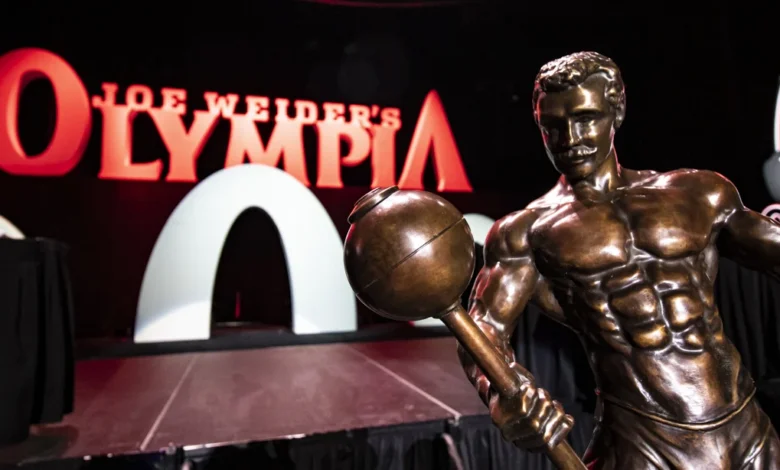
The path to the Mr. Olympia stage is often marketed as a linear progression: win a professional qualifying show, or place within the top three at the previous year’s championship to secure an automatic invitation. While these foundational rules have served the IFBB Pro League well for decades, the current landscape of professional bodybuilding has introduced a level of density at the top of the sport that challenges the traditional interpretation of these bylaws. As the professional field matures and the number of living legends competing simultaneously reaches an all-time high, the intersection of "lifetime qualifications" and "annual top-three placements" has created a scenario that is as complex as it is misunderstood.
To grasp why this matters, one must first look at the mechanics of the Olympia Qualification System (OQS). Historically, the system was designed to ensure that the most elite bodybuilders in the world converged on a single stage once a year. By guaranteeing entry to those who finish on the podium, the organizers ensure that the sport’s highest-level talent remains consistently involved in the marquee event. However, when multiple former champions enter the same lineup, the efficacy of these "slots" becomes diluted.
The 2025 Case Study: A Lesson in Qualification Mechanics
The 2025 Mr. Olympia competition served as a definitive case study for how these rules function—or, more accurately, how they fail to cascade. At that event, Derek Lunsford secured the victory, while Hadi Choopan earned second place, and Andrew Jacked rounded out the top three.
Under standard operating procedures, one might assume that these three podium spots generate three distinct invitations for the 2026 event. However, this interpretation ignores the layer of "lifetime eligibility." Both Lunsford and Choopan are former Mr. Olympia winners. Under the standing regulations of the IFBB Pro League, any athlete who has achieved the pinnacle of the sport is granted a permanent invitation to compete in the Mr. Olympia contest for the remainder of their career.
Because Lunsford and Choopan were already qualified for life, their podium finishes in 2025 did not "activate" new qualification spots for the field. The IFBB rulebook does not provide for a "roll-down" mechanism—a common feature in other professional sports where a qualification spot passes to the next eligible athlete if the winner is already qualified. Consequently, while the top three athletes were celebrated for their performance, only Andrew Jacked, who had not yet attained the status of a former champion, derived a new, tangible qualification benefit from that top-three placement.
The Impact of Lifetime Eligibility and Visa Constraints
The complexity of these rules is further compounded by external factors, such as the recent withdrawal of Hadi Choopan from the 2026 competition due to visa complications. When an athlete with lifetime eligibility is forced to withdraw, the spot does not become available to another competitor; it simply remains vacant. This highlights a rigid aspect of the current system: the qualification spots are tied to the individual’s performance and status, not to a fixed pool of entries that must be filled at all costs.
This leads to the curious position of athletes like Samson Dauda. Having won the 2024 Mr. Olympia, Dauda occupies a position of permanent security. Even in instances where a former champion places fourth or fifth—as Dauda did in 2025—their presence in the standings does not block a lower-ranked, non-qualified athlete from entry, nor does it create a vacancy. The "top three" rule remains an absolute threshold for those without lifetime status, creating a stark divide between established champions and the rising generation of professionals.
The "Top Three" vs. "Three Spots" Distinction
The primary point of confusion for fans and industry analysts lies in the linguistic difference between "the top three qualify" and "three qualification spots are created." The former is a descriptive rule regarding eligibility, while the latter is a prescriptive rule regarding capacity. The IFBB Pro League’s current framework treats the former as the standard.
If the system were to allow for roll-downs—where a fourth or fifth-place finisher qualifies because a higher-ranked athlete is already qualified—the entire competitive structure would become unpredictable. In a scenario with a highly concentrated talent pool, a single event could potentially qualify the entire top ten, effectively rendering the rest of the year’s professional qualifying circuit less vital. By maintaining the "top three" rule as an absolute, the governing body preserves the scarcity and prestige associated with the Olympia stage.
Historical Context and Evolution of the OQS
The Olympia Qualification System has undergone numerous iterations since the inaugural contest in 1965. In the early decades, the field was significantly smaller, and the criteria for entry were largely based on invitation or previous standing. It was not until the expansion of the IFBB professional circuit in the 1990s and 2000s that a formal point system and strict qualifying criteria became necessary.
Throughout the 2010s, the system fluctuated between a points-based qualification and the current "win-a-show" format. The move toward the current model was intended to simplify the narrative for fans: if you win a pro show, you are in. This creates a clear, binary outcome for every professional event held throughout the calendar year. The unintended consequence, however, is that as the sport has grown, the "pro show" circuit has become the primary filter, while the Olympia podium has become an exclusive club for the sport’s elite, whose positions are protected by their previous victories.
Broader Implications for Emerging Talent
For athletes like Martin Fitzwater, who finished fifth in 2025, the reality of these rules is quite sobering. Despite being one of the top five bodybuilders in the world, the rules dictated that he had not secured an automatic invitation for the following year. While his placement certainly bolstered his professional standing and likely earned him favorable positioning for future invitation-based events, he was still required to navigate the standard qualifying path—either winning a pro show or accumulating sufficient points—to ensure his return to the stage.
This creates a high-pressure environment for emerging talent. The gap between "elite" and "qualified" is often bridged by a single win at a qualifying show, but the competition at these shows is increasingly fierce as former Olympia-level athletes, still seeking to prove themselves, drop down into these regional events.
Future Outlook and Administrative Responses
While the IFBB Pro League has made adjustments to the qualification rules in recent years, there is no immediate indication that the organization intends to adopt a roll-down system. The current administrative philosophy emphasizes the prestige of the Olympia title, maintaining that only those who explicitly meet the established criteria—winning a show or placing in the top three—should be afforded the honor of standing on the Olympia stage.
Industry experts suggest that the current system, while occasionally confusing, serves to maintain the exclusivity of the brand. By keeping the barrier to entry high and strictly defined, the Olympia remains the undisputed pinnacle of the sport. As the professional field continues to evolve and the number of former champions grows, the dialogue surrounding these rules will likely intensify. However, for the foreseeable future, the "top three" rule will remain an immovable object, ensuring that the road to the Olympia remains a rigorous test of consistency, durability, and competitive excellence.
The ongoing conversation regarding these regulations is a testament to the health and growth of the sport. When the nuances of qualification become a topic of widespread debate, it indicates that the stakes are higher than ever and that the talent pool is deeper than at any point in the history of professional bodybuilding. For the athletes, the mandate remains simple: leave no doubt on the stage, because in the current system, nothing is guaranteed beyond the top three.