Alzheimer’s breakthrough: Scientists restore two hours of sleep without clearing brain plaques


In the complex landscape of Alzheimer’s disease research, a longstanding mystery has surrounded the profound sleep disturbances that often precede cognitive decline. For decades, the scientific community has largely attributed these disruptions to the physical presence of amyloid-beta plaques or the direct degradation of neurons. However, a groundbreaking study from the University of Kentucky (UK) College of Medicine has shifted this paradigm, revealing that the brain’s own immune cells—microglia—are the primary culprits behind sleep loss in animal models of the disease. By identifying this specific inflammatory mechanism, researchers have not only clarified a fundamental aspect of the disease’s pathology but have also demonstrated a potential method for restoring lost sleep, offering a glimmer of hope for millions of patients and their families.
The Sprinkler System Analogy: When Protection Becomes Destruction
To understand the findings, one must first visualize the delicate ecosystem of the human brain. Researchers often compare the onset of Alzheimer’s to a small fire in a kitchen corner. In a healthy response, the fire is localized and extinguished quickly. In the Alzheimer’s-afflicted brain, the "fire" is represented by amyloid plaques—sticky protein clumps that accumulate between neurons. The "sprinkler system" is composed of microglia, the resident immune cells tasked with patrolling the brain and clearing away debris.
Under normal circumstances, microglia are the brain’s first line of defense. However, in the presence of chronic amyloid pathology, these cells can become overactive. Instead of merely extinguishing the fire, the "sprinklers" activate with such intensity that they flood the entire house. This "whole house response" results in widespread inflammation that disrupts various neurological functions, including the ability to achieve and maintain sleep. This inflammatory cascade, described by researchers as an "all-night party" held by immune cells, keeps the brain in a state of hyper-arousal, effectively preventing the transition into restorative rest.
Study Design and Methodology
The study, published in the prestigious journal Alzheimer’s & Dementia, was led by Shannon L. Macauley, Ph.D., an associate professor of physiology at the UK College of Medicine and a researcher at the Sanders-Brown Center on Aging. The first author, Nicholas J. Constantino, Ph.D., collaborated with a multidisciplinary team to investigate how these immune cells influence sleep patterns over the course of the disease’s progression.
To differentiate between the effects of Alzheimer’s and the natural consequences of aging, the team utilized two distinct groups of mice. The first group consisted of mice genetically engineered to develop amyloid plaques, mimicking the progression of Alzheimer’s. The second group, known as "wild-type" mice, served as a control, aging normally without the development of plaques.
The researchers conducted observations at two critical milestones: six months of age, which represents the early stages when plaques first emerge, and 18 months, representing advanced Alzheimer’s pathology. To capture a high-resolution "electrical fingerprint" of the brain, the animals were fitted with miniature head-mounted devices capable of recording electroencephalography (EEG) and electromyography (EMG).
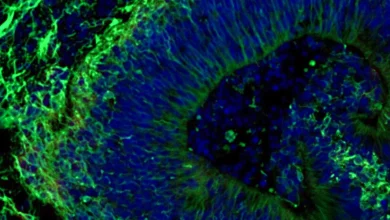
The EEG allowed the team to monitor rhythmic electrical oscillations and background electrical noise, while the EMG tracked muscle activity. Together, these tools provided a precise measurement of when the mice were awake, in deep Non-Rapid Eye Movement (NREM) sleep, or in Rapid Eye Movement (REM) dreaming sleep. To visualize the cellular interactions, the team employed light sheet microscopy, a technique that renders brain tissue transparent and uses laser light to create detailed 3D digital maps of plaques and immune cells.
The Breakthrough: Restoring Two Hours of Sleep
The most significant revelation of the study occurred when the researchers intervened to modulate the microglial response. Using a drug called Pexidartinib (PLX3397), which was originally developed for cancer treatment, the team blocked a signaling pathway essential for microglial survival. After 14 days of treatment, approximately 87% of the microglia in the mice were temporarily depleted.
The results were described by Dr. Macauley as "mind-blowing." Once the overactive immune cells were removed, the mice with Alzheimer’s pathology gained an average of more than two hours of sleep per day. Crucially, the quality of sleep also improved; the animals experienced longer periods of restorative NREM sleep, which in turn facilitated more frequent entries into REM sleep.
Perhaps most importantly, this dramatic improvement in sleep occurred without any reduction in the amount of amyloid plaque in the brain. This finding strongly suggests that the sleep disruption is not caused by the physical presence of the plaques themselves, but rather by the inflammatory reaction of the microglia to those plaques. This distinction is vital for drug development, as it suggests that sleep—and perhaps other cognitive symptoms—can be treated by targeting the immune response even if the underlying plaques remain.
Distinguishing Alzheimer’s from Normal Aging
The UK research team also provided critical data on how Alzheimer’s specifically degrades the sleep architecture compared to normal aging. In the control group, normal aging primarily affected REM sleep, the stage associated with emotional regulation and memory consolidation. However, in the Alzheimer’s model, the pathology specifically targeted NREM sleep.
NREM sleep is often referred to as "restorative sleep" because it is during this phase that the brain’s glymphatic system becomes most active. This system acts as a biological waste-clearance mechanism, "washing out" metabolic toxins and proteins—including amyloid-beta—that accumulate during waking hours.
When Alzheimer’s patients lose NREM sleep, they lose their brain’s primary cleaning cycle. This creates what Dr. Macauley calls a "feed-forward loop." The lack of sleep prevents the clearance of toxins, which leads to more plaque accumulation and more immune overactivity, which in turn leads to even worse sleep. Breaking this cycle is now seen as a primary target for slowing the progression of the disease.
The "Ceiling Effect" and Early Intervention
Another unexpected finding was the "ceiling effect" of sleep disruption. The researchers found that the sleep loss observed at six months (the early stage) did not significantly worsen by 18 months (the advanced stage), despite the plaque burden more than doubling in that time.
This suggests that the initial immune response triggered by the first appearance of plaques is sufficient to cause maximum sleep disruption. From a clinical perspective, this reinforces the necessity of early intervention. If the "sprinkler system" is triggered early and stays on, the damage to sleep patterns—and the subsequent impact on cognitive health—begins long before a patient might show signs of severe memory loss.
Future Clinical Applications: From Labs to Local Clinics
The implications of this research extend far beyond the laboratory. One of the team’s primary goals is the development of affordable, noninvasive tools for the early detection of Alzheimer’s. By identifying specific EEG patterns associated with microglial overactivity, researchers believe that portable EEG systems could eventually be used to screen patients in their own homes.
"Portable EEG systems could allow us to monitor people in their home environments and potentially screen for changes associated with Alzheimer’s disease, without the initial need for expensive or invasive tests," said Dr. Macauley. Such technology would be particularly beneficial for rural populations, such as those in Kentucky, who may not have easy access to major neurological centers.
Furthermore, the lab is already investigating ways to "calm" microglia without eliminating them entirely, as these cells still perform essential functions in the brain. They are currently testing the efficacy of existing, FDA-approved medications, including the diabetes drug Metformin and the anti-seizure medication Stiripentol. The goal is to determine if these drugs can metabolicly reprogram microglia, preventing them from entering a hyper-active, "party-all-night" state.
Analysis of Implications for Alzheimer’s Treatment
The shift toward targeting neuroinflammation rather than just amyloid plaques represents a significant evolution in Alzheimer’s research. For years, the "amyloid hypothesis"—the idea that clearing plaques would cure the disease—dominated clinical trials, many of which ended in failure. The University of Kentucky’s findings add to a growing body of evidence suggesting that the brain’s immune response is a more flexible and potentially more effective therapeutic target.
By focusing on sleep restoration, clinicians may be able to improve the quality of life for patients significantly. Better sleep is linked to improved attention, reduced confusion, and slower cognitive decline. If the inflammatory "engine" of the brain can be slowed down, patients may retain their independence for years longer than currently possible.
Conclusion and Acknowledgments
The success of the study is attributed to the collaborative and "calculated risk-taking" culture of the Macauley lab at the Sanders-Brown Center on Aging. Dr. Macauley emphasized that following the data, even when it contradicted original hypotheses, was key to the discovery.
This research was supported by several grants from the National Institute on Aging (NIA) and the National Institute of General Medical Sciences (NIGMS), part of the National Institutes of Health (NIH). Additional funding was provided by the Cure Alzheimer’s Fund ($287,236) and The CART Fund (Coins for Alzheimer’s Research Trust, $250,000). As the team moves into human-centric studies and clinical trials, their work stands as a testament to the power of looking beyond traditional targets to find the hidden drivers of neurological disease.