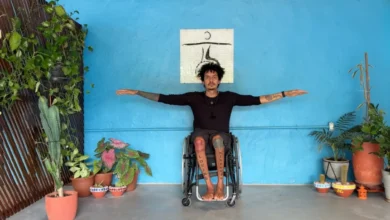
World Meditation Day serves as a crucial global reminder to intentionally pause, a vital counterpoint to the relentless demands of modern life that constantly pull our attention outward. In an era saturated with stimuli, meditation offers a profound invitation to turn inward, to reconnect with the fundamental rhythm of our breath, to anchor ourselves in the present moment, and ultimately, to rediscover our authentic selves. This annual observance transcends a mere date on the calendar, acting as a global beacon for individuals to cultivate inner peace and resilience.
The enduring resonance of meditation with millions worldwide stems from its fundamental premise: it is not an act of escapism, but rather a practice that equips individuals with the tools to engage with reality more skillfully, compassionately, and consciously. Whether one is a seasoned practitioner or a curious novice, World Meditation Day provides a valuable opportunity to recommit to this ancient discipline, acknowledging the transformative power held within even a few mindful breaths. As recognized by various wellness communities, and increasingly by global institutions, the significance of dedicated time for introspection and calm has become undeniable.
While many traditions have historically celebrated World Meditation Day on May 21st, a significant development occurred in 2024 when the United Nations officially designated December 21st as World Meditation Day. This harmonization of observance underscores the growing global recognition of meditation’s profound impact on mental, emotional, physical, and spiritual well-being. Celebrated across continents, this day encourages individuals from all walks of life, irrespective of their backgrounds, beliefs, or prior experience, to embrace practices that foster inner peace and holistic health.
The roots of meditation delve deep into human history, tracing back thousands of years to ancient traditions such as Buddhism, Hinduism, Taoism, and yogic philosophy. These contemplative practices, honed over centuries, have progressively integrated into mainstream wellness movements, adapting to contemporary lifestyles while retaining their core efficacy. Today, meditation is a ubiquitous practice, finding its place in homes, educational institutions, corporate environments, healthcare settings, and community gatherings, both in person and through the expansive reach of online platforms.
The underlying purpose of World Meditation Day is elegantly simple yet profoundly impactful: to foster an environment where individuals can consciously cultivate inner peace, enhance emotional regulation, improve focus, and reduce stress. In recent years, a burgeoning body of scientific research has provided empirical validation for what ancient wisdom has long espoused – that meditation significantly benefits stress reduction, nervous system regulation, cognitive function, emotional resilience, sleep quality, and overall life satisfaction.
The Urgent Relevance of Meditation in Contemporary Society
The current global landscape is characterized by an unprecedented level of sensory input, constant connectivity, and pervasive uncertainty. Modern existence often feels loud, chaotic, and relentlessly demanding, with a barrage of notifications, an unending stream of information, and persistent stressors contributing to a pervasive sense of disconnection from ourselves and others. In this context, meditation emerges as a crucial practice, creating essential space. It carves out room to breathe, to transition from reactive impulses to considered responses, and to re-establish a connection with what truly matters.
As emphasized by practitioners, even a brief meditation session can initiate a significant shift in one’s physical, mental, and emotional state. World Meditation Day, therefore, holds particular significance by reminding us that inner peace is not a conditional state contingent upon external circumstances. Instead, it is an intentional cultivation that can be nurtured from within, even amidst the turbulence of a busy or uncertain world. This day serves as a catalyst, prompting individuals to explore the accessibility of tranquility and the power of self-regulation.
Pathways to Celebrating World Meditation Day
A fundamental aspect of meditation is its inherent flexibility; there is no single "correct" method. The practice does not necessitate secluded retreats, perfectly curated morning routines, or years of dedicated study. At its most accessible, meditation can be as simple as a few moments of quiet contemplation, observing the natural rhythm of one’s breath.
Several meaningful avenues exist for individuals to observe World Meditation Day:
1. Embracing the Mindful Pause
Dedicate five to ten minutes to simply sit, breathe, and be present. This involves consciously noticing the sensation of the breath entering and leaving the body, observing bodily sensations without judgment, and acknowledging thoughts as they arise and pass, much like clouds in the sky. The most profound transformations can often stem from these seemingly simple acts of intentional presence.
2. Engaging with Guided Meditation Resources
For those who benefit from structure and guidance, a plethora of guided meditation resources are available. Online platforms, such as YouAligned Classes, offer extensive libraries encompassing beginner-friendly mindfulness exercises, yoga nidra, breathwork techniques, grounding meditations, and sleep-focused practices. These resources cater to varying time commitments, from brief five-minute sessions to more immersive forty-five-minute experiences, ensuring that accessible options are available for everyone.
3. Cultivating Community Through Shared Practice
While meditation is an intensely personal journey, its practice can also be a profoundly collective experience. Engaging in meditation with others can foster a sense of accountability, deepen interpersonal connection, and amplify shared intentions. This World Meditation Day, consider inviting a friend to join in a meditation session, attending a local gathering, or participating in an online group meditation. The realization that one is not alone in this pursuit can itself be a source of solace and encouragement.
4. Integrating Mindfulness into Daily Activities
The practice of mindfulness is not confined to formal seated meditation. It can be seamlessly woven into the fabric of everyday life. This includes engaging in mindful eating, savoring each bite and noticing the textures and flavors; practicing mindful walking, paying attention to the sensation of the feet on the ground and the surrounding environment; or engaging in mindful listening, offering full, undivided attention to the speaker. Mindfulness is, at its essence, the practice of presence, and presence can be cultivated in virtually any setting.
A Historical Tapestry of Meditation
Meditation stands as one of the most ancient spiritual and contemplative practices known to humanity. Its origins are deeply embedded in the Vedic texts of ancient India, with scholarly estimates placing their composition around 1500 BCE. Over millennia, meditation techniques evolved and diversified across a rich spectrum of traditions and cultures, including:
- Buddhism: Emphasizing mindfulness (Vipassanā) and concentration (Samatha) to achieve enlightenment.
- Hinduism: Incorporating various yogic disciplines and mantra-based practices for spiritual realization.
- Taoism: Focusing on cultivating vital energy (Qi) and achieving harmony with the natural flow of the universe.
- Jainism: Promoting intense asceticism and self-discipline, with meditation playing a key role in purification.
Despite variations in methodology, a common thread unites these traditions: the pursuit of heightened awareness, the cultivation of compassion, the attainment of inner stillness, the anchoring in the present moment, and the liberation from suffering. In the modern era, the dissemination of meditation practices in the West was significantly influenced by spiritual teachers, psychologists, pioneering mindfulness researchers, and influential spiritual leaders, leading to its widespread adoption in both spiritual and secular contexts.
The Neurological Impact: How Meditation Supports the Nervous System
A primary driver behind meditation’s global embrace is its demonstrable and measurable impact on stress and the regulation of the nervous system. Scientific inquiry has illuminated the intricate ways in which meditation influences our physiological and psychological states. Research indicates that consistent meditation practice may contribute to:
- Reduced sympathetic nervous system activation: This leads to a decrease in the "fight-or-flight" response, characterized by lowered heart rate, blood pressure, and cortisol levels.
- Increased parasympathetic nervous system dominance: This promotes a state of "rest and digest," fostering relaxation and recovery.
- Enhanced emotional regulation: Meditation trains the brain to respond to stressors with greater calm and less reactivity.
- Improved resilience to stress: Regular practice builds the capacity to bounce back from challenging experiences.
- Greater interoceptive awareness: This is the ability to sense the internal state of the body, which is crucial for emotional self-understanding and regulation.
Science-Backed Benefits: The Empirical Case for Meditation
Decades of rigorous scientific research have consistently underscored the positive influence of meditation on mental, emotional, and physical well-being. While its roots lie in ancient spiritual traditions, modern scientific investigation is increasingly providing empirical validation for its profound benefits. Studies suggest that meditation can:
- Alleviate symptoms of anxiety and depression: By fostering emotional regulation and reducing rumination.
- Improve focus and attention span: Through the strengthening of prefrontal cortex functions associated with executive control.
- Enhance self-awareness: By cultivating a more objective and non-judgmental observation of one’s thoughts, feelings, and bodily sensations.
- Promote better sleep quality: By calming the mind and reducing the physiological arousal associated with insomnia.
- Boost immune system function: Through stress reduction and its impact on inflammation markers.
- Increase feelings of compassion and empathy: By activating brain regions associated with prosocial behaviors.
- Contribute to pain management: By altering the perception of pain and improving coping mechanisms.
Furthermore, ongoing neuroscience research is exploring meditation’s potential to influence brain structure and function, particularly in areas related to neuroplasticity and long-term emotional health, offering exciting avenues for understanding the brain’s capacity for change and adaptation.
A Global Invitation to Coherence: Joining World Meditation Day Practices
Meditation, while deeply personal, possesses the remarkable capacity to become a powerful collective experience. For this year’s World Meditation Day, prominent figures in the wellness sphere, such as meditation teacher and author Dr. Joe Dispenza, are extending invitations for global participation in unified meditation events. These initiatives, often focused on cultivating coherence, connection, and a spirit of universal love, aim to unite individuals across geographical boundaries.
One such initiative, the 15-minute guided meditation "Universal Heart, Universal Mind," is designed to foster brain and heart coherence within a global community. These events underscore the principle that no prior meditation experience is required, welcoming all individuals to participate in a shared journey towards greater well-being. The availability of such free, accessible global meditations highlights the increasing democratization of contemplative practices.
World Meditation Day: A Profound Return to Self
At its fundamental core, World Meditation Day is not about achieving an elusive state of perfection or "emptying the mind." Instead, it is a potent reminder to pause, to breathe, and to recognize the ever-present availability of presence. Meditation serves as a gentle yet insistent invitation to re-establish a harmonious relationship with ourselves, our physical bodies, the rhythm of our breath, and the richness of the present moment.
In a world that often champions distraction and fosters disconnection, the act of intentionally returning to oneself is a profoundly powerful and restorative endeavor. Whether one dedicates a single minute or an hour to meditation on World Meditation Day, the significance of this practice is undeniable. Each mindful breath represents a return, and each conscious pause is a step in the ongoing journey of self-discovery and cultivation. Ultimately, every moment of presence has the potential to generate ripples of positive impact, extending far beyond our immediate awareness. For those seeking further guidance and exploration, comprehensive resources on meditation and mindfulness practices are readily available through platforms like YouAligned, offering a gateway to a richer understanding and experience of these transformative disciplines.