Bridging the Divide: How Overcoming Loneliness Can Heal a Polarized Nation


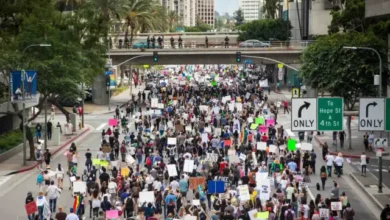
The contemporary sociopolitical landscape of the United States is frequently characterized by deep-seated division, fierce partisan rhetoric, and a pervasive sense of societal fracturing. While historical comparisons often point to the American Civil War as the nation’s ultimate test of internal conflict, modern political scientists, sociologists, and psychologists emphasize that today’s polarization operates differently. It is less a formal geographical or military split and more a pervasive cultural alienation. Yet, a growing body of academic research suggests that the primary catalyst for this intensifying hostility may not be ideological disagreement itself, but rather an underlying, often overlooked epidemic of social isolation and loneliness.
The Science of Isolation: How Loneliness Drives Polarization
To understand the mechanics of modern political animosity, researchers have increasingly turned to the intersection of social psychology and political science. Recent studies illuminate a direct correlation between an individual’s level of social connectedness and their perception of societal threat. According to a 2025 study by Langenkamp, Schmidt-Catran, and Schobin, individuals who experience chronic or acute loneliness consistently perceive significantly higher levels of social conflict. As personal isolation compounds over time, it fosters an escalating fear of societal unrest.
This psychological feedback loop has profound implications for the democratic process. Research published by Mernyk and colleagues in 2022 demonstrates that the more partisan conflict individuals perceive in their daily environment, the more likely they are to endorse or support political violence against ideological opponents. Conversely, social network analysis reveals a mitigating factor. A 2025 study by Dillion, Lewis, and Gray found that individuals embedded within close-knit social circles exhibit markedly higher levels of empathy and warmth toward political adversaries. Furthermore, these individuals demonstrate a greater willingness to engage in constructive dialogue across party lines. Similar patterns emerge at the macro level; geographically close-knit U.S. counties frequently display lower indices of extreme partisan animosity.
These findings suggest that political polarization is, to a significant degree, a symptom of fractured social infrastructure. When citizens are isolated from one another, they rely on media caricatures and political rhetoric to define their neighbors, transforming ideological differences into existential threats.
Examining the Root Causes: Media Rhetoric and Social Fragmentation
The upward trajectory of political hostility cannot be examined in a vacuum. Decades of media evolution, coupled with the algorithmic design of modern digital platforms, have generated powerful financial and political incentives for sensationalism. As noted by media analysts, hyper-partisan rhetoric captures attention, drives engagement, and ultimately benefits external political and corporate forces that profit from an "us versus them" dichotomy.
However, blaming political media, while entirely valid, often leaves individuals feeling paralyzed and incapable of enacting meaningful change. Sociological data underscores that while citizens possess virtually no direct control over national media conglomerates or congressional rhetoric, they exercise profound agency over their immediate environments. Cross-cultural studies of low-loneliness societies—such as those highlighted in global sociological research by Schermer et al. (2023)—indicate that communities characterized by robust interpersonal trust, shared obligations, and horizontal collectivism are remarkably resilient against external polarizing pressures.
Actionable Strategies for Rebuilding Social Capital
Reversing the tide of polarization does not require a nationwide political consensus. Instead, researchers and civil society experts advocate for a grassroots approach centered on restoring local social capital. By intentionally reducing personal isolation and fostering mundane, positive human interactions, individuals can systematically dismantle the psychological architecture of polarization.
Engaging in Non-Partisan Volunteer Work
One of the most effective avenues for combating loneliness while bridging social divides is participating in structured volunteer organizations. Choosing initiatives whose core missions transcend the political arena—such as local food banks, animal shelters, environmental cleanup projects, or youth sports leagues—allows individuals from diverse socio-economic, racial, and political backgrounds to work toward a common goal. As research by Swader and Moraru (2023) indicates, shared non-political labor neutralizes the ideological friction that frequently paralyzes contemporary discourse, allowing human connection to precede political categorization.
Cultivating Intentional Neighborliness
In many regions across the United States, including rural and semi-urban communities in Western North Carolina, the traditional concept of the "neighbor" historically superseded partisan affiliations. When infrastructural or personal emergencies occur, immediate physical proximity demands cooperation and mutual aid. Actively engaging with neighbors—whether through simple check-ins, sharing seasonal harvests, or offering mutual assistance—recreates one of the last remaining spaces where citizens can genuinely know, value, and love individuals who do not share their voting habits.
Establishing Routine and Becoming a "Regular"
Civic health is frequently built upon micro-interactions. Individuals who lack the bandwidth for intensive volunteer commitments can combat isolation simply by becoming a predictable, cheerful presence in their local communities. Patronizing the same local coffee shop, greeting transit workers daily, or frequenting community parks establishes a fabric of weak ties. Sociological research consistently demonstrates that these minor, positive daily connections dramatically lower baseline feelings of isolation, thereby reducing the cognitive biases that feed political paranoia.
Reinvigorating Multigenerational and Familial Ties
Global studies examining cultures with the lowest loneliness indices point consistently to strong, continuous multigenerational family structures (Saparov, 2025). While cohabitation with parents or extended family is neither universally feasible nor psychologically healthy for every individual, maintaining active family engagement remains a powerful antidote to polarization. Facilitating regular video calls between older relatives and younger generations, or simply sharing personal narratives and daily humor, grounds individuals in enduring human relationships, pulling focus away from abstract national political binaries.
Participating in Resilient Community Groups
Data from the American Enterprise Institute’s comprehensive Survey on Community and Society (Abrams et al., 2019) revealed a striking statistic: civically engaged Americans were half as likely to suffer from chronic loneliness compared to those who remained socially inactive. Finding spaces of refuge—whether hobby clubs, artistic collectives, athletic leagues, or historical societies—rebuilds the social muscle required to view fellow citizens as complex human beings rather than political caricatures.
Fostering Civil Political Engagement
For citizens who feel a strong compulsion to engage directly with governance and political issues, specialized organizations now exist to channel that energy into productive, cross-party dialogue. Across the country, local chapters of national initiatives are dedicated to civil problem-solving, structured debates, and bipartisan community service. These groups operate on the premise that disagreement is a natural component of a pluralistic society, but that hostility is an avoidable choice.
Embracing Shared Community Obligations
Cross-national research into horizontal collectivism highlights that communities bound by shared financial, social, or caregiving obligations exhibit exceptionally high levels of interpersonal trust (Schermer et al., 2023). Whether through neighborhood mutual-aid funds, community land trusts, or organized care networks for vulnerable residents, shared responsibility creates a vested interest in the collective well-being of one’s peers.
Broader Impact and Implications
The implications of this research are clear: addressing loneliness is not merely a matter of public health or individual well-being; it is a vital national security and democratic imperative. Data from the Pew Research Center’s comprehensive 2026 Political Typology report (Kiley et al.) consistently demonstrates that the ideological extremes on both the radical left and the radical right represent very small minorities of the American public. The vast majority of citizens occupy a pragmatic, moderate middle ground, yet they are often drowned out by the amplified voices of hyper-polarized factions.
When individuals actively step outside their ideological echo chambers to engage with the human beings physically present in their neighborhoods, workplaces, and volunteer organizations, they undermine the systemic forces that profit from societal division. Restoring social trust requires no legislative overhaul or federal mandate. It requires a deliberate, everyday commitment to human connection. In an era defined by friction, rebuilding our communities may be the most radical—and most patriotic—act possible.