The Odyssey Behind the Screen: How Stunt Performer Devyn Dalton Built the Physique That Impressed Matt Damon


The recent cinematic release of The Odyssey has captivated global audiences, offering a visually arresting journey into Greek mythology. While the film’s narrative follows the legendary hero, much of the physical intensity projected on the big screen belongs to Canadian stunt performer and actor Devyn Dalton. Serving as the primary stunt double for Oscar winner Matt Damon, Dalton’s contributions were so substantial that her own physique—specifically her remarkably defined arms—became a focal point of the film’s promotional materials. Her performance was so commanding that it reportedly earned high praise from Damon himself, who described her upper-body strength as among the most impressive he has witnessed in his career.
This level of physical excellence is not accidental; it is the result of years of meticulous athletic conditioning. Dalton, who stands at 4 feet 6 inches, has leveraged her background in dance and performance capture to shatter industry expectations regarding the physical capabilities of smaller-statured individuals. By adopting a training regimen that prioritizes functional strength, explosive power, and mobility, Dalton has transitioned from a specialized performer to a recognized force in high-intensity stunt work.
The Evolution of a Stunt Athlete
Dalton’s journey into professional stunt work required a paradigm shift in her approach to physical fitness. Initially rooted in dance, her transition to the film industry demanded a more rugged, resilient form of athleticism. In the context of film production, stunt performers must endure long hours of filming, repetitive physical trauma, and the necessity of executing complex movements under extreme fatigue.
"When I started getting into stunt work and performance capture, training became less about simply working out and more about what my body was capable of doing," Dalton noted in a recent interview. For a stunt double, the goal is to mirror the lead actor’s performance while maintaining the structural integrity required to perform dangerous sequences. Her training philosophy centers on four pillars: strength, explosiveness, mobility, and resilience. This methodology is essential for professional stunt performers who must mitigate the risk of injury while maintaining the aesthetic requirements of a high-budget production.
Chronology of Production and Training
The production of The Odyssey was a multi-year endeavor involving complex choreography and months of rigorous physical preparation. Before cameras began rolling, the stunt team underwent a structured training phase designed to prepare them for the demands of the film’s battle sequences.
- Pre-Production (Phase 1): Focus on foundational strength, hypertrophy, and injury prevention. This included high-volume calisthenics and mobility drills to prepare the joints for the impact of combat sequences.
- Technical Training (Phase 2): Integration of skill-specific movements, including Muay Thai and jiujitsu. This phase was critical for Dalton, as it bridged the gap between raw strength and the fluid, tactical movements required for fight choreography.
- Principal Photography (Phase 3): Maintenance training. During filming, the objective shifted to recovery and stamina. Dalton utilized bodyweight circuits and cable movements to maintain muscle definition and cardiovascular health despite erratic shooting schedules.
- Post-Production (Phase 4): Reflection and public outreach. Following the film’s release, the focus shifted toward disseminating the training methodologies that allowed for the high-performance standards seen on screen.
Analysis of the Odyssey Upper-Body Protocol
The training regimen utilized by Dalton during the filming of The Odyssey reflects a modern approach to athletic conditioning, favoring functional movement over isolation-based bodybuilding. Her routine is categorized by high-intensity compound movements that target the shoulders, back, and arms.
Core Strength and Calisthenics
The foundation of Dalton’s routine relies on pull-ups and chin-ups. These movements are considered the gold standard for upper-body development because they require the activation of the lats, biceps, and core stabilizers simultaneously. By emphasizing a "strong hanging position" and driving with the elbows, Dalton maximizes muscle recruitment. For those unable to perform unassisted repetitions, she advocates for the use of resistance bands, which allow for the maintenance of proper form while building the necessary motor pathways.
Explosive Power
Dips and clapping push-ups serve as the primary drivers of explosive upper-body power. Dips are particularly effective for isolating the triceps and chest, while clapping push-ups—a variation of the standard push-up—require a rapid transition from eccentric to concentric phases, which is vital for developing speed and reactive strength.
Targeted Hypertrophy and Conditioning
The Arnold Press is a staple in Dalton’s shoulder development. By rotating the wrists throughout the movement, the exercise forces the shoulders and biceps to engage through a greater range of motion compared to a traditional overhead press. This is complemented by battle rope training, which is widely recognized in sports science for its ability to improve VO2 max and anaerobic threshold while providing a significant stimulus for shoulder endurance.
The Role of Cable Machines and Cardiovascular Integration
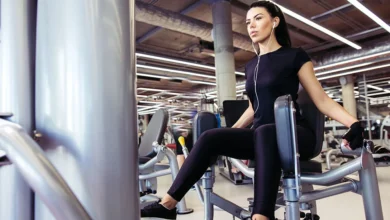
Dalton frequently incorporates a cable machine finisher into her sessions. Cable machines provide constant tension throughout the entire range of motion, which is crucial for muscular hypertrophy. Unlike free weights, which have "dead zones" where the muscle is not under maximum load, cables keep the tension continuous.
Furthermore, Dalton utilizes boxing as a primary cardiovascular tool. Boxing is highly effective for improving coordination, shoulder endurance, and core stability. It allows performers to simulate the high-stress environment of a fight scene while burning significant calories and improving overall agility.
Professional Implications and Industry Impact
The physical preparation demonstrated by Devyn Dalton serves as a case study for the evolving standards within the stunt industry. As audiences become more sophisticated, the demand for authentic, high-impact action sequences has increased. Consequently, the stunt profession has shifted from a secondary role to a specialized athletic career.
Data from the fitness industry suggests that functional training programs—those that prioritize movement patterns over aesthetics—are increasingly effective for longevity in high-impact professions. By integrating yoga for recovery and martial arts for skill acquisition, Dalton has demonstrated that "small-stature" is not a limitation but rather a specific physical profile that, when properly conditioned, can be exceptionally explosive and efficient.
The recognition by Matt Damon underscores a broader industry shift: lead actors are increasingly reliant on their stunt doubles not just for safety, but for the physical credibility of their roles. When a stunt double exhibits a physique that is both functional and aesthetically imposing, it enhances the believability of the character, particularly in physically demanding roles such as that of the mythical Odysseus.
Conclusion and Recommendations
Dalton’s advice for aspiring athletes remains grounded in individual progression rather than competitive comparison. Her methodology emphasizes the importance of recovery—a factor often overlooked in high-intensity training. By recommending a frequency of two sessions per week, she allows for adequate musculoskeletal repair, which is essential for preventing the chronic injuries common in stunt work.
"My biggest advice is to stop comparing your body or your numbers to anyone else’s," Dalton states. "Start where you are, learn good technique, get a little stronger over time, and find a way of training that you genuinely enjoy. Fitness should add to your life, not punish you."
For those looking to adopt a similar routine, the consensus among strength coaches is that consistency and form are paramount. Whether utilizing pull-up bars, cable machines, or heavy bags, the goal should be to replicate the functional capacity that Dalton displays on screen. As the film industry continues to push the boundaries of what is possible, performers like Dalton represent the new standard of what it means to be an athlete in the modern entertainment era. Through a commitment to technical precision and a holistic approach to wellness, she has not only doubled for a hero but has established herself as a significant contributor to the field of human performance.