Richmond Office of Neighborhood Safety Program Linked to 61 Percent Reduction in Firearm Violence Over Fourteen Years

A landmark study published in the Journal of the American Medical Association (JAMA) Network Open has provided compelling empirical evidence that community-based violence intervention programs can achieve significant, long-term reductions in urban gun violence. Researchers from the University of California, Berkeley’s Center for Global Healthy Cities found that the Richmond, California, Office of Neighborhood Safety (ONS) was responsible for a 61 percent decline in firearm-related homicides and non-fatal injury shootings over a 14-year period. This research represents one of the most comprehensive longitudinal analyses of a municipal violence prevention initiative in the United States, offering a potential blueprint for other cities grappling with persistent gun violence.
The Evolution of the Richmond Model
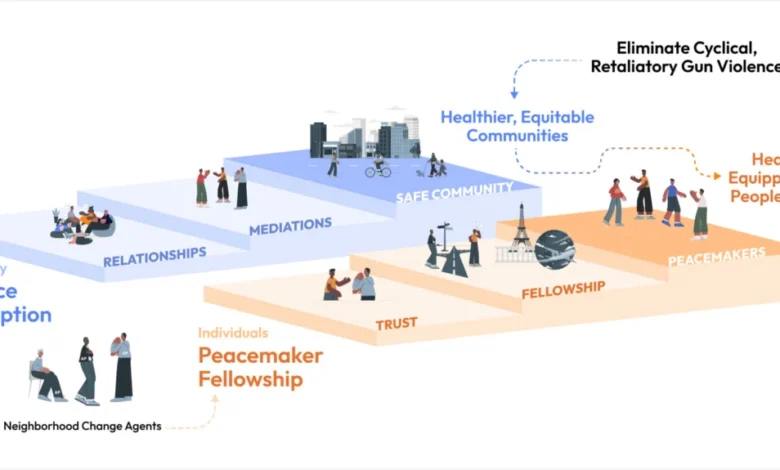
The Richmond Office of Neighborhood Safety was established in 2010 as a strategic response to the city’s high rates of firearm violence. Unlike traditional law enforcement-led interventions, the ONS operates as a distinct municipal agency, intentionally separated from the Richmond Police Department. The cornerstone of its efforts is the Operation Peacemaker Fellowship, a program that utilizes a public health approach to address the root causes of violence.
The Fellowship focuses on the individuals most likely to be involved in gun violence—often those labeled as "active firearm offenders" or those at high risk of victimization. By deploying street-outreach workers who possess deep credibility within the community, the ONS provides these individuals with intensive mentorship, cognitive behavioral therapy, life-skills training, and social service navigation, including assistance with housing, employment, and substance abuse treatment.

Chronology of Intervention and Impact
The implementation of the ONS program followed a period of intense public pressure to curb violence in Richmond. Since its inception in 2010, the program has evolved through several distinct phases:
- 2010–2012 (The Pilot Phase): Initial establishment of the Peacemaker Fellowship. The focus was on identifying high-risk individuals and building trust through street-level engagement.
- 2013–2017 (Scaling and Stabilization): The program began to see consistent funding and refined its methodology. Outreach workers were standardized as full-time city staff with benefits, contributing to low turnover and long-term mentorship consistency.
- 2018–2020 (Resilience Testing): During the onset of the COVID-19 pandemic, which saw violence spikes across the United States, Richmond’s data showed a remarkable resistance to these trends compared to regional and national averages.
- 2021–2024 (Institutionalization): Despite a significant reduction in the city’s sworn police force—dropping from over 300 full-time equivalent officers in 2014 to 121 in 2024—the ONS maintained and expanded its operations, further cementing its role as a primary pillar of public safety in the city.
Data-Driven Analysis of Success
To quantify the impact of the ONS, the UC Berkeley research team, led by doctoral candidate Alice Bruno, employed a sophisticated comparative methodology. By analyzing data from dozens of demographically and socioeconomically similar cities across the United States, the researchers developed a "synthetic control" model to simulate what violence rates in Richmond would have looked like in the absence of the ONS program.
The results indicated a statistically significant divergence. While Richmond experienced a 61 percent reduction in firearm incidents, the comparison group cities did not mirror this decline. Lead author Alice Bruno noted that the Fellowship contributed to long-term, sustained reductions, and importantly, the effectiveness of the program appeared to increase as it matured and integrated more deeply into the community fabric.
The study’s co-authors, including Jason Corburn, Mahasin Mujahid, Sean Darling-Hammond, and Juan Cabrera, emphasized that the findings remained robust even when controlling for broader national trends. While the FBI has reported a recent 18.1 percent national decline in murder rates, Richmond’s historical performance consistently outperformed these benchmarks for over a decade, indicating that the ONS interventions were a primary driver of the local success.

Official Perspectives and Operational Insights
The success of the ONS is attributed to a combination of institutional stability and personalized intervention. Sam Vaughn, the director of the ONS, underscored the real-world implications of the data, noting that the statistics align with the tangible improvements observed on the streets of Richmond: fewer shootings, lower mortality rates, and a more stable, healthier community environment.
James Houston, the program manager who oversees the daily operations of the Peacemaker Fellowship, manages a team of 14 street-outreach workers currently serving 123 participants. According to Houston, the success is rooted in the symbiotic relationship between the mentors and the participants. The program provides the structural support—food, housing, and counseling—that allows participants to make different life choices.
The narrative of change is perhaps best illustrated by the participants themselves. One former participant described the transformation from a mindset of survival and street status to one of community contribution, employment, and family stability. This individual, who previously believed he would not survive past his teenage years, now credits the daily engagement of his mentor for his ability to navigate life’s stressors without resorting to violence.
Broader Implications for Public Health
The implications of the Richmond study extend far beyond the Bay Area. The research highlights several unique aspects of the ONS model that may be critical to its success:

- Organizational Independence: The ONS functions as a government agency separate from the police department. This separation is essential for maintaining the trust of participants who may have historically antagonistic relationships with law enforcement.
- Long-Term Staff Retention: By providing competitive pay and benefits to outreach workers, the ONS has retained staff for over a decade. This continuity is vital for building the long-term relationships required for effective behavioral change.
- Holistic Support: The program does not treat gun violence as a singular issue but as a symptom of broader social and psychological challenges. By addressing trauma, addiction, and economic instability simultaneously, the program creates a more resilient individual.
- Fiscal Sustainability: Even as the city of Richmond faced budget constraints and police force downsizing, the ONS maintained its funding through a mix of city support and grants. This demonstrates that investing in social infrastructure can be a fiscally responsible alternative to, or complement for, traditional policing.
Analyzing the "Richmond Effect"
The "Richmond Effect" serves as a case study for the efficacy of non-police interventions. Analysts note that while policing remains a component of public safety, the ONS model suggests that "violence interruption" is a proactive, rather than reactive, tool. By intervening before a conflict escalates to a firearm discharge, the ONS disrupts the cycle of retaliatory violence that plagues many urban centers.
Furthermore, the study provides evidence that violence prevention is a "force multiplier" for other social outcomes. When gun violence is reduced, the downstream effects include improved educational outcomes, increased economic investment in neighborhoods, and a reduction in the collective trauma that hampers community development.
As cities across the country look for effective strategies to curb violence, the Richmond model offers a data-backed alternative to traditional methods. The researchers at UC Berkeley have indicated that future studies will continue to examine which specific components of the ONS are most effective, providing even greater granular detail for policymakers. For now, the evidence suggests that the combination of consistent, professionalized, and empathetic intervention can successfully reorient individuals and communities away from the cycle of violence, offering a sustainable path toward public health and safety.
The research findings serve as a stark reminder that violence is not an inevitable feature of urban life but a public health crisis that can be managed and mitigated through intentional, well-resourced, and sustained community action. The success of the Office of Neighborhood Safety demonstrates that when a city prioritizes the human needs of its most vulnerable residents, it can fundamentally alter the trajectory of its future.