Navigating the Gradual Erosion of Global Stability: A Comprehensive Guide to Modern Preparedness and Societal Resilience

The modern landscape of global stability is increasingly defined not by singular, cataclysmic events, but by a series of cascading systemic vulnerabilities. From disruptions in global supply chains to the fragility of interconnected energy grids, the contemporary socioeconomic environment is experiencing a gradual, measurable erosion. Experts in risk assessment and logistics observe that this process is characterized by thinning rule of law, intermittent service failures, and the exhaustion of just-in-time delivery models. For citizens and policymakers alike, the challenge lies in shifting from a reactionary posture to one of informed, decentralized resilience.
The Chronology of Systemic Instability
The current state of global instability can be traced back to the post-pandemic supply chain shocks of 2020 and 2021, which exposed the lack of redundancy in international trade. Since that period, a series of tremors has continued to test the limits of infrastructure. In 2022, the European energy crisis highlighted the vulnerability of regional power grids to geopolitical conflicts. By 2023 and 2024, reports of labor strikes in the logistics sector—specifically among long-haul truckers and port workers—further demonstrated how quickly urban centers become isolated when transit lines are severed.
The sequence of these events follows a pattern: an initial shock to the system leads to localized shortages, which then trigger behavioral changes among the public, such as panic-buying or hoarding. A notable example occurred in Italy, where brief but intense protests resulted in the localized depletion of food supplies, serving as a case study for how quickly civil order can degrade when grocery distribution is interrupted. These events are not isolated; they are part of a broader trajectory where centralized systems struggle to manage the combined pressures of inflation, energy scarcity, and logistical bottlenecks.
Supporting Data and Risk Factors
Analysis of current global indicators suggests that the primary risks to stability involve three critical vectors: energy distribution, agricultural output, and digital infrastructure. According to the International Energy Agency (IEA), the concentration of oil and gas transit through specific maritime chokepoints, such as the Strait of Hormuz, creates a single point of failure that could, if compromised, lead to an immediate 15-20% increase in global fuel costs. Such a spike would inevitably lead to a cessation of non-essential shipping, creating the exact "empty shelf" scenario that many risk analysts fear.
Furthermore, the fertilizer market remains a point of concern. The global agricultural sector is heavily dependent on synthetic fertilizers, the production of which is inextricably linked to natural gas prices. A sustained increase in the cost of these inputs leads directly to lower crop yields in the following harvest cycle, a phenomenon already observed in parts of Southeast Asia and Sub-Saharan Africa. When these data points are synthesized, the trend line suggests a future of "managed scarcity," where the availability of basic goods is no longer guaranteed by the market alone.
The Psychology of Mass Reality Avoidance
Sociological research indicates that a significant segment of the population remains in a state of "mass reality avoidance," a phenomenon where individuals prioritize the maintenance of cognitive normalcy over the acknowledgment of systemic risks. This behavior, often reinforced by mainstream media narratives that prioritize stability, leaves a large portion of the public vulnerable when crises arrive.
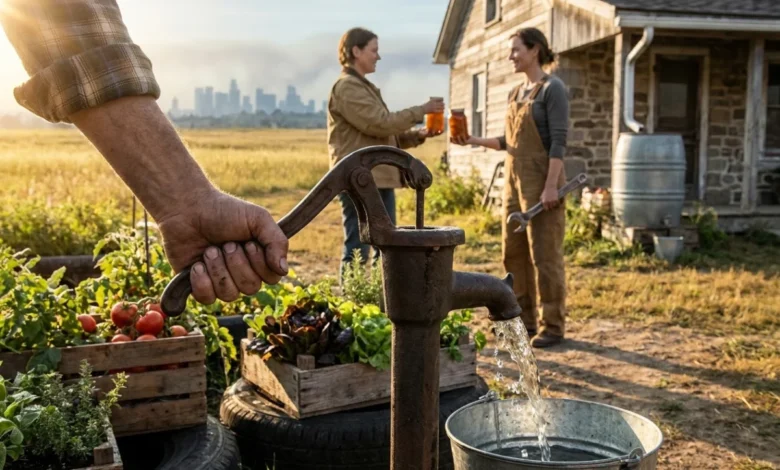
Conversely, those who engage in proactive preparedness—often referred to in logistics circles as "decentralization of dependence"—are statistically more likely to weather systemic shocks. The transition from total reliance on corporate and government systems to the establishment of individual or community-based buffers is a core tenet of modern disaster mitigation. This does not imply a total withdrawal from society, but rather the implementation of "redundancy layers," such as on-site water purification, localized food storage, and the acquisition of tradeable skills.
Official Responses and Institutional Perspectives
While government agencies maintain that the supply chain is robust, internal memos from departments of homeland security in various nations have increasingly shifted focus toward "continuity of operations" (COOP) in the event of grid failure. Official responses often emphasize that the public should maintain at least 72 hours of supplies; however, independent consultants argue that in the face of a systemic erosion—as opposed to a localized natural disaster—this window is insufficient.

Organizations such as the Red Cross and various civil defense agencies have recently updated their guidelines to suggest that households build more robust, longer-term caches. Despite this, there remains a disconnect between institutional messaging and the reality of the risks. Analysts argue that this is due to a desire to prevent "panic-driven economic volatility," suggesting that the state itself is incentivized to downplay the severity of the ongoing erosion to maintain market confidence.
Implications of Decentralized Resilience
The shift toward decentralization has profound implications for the future of social organization. As centralized institutions face challenges in meeting basic demands, parallel networks are naturally emerging. These include:
- Barter and Trade Networks: The emergence of local exchanges for labor, expertise, and goods that bypass traditional financial rails.
- Resource Autonomy: The adoption of solar, wind, and well-water technologies that allow for residential operation independent of municipal grids.
- Community Triage: A shift in community dynamics where neighbors are increasingly organizing around shared security and resource pools, effectively replacing the reactive role of local law enforcement in low-intensity scenarios.
The implications for urban centers are particularly severe. High-density areas rely entirely on the seamless flow of goods. Any interruption longer than 96 hours is projected to cause significant social instability. Consequently, there is an ongoing migration pattern—both in the private sector and among individuals—toward semi-rural areas where the capacity for self-defense and food production is higher.
Managing the Human Element
One of the most overlooked aspects of systemic failure is the human response to scarcity. Historical analysis of the "nine meals from anarchy" principle—the theory that society is only nine meals away from chaos—suggests that once the perception of food security is lost, the social contract effectively dissolves.
For those who have taken steps toward preparedness, the challenge is not just material, but ethical. The pressure to assist the unprepared will be immense. Experts recommend the establishment of "triage protocols" long before a crisis manifests. This involves clearly defining who can be supported and at what cost to the household’s overall stability. Compassion remains a vital component of a functioning society, but it must be balanced against the necessity of long-term sustainability. The goal is to remain a contributor to one’s community, not to become a victim of its desperation.
Future Outlook and Strategic Adaptation
The trajectory of the next decade suggests that the "gradual erosion" will continue. Rather than a singular date of collapse, society will likely witness a series of compounding stressors that force individual households to choose between increasing dependence on failing systems or investing in self-reliance.
Success in this environment does not require perfection or the construction of a fortress. It requires the ability to bend without breaking. By reducing single points of failure—such as relying on a single utility provider, a single source of food, or a single income stream—individuals can insulate themselves from the volatility of the broader system.
The transition to a more resilient existence is ultimately a process of education. Acquiring skills in mechanical repair, food preservation, basic medical care, and digital privacy is an investment that yields dividends regardless of whether a major crisis occurs. As the global landscape continues to shift, the value of these competencies will only increase, positioning the prepared individual not as a relic of the past, but as a foundational element of a more stable, decentralized future. The capacity to adapt to shifting circumstances, rather than the ability to predict them, will be the defining metric of survival in the coming years.