The Global Sulfur Crisis Explained: The Invisible Chokepoint That Could Break Food, Energy, and Industry

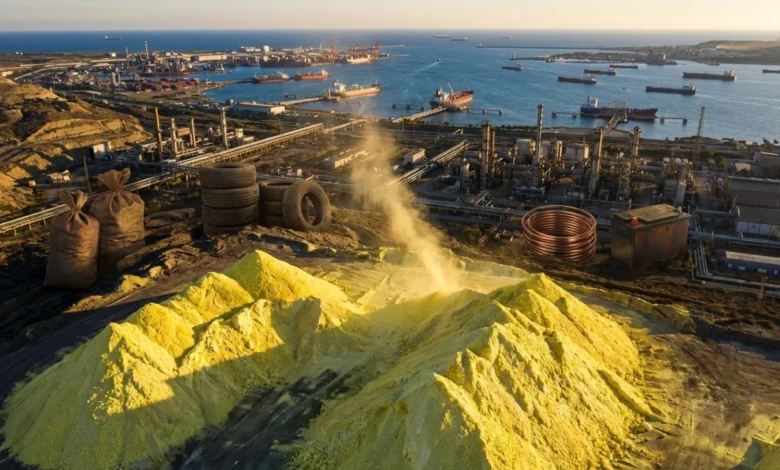
The global industrial supply chain is currently facing a systemic disruption that threatens the foundational components of modern civilization. While public discourse has largely remained fixated on the price of crude oil and the geopolitical instability surrounding the Strait of Hormuz, a far more critical, albeit less visible, commodity is reaching a point of critical depletion: elemental sulfur. Since the escalation of hostilities in the Persian Gulf in March, the flow of sulfur—a byproduct of oil and gas refining—has been severely constricted. Because sulfur serves as the chemical backbone for everything from phosphate fertilizers to the vulcanization of rubber and the leaching of essential metals, this supply interruption represents an unprecedented risk to global food security and manufacturing stability.
The Role of Sulfur in the Industrialized Economy
To understand the magnitude of this crisis, one must first recognize the role of sulfur in the global molecular supply chain. Sulfur is rarely the primary product of extraction; rather, it is a byproduct of the desulfurization process required to produce "clean" fuels from sour oil and gas reserves. Once extracted, this elemental sulfur is converted into sulfuric acid, arguably the most important chemical compound in existence.
The industrial utility of sulfuric acid is vast. It is the primary reagent used to dissolve phosphate rock into soluble phosphoric acid, which is then used to manufacture granular fertilizers. Without a steady supply of sulfur, the global production of phosphate-based fertilizers—essential for the cultivation of staple crops—effectively grinds to a halt. Furthermore, sulfur is indispensable in the mining sector. Sulfuric acid is the standard solvent for leaching copper, nickel, and zinc from ore. The metallurgical implications of a sulfur shortage are profound: as production of these metals wanes, the secondary production of precious metals, such as silver, which is often extracted alongside base metals, also declines.
Chronology of the Supply Disruption
The current crisis traces its origins to the systematic disruption of the Persian Gulf, a region that historically accounts for a significant portion of global sulfur exports. The timeline of the disruption is as follows:
- March 2026: A series of escalated military engagements in the Persian Gulf results in the effective closure of the Strait of Hormuz. International shipping insurance rates surge, and major energy exporters cease the transport of refined byproducts.
- April 2026: Global sulfur spot prices begin a sharp upward trajectory. Industrial consumers, particularly in the agricultural and battery manufacturing sectors, begin to burn through existing inventories.
- May–June 2026: Major fertilizer manufacturers in the Northern Hemisphere report significant delays in production. Governments in several jurisdictions declare emergency status regarding agricultural inputs as the cost of urea and phosphate-based fertilizers doubles in regional markets.
- July 2026–Present: Global reserves, heavily bolstered by decades of accumulation in Alberta, Canada, enter a state of rapid depletion. Industry analysts warn that the "buffer" provided by these stockpiles is non-renewable and is currently being drawn down at an unsustainable rate.
Analytical Data on Supply Fragility
The current situation is exacerbated by the "just-in-time" nature of modern global logistics. Historically, sulfur was treated as a low-value commodity, often priced at approximately $50 per ton. Recent market data suggests that prices have reached levels 10 to 20 times higher than historical norms. The scarcity is not merely a reflection of logistics costs, but of a fundamental absence of supply.
According to sector analysts, the global agricultural system requires approximately 200 million tons of phosphate fertilizer annually to sustain current yield levels. Because the sulfur-to-phosphoric acid conversion process is mandatory, a 20 percent reduction in sulfur availability leads to a disproportionate impact on crop yields. When applied to the global grain market, this translates to a potential deficit in food output that could impact populations across the developing world within 9 to 12 months.
Official Responses and Institutional Reactions
Governmental bodies have begun to acknowledge the strain on the supply chain, though their responses have been categorized by many industry observers as reactive rather than strategic. Several nations have initiated duty-free import programs for phosphate and sulfur-based chemicals in a bid to stabilize domestic markets. In the United States, agricultural departments have issued guidance to farmers regarding soil management, while energy regulators are evaluating the feasibility of increasing domestic "sour" gas processing to recover additional sulfur—a process that is time-intensive and requires significant capital investment.
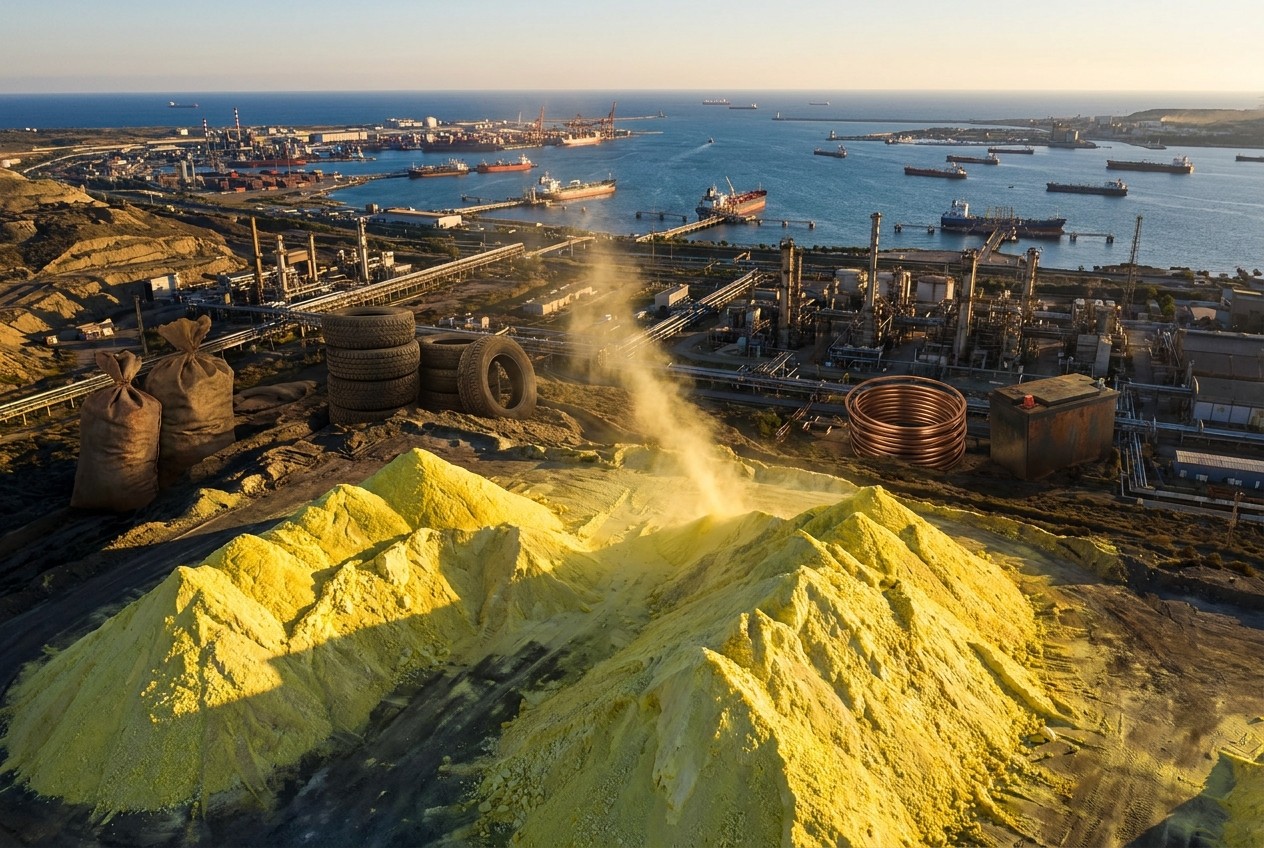
International commodity organizations have warned that the reliance on concentrated, centralized stockpiles—such as those in Alberta—leaves the world vulnerable to sudden, catastrophic failures. The lack of decentralized, localized production capacity means that when these massive stockpiles are exhausted, there is no immediate "on-switch" to restart the supply.
Broader Implications: Energy, Tires, and Infrastructure
The cascading effects of the sulfur crisis extend well beyond the farm. The automotive industry is particularly sensitive to the availability of sulfur due to the vulcanization process. Tires are not merely rubber; they are complex chemical products that require sulfur to cross-link polymer chains, providing durability and safety. A sustained shortage could lead to a manufacturing bottleneck in the automotive sector, further complicating the supply of heavy-duty transportation vehicles required for logistics.
Similarly, the energy sector is facing a silent threat. The transition to renewable energy storage, specifically lithium-iron-phosphate (LFP) battery chemistry, is heavily dependent on the availability of high-purity phosphoric acid. A disruption in the sulfur supply chain effectively places a ceiling on the growth of battery manufacturing, threatening the targets set by various nations for the electrification of their transport grids.
Furthermore, the integrity of the electrical grid is at risk. Copper is the most critical metal for the transmission of electricity. If the leaching process for copper ore cannot be sustained due to a lack of sulfuric acid, the availability of high-grade copper will diminish, leading to increased costs for infrastructure projects, substation upgrades, and the high-density cabling required for modern data centers.
Conclusion: The Need for Structural Resilience
The sulfur crisis serves as a stark reminder of the fragility of the globalized industrial architecture. By relying on a single, narrow geographical chokepoint to provide the essential molecular components for food, energy, and technology, the global economy has entered a state of precarious dependency.
Moving forward, policy experts are calling for a shift toward industrial decentralization. This includes the development of local sulfur recovery facilities, the exploration of alternative fertilizer technologies that do not rely on high-volume phosphate dissolution, and a re-evaluation of how strategic reserves are managed. The current reliance on existing stockpiles is a temporary stopgap, not a long-term solution. As the yellow piles in Alberta continue to dwindle, the necessity of building domestic, resilient supply chains has transitioned from a theoretical concern to an urgent national security priority.
The coming months will be a definitive test for the global supply chain. The question is no longer whether a crisis exists, but how the world will adapt when the remaining buffers are fully exhausted. Industrial stability, once taken for granted, now hinges on the availability of a single, often overlooked element. The transition from an era of abundance to an era of scarcity will require significant adjustments in both public policy and industrial strategy to prevent a broader systemic failure of the modern economy.