Parasomnias Identified as Significant Clinical Indicators for Psychiatric Disorders in Massive Decadelong Study


A groundbreaking analysis of more than 372,000 patients across the United States has established a profound and statistically significant link between parasomnias—unusual behaviors occurring during sleep—and various psychiatric conditions, most notably clinical depression. The study, which utilized data spanning fifteen years of clinical observations, reveals that individuals suffering from depression are nearly three times more likely to experience frequent parasomnias compared to the general population. This discovery marks a pivotal shift in how sleep medicine and psychiatry intersect, suggesting that behaviors such as sleepwalking, night terrors, and sleep-related eating disorders should no longer be viewed as mere "sleep quirks" but as critical diagnostic markers for underlying mental health challenges.
The research, which drew upon a vast repository of data from 240 sleep centers across 30 states, offers one of the most comprehensive looks at the prevalence of these nocturnal disturbances to date. By examining the records of 371,811 patients between 2004 and 2019, researchers have provided a high-resolution map of how the sleeping brain mirrors the waking mind’s distress. The sheer scale of the study allows for a level of statistical certainty that previous, smaller-scale studies could not achieve, reinforcing the necessity for medical professionals to integrate detailed sleep history into standard psychiatric evaluations.
Understanding the Spectrum of Parasomnias
Parasomnias represent a diverse group of sleep disorders involving unwanted physical events or experiences that occur while falling asleep, during sleep, or upon arousal from sleep. These events are often characterized by complex, goal-directed behaviors that the individual typically does not remember. In the context of this study, researchers focused on several distinct manifestations:
- Sleep Talking (Somniloquy): The most common parasomnia identified, involving vocalizations that can range from simple sounds to long, complex speeches.
- Sleep Hallucinations (Hypnagogic and Hypnopompic): Vivid, often frightening sensory experiences that occur at the transition between wakefulness and sleep.
- Sleep-Related Eating Disorders: Compulsive eating episodes during the night where the individual is in a state of partial arousal, often consuming unusual or hazardous items.
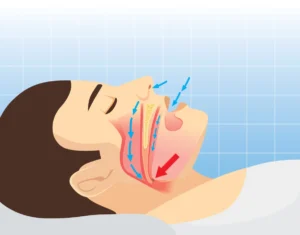
- Sleep Paralysis: A temporary inability to move or speak while waking up or falling asleep, frequently accompanied by a sense of chest pressure or a "presence" in the room.
- Sleepwalking (Somnambulism): Complex motor behaviors initiated during deep sleep, which can involve walking, moving furniture, or even exiting a building.
The study found that approximately 16% of the clinical population—roughly one in six individuals—experiences at least one of these behaviors on a regular basis. While sleep talking was the most prevalent (8.8%), the clinical significance of more complex behaviors like sleepwalking and sleep-related eating was highlighted by their strong correlation with psychiatric distress.
Methodology and the Fifteen-Year Chronology
The research team analyzed data collected over a 15-year period, creating a chronological narrative of sleep health in the United States. Between 2004 and 2019, patients visiting participating sleep centers were asked to complete standardized questionnaires regarding the frequency and nature of their nocturnal behaviors.
To ensure the data reflected chronic conditions rather than isolated incidents, the researchers categorized responses into two primary groups. The first group consisted of patients who reported experiencing parasomnias "often" or "always," while the control group included those who experienced them "a few times" or "never." This distinction was crucial for isolating the behaviors most likely to be tied to stable psychiatric diagnoses rather than temporary stressors or acute sleep deprivation.
The timeframe of the study is particularly relevant as it covers a period of significant change in both sleep medicine and the public’s understanding of mental health. As diagnostic criteria for depression and anxiety evolved during these years, the data remained consistent in showing that as mental health deteriorated, the frequency of parasomnias increased.
The Statistical Link: A Deep Dive into the Data
The most striking revelation of the study is the "odds ratio" regarding depression. According to the findings, patients diagnosed with depression were 2.72 times more likely to fall into the "often/always" parasomnia category. This nearly threefold increase suggests a deep-seated biological or neurological connection between the mechanisms that regulate mood and those that govern the transitions between sleep stages.
Beyond the headline figure for depression, the data revealed other significant patterns:
- Sleep Talking: 8.8% of the study population reported frequent occurrences.
- Sleep Hallucinations: Reported by 6% of patients, often linked to high levels of anxiety.
- Sleep-Related Eating: 4.8% of patients, a condition that carries significant metabolic and safety risks.
- Sleep Paralysis: 2.1% of patients, frequently associated with REM sleep disruptions.
- Sleepwalking: 1.7% of patients, primarily occurring during the deepest stages of non-REM sleep.
The researchers also noted that the presence of multiple parasomnias in a single patient significantly increased the likelihood of a co-morbid psychiatric diagnosis. This suggests a "cumulative effect," where the more chaotic a person’s sleep architecture becomes, the more likely they are to be suffering from an underlying affective disorder.
Neurobiological Implications and Expert Perspectives
While the study was primarily epidemiological, the findings have prompted a renewed discussion among neuroscientists regarding the "incomplete arousal" theory. This theory suggests that parasomnias occur when the brain is stuck between states—partially awake and partially asleep. In patients with depression, the neurochemical balance of serotonin, norepinephrine, and dopamine is often disrupted. Since these same chemicals play a vital role in regulating sleep cycles, their imbalance may prevent the brain from cleanly transitioning between consciousness and the various stages of sleep.
Medical professionals reacting to the study emphasize the "bidirectional" nature of the relationship. Dr. Aris Iatridis, a sleep medicine specialist not directly involved in the study, noted that "Sleep is often the first thing to break when the mind is under duress. By the same token, fractured sleep can exacerbate depressive symptoms, creating a vicious cycle that is difficult to break without addressing both the psychiatric and the physiological aspects of the patient’s health."
Furthermore, the role of psychiatric medications cannot be ignored. Many common antidepressants, particularly Selective Serotonin Reuptake Inhibitors (SSRIs), are known to alter REM sleep and can, in some cases, trigger or worsen parasomnias. This adds a layer of complexity for clinicians who must balance the treatment of depression with the potential for increased sleep disturbances.
Broader Impact on Clinical Practice and Public Health
The implications of this study for clinical practice are profound. Historically, parasomnias have been treated as secondary symptoms or "nuisance" behaviors. However, this data suggests they should be treated as primary clinical indicators.
1. Screening Protocols: The researchers advocate for a change in how psychiatric intakes are performed. Questions about sleepwalking, night terrors, and sleep-talking should be as standard as questions about appetite or mood.
2. Safety Concerns: Parasomnias like sleepwalking and sleep-related eating pose physical dangers, including falls, injuries from sharp objects, or the consumption of toxic substances. Identifying these behaviors early in psychiatric patients can lead to preventative safety measures in the home.
3. Targeted Treatment: Understanding that a patient’s sleepwalking is tied to their depression allows for a more holistic treatment plan. This might include cognitive-behavioral therapy for insomnia (CBT-I) alongside traditional depression treatments.
From a public health perspective, the study highlights a significant under-recognition of sleep disorders in the general population. If 16% of sleep clinic patients are experiencing these issues, the number of undiagnosed individuals in the wider community is likely substantial. Increased public awareness could lead more people to seek help for "strange" sleep behaviors that they might otherwise be embarrassed to mention.
Conclusion and Future Directions
The massive scale of this 372,000-patient study provides a definitive link between the "nighttime mind" and psychiatric health. By identifying parasomnias as potent indicators of depression, the research opens new avenues for early intervention and more nuanced diagnostic approaches.
As the medical community moves forward, the focus will likely shift toward longitudinal studies to determine if treating parasomnias can actually improve psychiatric outcomes, or if successful treatment of depression naturally resolves these sleep disturbances. For now, the message to both patients and doctors is clear: what happens during the night is a vital window into the health of the mind during the day. Unusual sleep behaviors are not just quirks; they are a call for clinical attention, offering a unique opportunity to catch and treat mental health disorders before they escalate.
The full study, published in the journal Psychiatry and Clinical Neurosciences, serves as a landmark document in the ongoing effort to integrate sleep medicine into the broader framework of mental health care, ensuring that the 16% of the population struggling with these disturbances are no longer left in the dark.