Orthopedic surgeons reveal 3 ways to slow arthritis — and one goes against what most people believe

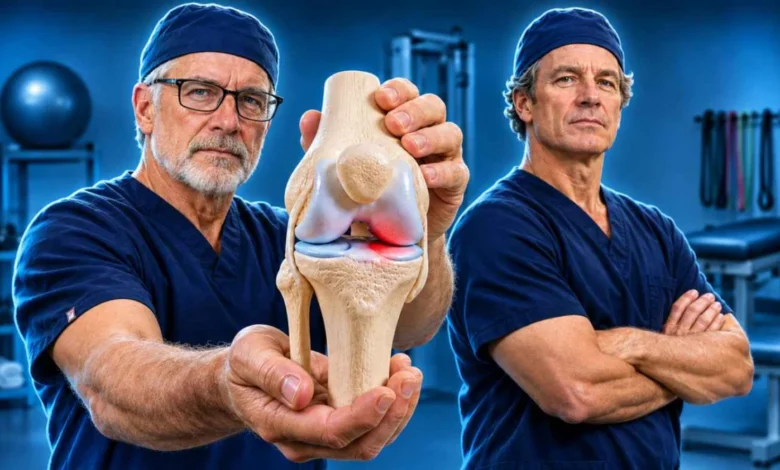
The clinical reality of osteoarthritis remains one of the most misunderstood topics in modern medicine. Despite the proliferation of advertisements for supplements, regenerative injections, and “joint-rejuvenation” protocols, the consensus among orthopedic surgeons, including Dr. Brad Weening and Dr. Paul Zalzal, is stark: there is currently no pill, injection, or dietary supplement clinically proven to regrow or regenerate worn articular cartilage in humans.
As the global population ages, the prevalence of osteoarthritis (OA) continues to climb, becoming a leading cause of disability worldwide. Understanding how to manage this condition requires shifting the focus from the search for a miracle cure toward evidence-based lifestyle modifications that can effectively slow disease progression and significantly improve quality of life.
The Anatomy and Pathology of Osteoarthritis
To understand why reversal is not currently possible, one must look at the biological nature of cartilage. Articular cartilage is a specialized, avascular connective tissue that caps the ends of bones. Because it lacks a direct blood supply, it relies on the diffusion of nutrients from the synovial fluid within the joint space. Once this tissue is damaged or eroded, the body lacks the biological mechanism to repair it to its original, smooth, load-bearing state.
Osteoarthritis is fundamentally a degenerative disease. It is distinct from inflammatory conditions like rheumatoid arthritis, which is an autoimmune process. In OA, the structural integrity of the joint breaks down over time, leading to the characteristic pain, stiffness, and inflammation associated with bone-on-bone contact. While surgical interventions like total joint arthroplasty (replacement) can resolve the mechanical symptoms of an end-stage joint by replacing the damaged surfaces with metal and polyethylene, the "arthritis" itself is removed along with the joint, rather than cured in the biological sense.
The Counterintuitive Necessity of Movement
The most significant misconception regarding joint health is the belief that a painful, arthritic joint should be kept immobile to prevent further wear. In reality, total rest is often the worst possible approach.
Orthopedic specialists emphasize that joints require movement to maintain health. Because cartilage is avascular, the rhythmic compression and release of the joint during movement act as a pump, circulating synovial fluid and forcing nutrients into the cartilage matrix. Furthermore, the muscles surrounding the joint serve as the primary shock absorbers for the skeletal system. When patients reduce activity due to pain, these muscles undergo atrophy, which reduces joint stability and increases the mechanical load on the already compromised cartilage.
Clinical data suggests that physical therapy and structured strength training are among the most effective treatments for slowing the progression of OA. By strengthening the quadriceps, hamstrings, and supporting core musculature, patients can effectively "offload" the joint, shifting the burden of movement from the bone surfaces to the musculature. The goal is not to force painful movement, but to engage in low-impact, consistent activity that maintains joint lubrication and structural stability.
The Long-Term Impact of Joint Injuries
The history of an individual’s joint health often begins years, or even decades, before the onset of chronic arthritis. Injury prevention is the only truly effective way to "reverse" arthritis—by preventing it before it begins.

A clear chronology exists between acute trauma and chronic degeneration. A high-impact injury, such as an anterior cruciate ligament (ACL) tear or a tibial plateau fracture, creates an immediate focal defect in the cartilage. Even with gold-standard surgical reconstruction, the mechanics of the joint are often permanently altered. Longitudinal studies on athletes have shown that a significant percentage of those who suffer major knee trauma develop post-traumatic osteoarthritis within 10 to 15 years.
This realization has changed how sports medicine professionals approach recovery. The focus is no longer just on returning to play, but on long-term biomechanical alignment and bone health. Osteoporosis, often categorized as a separate entity, plays a secondary role; by weakening the bone structure, osteoporosis increases the risk of micro-fractures near the joint, which can accelerate the degenerative cycle.
The Statistical Weight of Body Mass
The correlation between body weight and joint degradation is perhaps the most heavily supported data point in orthopedic research. The knee joint, in particular, acts as a force multiplier; for every pound of body weight, approximately four pounds of pressure are exerted on the knee during walking.
Large-scale meta-analyses, including reviews of prospective studies, indicate that individuals with obesity face a 4.5-fold higher risk of developing knee osteoarthritis compared to their healthy-weight counterparts. Furthermore, for every 5-point increase in Body Mass Index (BMI), the risk of symptomatic osteoarthritis rises by roughly 35 percent.
The clinical implication is that weight loss is the most powerful tool available for pain management. For patients with existing arthritis, even a modest reduction in weight can lead to a disproportionate reduction in pain. Reducing the gravitational load on the joint lessens the inflammatory response and allows for a higher threshold of activity, creating a positive feedback loop of movement and health.
Evaluating Injections and Supplements
The marketplace is saturated with products promising cartilage regeneration, yet the medical literature remains unconvinced.
- Glucosamine and Chondroitin: Despite their popularity, extensive clinical trials, including the landmark GAIT study, have failed to show that these supplements can regrow cartilage or stop the progression of structural damage. While some patients report subjective symptom relief, it is often attributed to the placebo effect or minor anti-inflammatory properties rather than structural restoration.
- PRP and Stem Cells: Platelet-Rich Plasma (PRP) and stem cell injections have gained significant attention in recent years. While these therapies may help modulate the inflammatory environment within a joint, there is currently no high-quality, peer-reviewed human evidence demonstrating that they can regenerate healthy, hyaline cartilage. They are often marketed as "regenerative medicine," but in practice, they serve more as biological anti-inflammatories.
- Cortisone: Corticosteroid injections are effective at providing short-term relief during acute flare-ups by reducing inflammation. However, surgeons caution against frequent or repeated use, as some studies suggest that long-term, high-frequency cortisone exposure may actually accelerate cartilage thinning.
When to Seek Intervention
While standard "wear and tear" is common, patients must be aware of "red flag" symptoms that necessitate immediate medical evaluation. Persistent pain at night, significant joint swelling, redness, warmth, or a joint that locks or "gives way" can be indicative of underlying conditions such as crystalline arthritis (gout), septic arthritis (infection), or meniscal tears that require urgent intervention.
The Broader Implications for Healthcare
The shift toward proactive, lifestyle-based management of osteoarthritis represents a broader trend in medicine: moving away from the "fix-it-later" surgical model toward preventative maintenance. As medical costs rise, the focus on weight management, injury prevention, and physical therapy offers a more sustainable path for the healthcare system.
The consensus among orthopedic surgeons is a call to action for patients: take ownership of joint health through the pillars of movement and weight management. While the medical community continues to research advanced therapies, the most reliable "treatment" remains the one that has been proven over decades of clinical practice. By maintaining active lifestyles and protecting joints from avoidable trauma, patients can often manage their symptoms effectively, delaying the need for surgical intervention for years or even decades. The future of arthritis care lies not in a syringe or a pill, but in the sustained commitment to the biomechanical integrity of the human body.