The Art of Unlearning: Why Master Coaches Are Rethinking the Foundations of Client Success


In the rapidly evolving landscape of health and wellness, the definition of a "successful coach" is undergoing a profound transformation. Historically, coaching models—particularly in nutrition and fitness—emphasized the role of the authority figure: an expert who identifies a client’s deficits, prescribes a rigid protocol, and monitors compliance. However, recent data from behavioral psychology and professional certification programs suggest that this "expert-led" model often triggers a phenomenon known as the "righting reflex." This reflex, characterized by an instinctive urge to fix or steer a client, frequently results in client defensiveness, reduced autonomy, and eventual program abandonment.
As the industry shifts toward a more human-centric approach, seasoned practitioners are discovering that the path to mastery is paved not by accumulating more technical data, but by actively unlearning long-held, intuitive assumptions. This transition from "information provider" to "facilitator of change" is redefining how health outcomes are achieved in clinical and community settings.
The Paradox of the Righting Reflex
The righting reflex is a psychological concept rooted in Motivational Interviewing (MI), an evidence-based communication style. It manifests when a coach, motivated by a genuine desire to see a client improve, offers unsolicited advice or "fixes." While well-intentioned, this approach often backfires. When a coach pushes a client toward a specific behavioral change, the client may paradoxically begin to argue for the status quo.
Research into behavioral economics and psychology indicates that humans possess a deep-seated need for autonomy. When that autonomy is threatened by an external authority, psychological reactance—the urge to resist influence—occurs. Consequently, the most effective coaches are those who prioritize curiosity over correction, often exploring the benefits of maintaining current habits before investigating the possibility of change.
Chronology of a Shift: The Evolution of Coaching Methodology
For decades, the standard coaching trajectory was linear: obtain a certification, master the physiology of nutrition and exercise, and apply those facts to a client. However, a review of coaching practices over the last 15 years reveals a significant departure from this rigid framework.
- 2000–2010: The era of the "Robot Detective." Coaches focused heavily on data extraction—forms, assessments, and tracking logs—operating under the assumption that if the data was accurate, the solution would be obvious.
- 2010–2018: The emergence of "Behavioral Integration." As obesity rates and chronic lifestyle-related conditions continued to climb, the industry recognized that knowledge transfer (knowing what to eat) did not equate to behavior change.
- 2018–Present: The "Mastery Phase." Leading organizations like Precision Nutrition have pivoted to emphasize emotional intelligence, self-compassion, and the "whole-person" approach, prioritizing the coach-client relationship as the primary driver of adherence.
Data-Driven Insights: Why "More Information" Fails
The failure of the "more information" model is supported by longitudinal observations. In a study of client compliance, researchers found that the primary obstacle to success was not a lack of knowledge regarding macronutrients or training volume, but a lack of psychological safety and self-efficacy.
When coaches rely on exhaustive intake forms—sometimes exceeding 20 pages—to "solve the mystery" of a client, they often create a barrier to entry. The administrative burden can diminish a client’s initial motivation, leading to attrition before the first session even begins. Master coaches, such as Jeremy Fernandes, have reported that abandoning these diagnostic-heavy models in favor of open-ended dialogue leads to higher engagement rates. By shifting from "detective mode" to "listening mode," coaches enable clients to surface the true barriers to their progress, which are often psychological or environmental rather than purely physiological.
Redefining Goals: The Fallacy of the "Finish Line"
A critical realization among top-tier health coaches is that health is not a destination. While specific, measurable goals (such as running a marathon or achieving a target body mass index) have definitive end dates, lifestyle health is a perpetual process.
Kate Solovieva, Director of Community Engagement at Precision Nutrition, notes that the "save button" mentality—the idea that once a goal is reached, the effort can cease—is a major contributor to the cycle of yo-yo dieting. The industry is now emphasizing the "manufacturing of milestones." By breaking down long-term objectives into short-term, achievable, and psychologically rewarding goals, coaches provide the dopamine feedback loops necessary to maintain long-term engagement.
The Role of Compassionate Accountability
The intersection of self-compassion and accountability represents one of the most significant shifts in contemporary coaching. For years, the prevailing wisdom was that strict discipline was the antidote to non-compliance. However, practitioners like Azul Corajoria have observed that when clients face setbacks, a punitive or overly strict response often leads to shame-based withdrawal.
"Compassionate accountability" posits that a client is more likely to remain engaged if they can view a mistake as an opportunity for data collection rather than a moral failure. By fostering an environment where a client feels safe reporting a "loss" or a lapse in habit, the coach preserves the relationship. This relationship, in turn, becomes the container within which sustainable behavior change occurs.
Beyond the Scale: Holistic Success Metrics
The traditional "scorecard"—usually defined by weight or performance metrics—is being replaced by a more nuanced view of "Deep Health." This concept includes emotional well-being, relational health, and professional fulfillment.
Coach Dom Matteo, a National Board-Certified Health & Wellness Coach (NBC-HWC), advocates for the "Wellness Vision." This approach asks the client to define what success looks and feels like to them, rather than imposing external metrics. This allows for progress to be measured in ways that are personally meaningful to the client, which often includes improved energy, better sleep, or enhanced confidence, even when the scale remains static.
The Broader Impact and Industry Implications
The transition toward advanced coaching certifications—such as the Level 2 Master Health Coaching program—signals a maturing industry. The current market is saturated with fitness apps and AI-driven chatbots capable of providing generic nutritional advice. Consequently, the value of a human coach is no longer tied to their ability to calculate calories or design a workout program.
The future of the profession lies in the coach’s ability to:
- Synthesize complexity: Understanding how a client’s life context (work, family, stress) influences their physical habits.
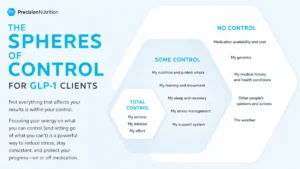
- Foster autonomy: Shifting from telling the client what to do to helping the client discover what they are willing and able to do.
- Prioritize the relationship: Treating the coaching connection as the "sun" around which all other interventions orbit.
As the industry continues to professionalize, the demand for coaches who are NBHWC-approved and capable of navigating these complex behavioral landscapes will increase. The most successful practitioners of the future will be defined not by the volume of information they possess, but by their humility, their capacity for unlearning outdated methodologies, and their dedication to the human beings they serve. By relinquishing the need to be the "all-knowing expert," coaches are finally empowering their clients to become the masters of their own health journeys.