Why Your Choice of Footwear at Home Could Be Increasing Your Risk of a Fall After Age 60

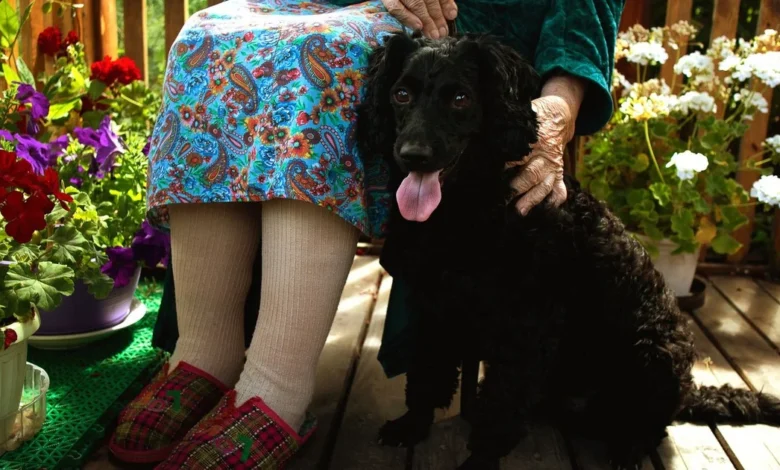
Falls represent a critical public health crisis among the aging population, acting as the leading cause of both fatal and nonfatal injuries for adults aged 65 and older. Data from the Centers for Disease Control and Prevention (CDC) indicates that more than one in four older adults reports falling annually. Alarmingly, this figure likely underestimates the true scale of the problem, as fewer than half of those who fall disclose the incident to their primary care physician. While environmental hazards are frequently cited as primary contributors, recent expert analysis suggests that a seemingly innocuous habit—wearing backless footwear inside the home—is a significant, modifiable risk factor that demands immediate attention.
The Physiology of Aging and Balance
To understand why the risk of falling accelerates after age 60, one must first consider the complex physiological shifts that occur during the aging process. As individuals reach their seventh decade, the body undergoes a series of cumulative changes that directly impact mobility. Dr. Kenneth A. Knapp, a public health expert and chair of the Department of Public Health at New York Medical College, notes that while Americans are living longer, the biological reality of aging remains constant. Balance, muscle mass, vision, and cognitive processing speed—often referred to as reaction time—tend to decline over time.
These physical changes are further complicated by the prevalence of chronic health conditions. Geriatrician Dr. Julia Loewenthal, an assistant professor of medicine at Harvard Medical School and an integrative primary care physician at Lutanen Health, explains that the intersection of sensory degradation and muscle weakness creates a “perfect storm” for instability. The loss of proprioception—the body’s ability to sense its position in space—combined with reduced tactile sensitivity in the feet, means that older adults have a diminished capacity to detect environmental hazards or correct their balance once a stumble begins. When these factors are compounded by comorbidities such as Parkinson’s disease, Alzheimer’s disease, or cardiovascular issues, the margin for error during daily movement becomes dangerously thin.
The Hidden Danger of Backless Footwear
The home is often perceived as a sanctuary, a place where individuals relax and let their guard down. However, domestic environments are where the majority of falls occur. A primary contributor to these accidents, according to clinical experts, is the ubiquitous use of backless shoes, including flip-flops, mules, clogs, and unsecure slippers.
The mechanism of injury is rooted in gait mechanics. When a shoe lacks a secure heel strap or back enclosure, the foot is not held firmly in place. To prevent the footwear from sliding off during a stride, the wearer often subconsciously curls their toes to “grip” the shoe. This compensatory movement alters the natural gait pattern, shifting the center of gravity and forcing the muscles of the lower leg to work in an inefficient, strained manner. Dr. Loewenthal emphasizes that if a shoe requires a “grip” to stay on, it is inherently unsafe for an older adult. The resulting instability, particularly on carpeted or uneven surfaces, significantly increases the likelihood of a trip or a loss of balance.
A Chronology of Fall Hazards and Data Trends
The focus on domestic fall prevention has evolved significantly over the past two decades. A landmark study published in 2013, analyzing emergency room data from 2001 to 2008, provided a sobering look at the impact of home environments on older populations. The study estimated that nearly 38,000 adults aged 65 and older were treated in U.S. emergency departments annually for injuries directly linked to carpets and rugs. Notably, 72.8% of these incidents occurred within the home.
While this data is now over 15 years old, public health officials argue that the risks remain just as prevalent today. The bathroom, in particular, consistently ranks as the most hazardous room in the home, accounting for approximately 35.7% of home-related fall injuries. The combination of slick surfaces, frequent night-time visits, and the transition from a seated to a standing position creates a high-risk scenario for those with compromised balance. Experts suggest that as the aging population grows, the cumulative number of fall-related emergency visits is projected to rise unless targeted behavioral and environmental interventions are adopted.
Environmental Interventions and Home Modifications
Mitigating the risk of a fall requires a proactive approach to the home environment. Dr. Knapp advocates for a “top-down” audit of the living space, starting with the floor. He identifies loose rugs as the single most dangerous item in the home. Contrary to popular belief, simply using non-slip tape or backing is often insufficient; even a minor curl at the edge of a rug can act as a trip hazard for someone with reduced foot lift or slower reaction times.
Beyond rug removal, the installation of safety infrastructure is essential. The strategic placement of grab bars in bathrooms—specifically near the toilet and inside the shower—provides necessary support points that allow individuals to regain balance if they begin to stumble. Furthermore, the issue of nocturnal mobility cannot be overlooked. Night-time trips to the bathroom are particularly dangerous because they often occur when the individual is not fully alert and when lighting is suboptimal. The use of motion-activated nightlights along the path from the bed to the bathroom is a low-cost, high-impact intervention that significantly improves safety.
Long-term Prevention: Strength and Clinical Oversight
Prevention strategies extend beyond the physical environment; they must also address the biological resilience of the individual. Bone density naturally declines with age, increasing the severity of injuries—such as hip fractures—when a fall does occur. To combat this, both Dr. Knapp and Dr. Loewenthal stress the importance of structured strength and balance training.
Evidence-based practices such as yoga, Pilates, and tai chi have been shown to improve core stability and neuromuscular control. Similarly, resistance training—whether through the use of light weights or elastic bands—can help maintain the muscle mass required to stabilize the body during a momentary lapse in balance.
Clinical oversight also plays a vital role in fall prevention. The National Institute on Aging (NIA) recommends that older adults maintain a rigorous schedule for vision and hearing screenings, as sensory input is crucial for maintaining balance. Additionally, there must be a candid dialogue between patients and their physicians regarding medication. Many common prescriptions, including those for hypertension or anxiety, can cause dizziness or drowsiness as side effects. Adjusting dosages or timing can often alleviate these issues, further reducing the risk of a fall.
Broader Implications and Future Outlook
The narrative that falling is an inevitable byproduct of aging is increasingly rejected by the medical community. While the biological challenges of aging are real, they are manageable. The current shift in geriatrics is moving away from reactive treatment—fixing a broken bone after a fall—toward a model of preventative, integrative care.
Public health campaigns are now focusing on empowering older adults to take agency over their living environments. This includes the simple act of choosing supportive, closed-back footwear with non-slip rubber soles. By removing physical hazards like loose rugs, improving illumination, and engaging in regular physical conditioning, the frequency of these injuries can be drastically reduced.
Ultimately, the goal is to prolong independent living. The implications of a fall go beyond the immediate physical injury; they often lead to a loss of confidence, restricted mobility, and a diminished quality of life. By addressing the factors that contribute to falls—starting from the ground up—older adults can maintain their independence and significantly improve their long-term health outcomes. The consensus among experts is clear: by combining simple environmental modifications with consistent physical and clinical care, the risk of a life-altering fall can be substantially mitigated. As the population continues to age, these proactive steps will be essential in ensuring that the home remains a safe and supportive environment.