New Insights Highlight Potential Heart Risks Linked to High-Caffeine Energy Drinks and Stimulant Supplements Among Young Adults

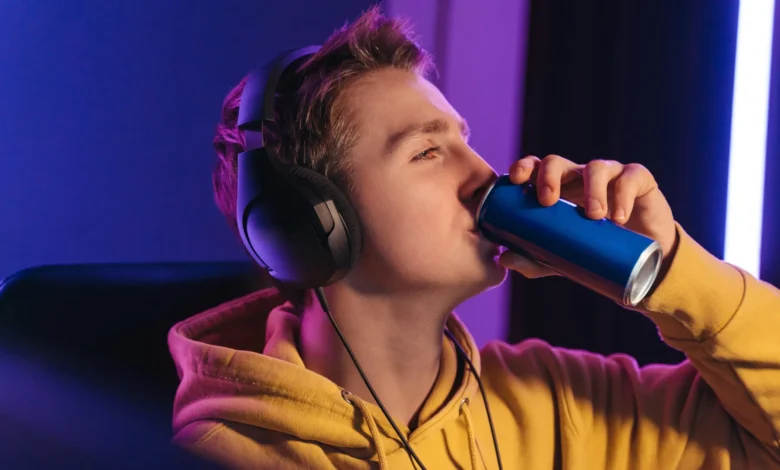
The booming market for energy drinks and specialized stimulant supplements has faced heightened scrutiny following the presentation of independent research at the American Heart Association’s Scientific Sessions 2026. Investigators analyzing federal adverse event reports discovered a striking statistical pattern: products containing concentrated caffeine and other stimulants appeared disproportionately in reports of severe cardiovascular emergencies, including cardiac arrest and heart attacks, when compared to non-stimulated foods and beverages. While the preliminary findings do not establish a direct causal relationship, they have reignited urgent medical discussions regarding the safety margins, regulatory oversight, and consumption patterns of ubiquitous products that have seamlessly integrated into the daily routines of millions of consumers worldwide.
The Rapid Expansion of the Energy Drink Market
Over the past decade, the energy drink and pre-workout supplement industry has experienced unprecedented commercial growth. Global sales have more than doubled, crossing the twenty-billion-dollar threshold in 2024. Marketed aggressively as everyday pick-me-ups, mental enhancers, and athletic performance boosters, these products occupy shelf space right alongside conventional bottled water, juices, and soft drinks. This omnipresence has fostered a widespread public perception that energy drinks are entirely benign, carrying no more risk than a standard cup of brewed tea or coffee.
However, the chemical reality of these formulations diverges sharply from traditional caffeinated beverages. While standard black coffee typically contains roughly 80 milligrams of caffeine per eight-ounce serving, certain commercial energy drinks pack up to three times that concentration per fluid ounce. More extreme are concentrated pre-workout powders and specialized dietary supplements, where caffeine concentrations can exceed the potency of standard coffee by a factor of twelve. Furthermore, these products frequently combine caffeine with other active sympathomimetics and methylxanthines—such as guarana, yerba mate, yohimbine, synephrine, and green tea extracts—creating complex chemical matrices whose cumulative cardiovascular impacts remain inadequately understood by the scientific community.
Chronology of Regulatory Oversight and Scientific Inquiry
The intersection of high-potency caffeine and acute cardiac distress is not an entirely new subject for medical professionals, but systemic evaluation of federal safety databases represents a critical evolution in how researchers track potential risks.
Between 2017 and 2025, voluntary reporting mechanisms administered by federal safety agencies accumulated tens of thousands of suspected adverse reaction records associated with foods and dietary supplements. Within this eight-year window, public health researchers recognized an emerging signal regarding cardiovascular complications tied specifically to stimulant-laden products.
The trajectory of this issue culminated at the American Heart Association’s Scientific Sessions 2026, where lead study author Sai Samayamanthula, a fourth-year medical student at the University of Virginia School of Medicine, unveiled the systematic comparison of FDA safety logs. This presentation coincided temporally with broader institutional re-evaluations, including the release of a 2026 American Heart Association Scientific Statement focused comprehensively on caffeine and cardiovascular disease. This authoritative guideline reaffirmed that while most healthy adults can safely consume up to 400 milligrams of caffeine daily—equivalent to approximately five eight-ounce cups of coffee—the staggering concentration spikes found in modern energy drinks and supplements can cause consumers to unintentionally breach safe upper limits within a single serving.
Methodology and Comparative Data Analysis
To evaluate potential safety signals, the research team conducted a retrospective analysis of the U.S. Food and Drug Administration’s adverse event reporting database covering the timeframe from 2017 through 2025. The investigation screened a total of 28,345 reports detailing suspected adverse reactions to dietary supplements and food products.
Out of this extensive dataset, 854 reports specifically implicated energy drinks or dietary supplements containing caffeine and associated stimulants. The remaining 27,491 reports comprised a diverse control and comparison group consisting of conventional, non-stimulated items such as soft drinks, smoothies, vitamin formulations, protein bars, and meal replacement shakes.
The criteria defining the stimulant category were comprehensive, encompassing pure caffeine, methylxanthines including theobromine, guarana, yerba mate, and green tea or coffee extracts, alongside sympathomimetic agents such as synephrine, yohimbine, ephedra, DMAA, and higenamine. Rather than focusing on individual corporate brands or specific commercial labels, the researchers categorized the products strictly by their active chemical ingredients. This broad-lens approach ensured that the findings addressed systemic product categories rather than pointing toward isolated commercial manufacturers.
The comparative analysis revealed a pronounced skew: products containing caffeine and stimulants appeared with vastly higher relative frequency in reports detailing critical cardiovascular events. Investigators took pains to clarify that these statistical differences represent reporting frequencies within a voluntary database rather than absolute risk multipliers for the general population. Specifically, the data did not signify that an individual consuming an energy drink faces an exact mathematical multiple of absolute risk for a heart attack or cardiac arrest. Instead, the findings constitute a vital safety signal, illuminating a disproportionate representation that demands rigorous prospective epidemiological study.
Vulnerability Among Younger Demographics
One of the most arresting elements of the 2026 analysis was the demographic distribution of the reported incidents. Individuals between the ages of 18 and 34 accounted for a substantial and disproportionate share of the cardiovascular events linked to caffeinated and stimulant-based products.
This trend has left clinical cardiologists and public health researchers searching for underlying explanations. Several hypotheses are currently under active investigation. First, younger adults represent the core consumer base for high-potency energy drinks and pre-workout powders, meaning higher exposure rates naturally translate into a greater volume of reported events within this cohort.
Second, behavioral patterns associated with consumption practices may amplify physiological stress. Younger consumers frequently ingest high-caffeine products immediately prior to engaging in high-intensity physical exertion, or conversely, mix them with alcohol and other recreational substances during social outings. Such combinations can place acute, synergistic demands on the cardiovascular system.
Finally, medical experts note that younger populations may harbor undiagnosed, congenital, or asymptomatic heart conditions—such as structural anomalies, channelopathies, or early-stage arrhythmias—that remain entirely silent until triggered by the acute sympathetic surge induced by massive doses of stimulants. The convergence of heavy commercial marketing targeted at youth culture and these physiological vulnerabilities underscores an urgent need for targeted educational campaigns.
Regulatory Classification and Industry Realities
A foundational element of the ongoing debate involves the statutory framework governing these products. Under current United States regulatory structures, energy drinks and dietary supplements are classified primarily as foods or supplements rather than pharmaceutical drugs. Consequently, they are entirely exempt from the rigorous, multi-phase pre-market safety testing, clinical trial requirements, and efficacy evaluations that the FDA mandates for prescription and over-the-counter medications.
Because manufacturers can introduce new formulations and ingredient combinations to the marketplace with minimal pre-market regulatory clearance, public health safety monitoring relies heavily on post-market surveillance. This system depends largely on voluntary reporting by consumers, manufacturers, and healthcare providers.
Experts emphasize the inherent limitations of this passive surveillance model. Because reporting is voluntary, the database does not capture every adverse event that occurs nationwide. Furthermore, the records lack denominators; researchers cannot ascertain the total number of individuals who consume these products daily without incident, nor can they quantify how many people experience mild or severe symptoms but fail to submit an official report. Consequently, calculating exact epidemiological risk probabilities remains fundamentally challenging.
Expert Perspectives and Clinical Implications
The release of these findings has prompted measured responses from leading cardiovascular specialists who were not directly involved in the study.
Dr. Gregory M. Marcus, a professor of medicine at the University of California, San Francisco School of Medicine and associate chief of Cardiology for Research at UCSF Health, acknowledged the biological plausibility of the findings while urging caution against alarmism or premature causal conclusions. As the chair of the 2026 American Heart Association scientific statement on caffeine and cardiovascular disease, Dr. Marcus noted that while high concentrations of caffeine possess clear physiological mechanisms capable of stressing the heart—such as increasing heart rate, elevating blood pressure, and triggering electrical instability—observational database reviews cannot definitively prove direct causation without accounting for confounding lifestyle variables.
"This study raises important concerns that products with very high amounts of caffeine may be harmful to the cardiovascular system," Dr. Marcus stated, while reiterating that further prospective, controlled research is urgently required to isolate the precise physiological mechanisms at play.
Lead investigator Sai Samayamanthula echoed the call for enhanced clinical awareness, emphasizing practical takeaways for practicing physicians. "These products are marketed as everyday pick-me-ups and sold next to soda and bottled water, so most people assume they carry no real risk," Samayamanthula observed. While conceding that occasional consumption by healthy individuals likely carries a minimal threat profile, he stressed that regular users can rapidly exceed safe daily caffeine thresholds.
For the medical community, the immediate implication involves clinical diagnostics. Researchers and cardiologists recommend that healthcare providers routinely screen younger patients presenting with unexplained palpitations, chest pain, dizziness, or syncopal episodes regarding their exact consumption habits concerning energy drinks and specialized pre-workout supplements.
Broader Impact and Future Directions
The unfolding discussion surrounding stimulant-based beverages and supplements highlights a broader public health challenge in modern nutrition: balancing consumer autonomy with effective harm reduction in an era of rapid product innovation. As functional beverages continue to evolve, offering increasingly potent formulations designed to maximize alertness and physical output, the gap between commercial availability and comprehensive toxicological understanding remains wide.
The findings presented at the American Heart Association Scientific Sessions 2026 serve as an important catalyst for regulatory reflection, clinical vigilance, and future scientific inquiry. Ultimately, bridging the knowledge gap will require robust, prospective clinical trials and systematic post-market monitoring to definitively establish the safety parameters of high-caffeine and stimulant products. Until such definitive data is established, public health authorities and medical professionals continue to advocate for heightened consumer awareness, transparent labeling standards, and cautious moderation regarding the daily intake of highly concentrated stimulant formulations.
Related posts: