Energy Drinks And Pre-workout Supplements Were Linked To Cardiac Arrest Reports In Young Adults, A New

The Scope of the Clinical Analysis
The study, which examined data spanning from 2017 to 2025, utilized the U.S. Food and Drug Administration’s (FDA) Adverse Event Reporting System (FAERS). By scrutinizing over 28,000 individual reports filed by consumers, healthcare practitioners, and manufacturers, the research team aimed to isolate the impact of caffeinated beverages and stimulant-based dietary supplements on heart health.
Of the total dataset, 854 reports were specifically linked to products marketed as energy drinks or pre-workout supplements. To establish a comparative baseline, these were measured against 27,491 reports associated with non-stimulant products, such as basic protein powders, vitamins, and standard soft drinks. The researchers categorized products based on their active ingredients rather than brand names, identifying caffeine, guarana, yerba mate, green tea extract, and synthetic stimulants like synephrine, ephedra, DMAA, and higenamine as the primary subjects of concern.
Data Trends and Cardiovascular Risk
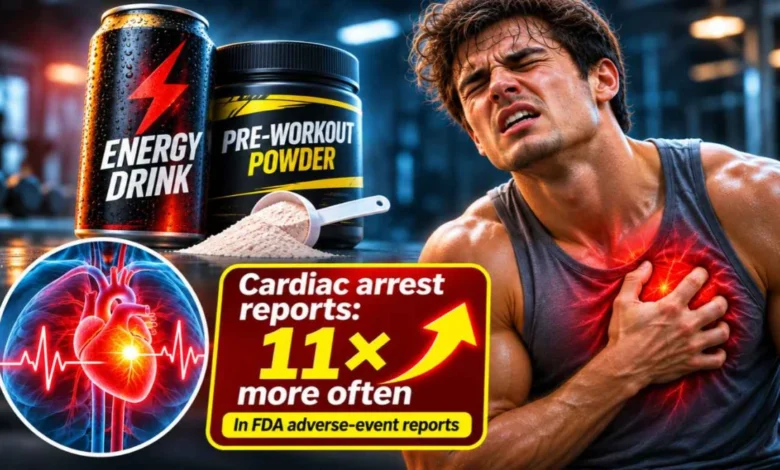
The findings suggest that users of stimulant-heavy products face a distinct physiological burden. When compared to the control group, reports involving energy drinks and pre-workout powders exhibited a statistically significant higher incidence of severe cardiac events. Specifically, the analysis identified a 3.5-fold increase in reports of cardiac arrest, a 2.5-fold increase in reports of palpitations, and a 2-fold increase in reports of chest pain or angina.
The pattern of these adverse events appears to be gender-neutral, affecting men and women with comparable frequency. These findings highlight a critical intersection between the unregulated nature of the dietary supplement market and the physiological vulnerabilities of the younger demographic.
Understanding the Physiological Mechanism
Medical experts posit that the mechanism of harm lies in the cumulative, and often extreme, cardiovascular strain caused by these substances. Stimulants, by definition, elevate heart rate and blood pressure. In the context of pre-workout powders, which are often consumed immediately prior to intense physical exertion, the heart is subjected to a dual stressor: the chemical provocation of the stimulant and the physical demands of exercise.
For young adults who may possess undiagnosed underlying heart conditions—such as hypertrophic cardiomyopathy or structural anomalies—this rapid increase in blood pressure and heart rate can act as a catalyst for cardiac arrhythmias. The susceptibility is further exacerbated by "stacking," or the practice of consuming multiple stimulant-containing products throughout a single day, which rapidly pushes the user well beyond the safety threshold of 400 mg of caffeine per day—the limit recommended by the 2026 American Heart Association (AHA) scientific statement.
The Regulatory Landscape and Safety Gaps
The primary challenge in mitigating these risks lies in the classification of these products. Under current FDA regulations, energy drinks and many pre-workout powders are categorized as foods or dietary supplements. Unlike pharmaceutical medications, which undergo rigorous, multi-phase clinical trials for safety and efficacy prior to market entry, these products face significantly lower barriers to entry.

The lack of mandatory pre-market safety testing means that the public often serves as the testing ground for novel stimulant combinations. Furthermore, the inclusion of "proprietary blends" on product labels frequently masks the exact concentration of active ingredients, leaving consumers unable to accurately track their total stimulant intake. This creates an environment where the consumer is unknowingly consuming highly concentrated doses of synergistic stimulants that have not been adequately studied for long-term cardiac safety.
Chronology of Concern
The discussion surrounding the safety of energy products is not new, but it has intensified over the last decade.
- 2017-2019: An uptick in emergency department visits related to energy drink consumption begins to surface in medical journals, prompting initial investigations.
- 2021-2023: The market for "high-stim" pre-workout powders expands rapidly, fueled by social media trends that promote extreme dosages for perceived athletic advantages.
- 2025: The University of Virginia study is finalized, providing the most granular look to date at the adverse event data submitted to the FDA over the preceding eight years.
- 2026: The American Heart Association issues updated guidance on caffeine, emphasizing the dangers of excessive intake and highlighting the potential for cardiac arrest in otherwise healthy young adults.
Clinical Perspectives and Limitations
While the data provided by the FAERS database is invaluable, researchers and outside cardiologists alike caution against drawing absolute causal conclusions. Because the system relies on voluntary reporting, it is subject to "reporting bias." It is currently impossible to quantify the denominator—the total number of people who consume these products safely without incident.
Furthermore, outside experts have noted that the reported cardiac events could be influenced by a myriad of confounding variables, such as existing health conditions, the use of other medications, or underlying lifestyle factors not captured in the reporting forms. Despite these limitations, the medical community maintains that the correlation is strong enough to warrant significant caution, particularly for adolescents and young adults.
Recommendations for Consumers
To navigate the current marketplace more safely, health professionals suggest the following precautions:
- Strict Label Scrutiny: Consumers should learn to identify all sources of stimulants on labels, including plant-derived compounds like guarana or green tea extract, which function similarly to synthetic caffeine.
- Avoid Stacking: Never combine energy drinks with pre-workout powders, as the additive effects on blood pressure can be unpredictable and dangerous.
- Monitor Total Intake: Treat energy products as medicine rather than beverages. Maintain a strict daily log of caffeine intake to ensure it remains below the 400 mg limit.
- Listen to the Body: Any sensation of a racing heart, lightheadedness, or unexplained chest pressure during or after use should be treated as a warning sign. These symptoms necessitate an immediate cessation of the product and a consultation with a primary care physician.
- Prioritize Natural Energy: Focus on hydration, balanced nutrition, and adequate sleep as the primary drivers of athletic performance and alertness, rather than chemical stimulants.
Broader Implications for Public Health
The implications of these findings extend beyond individual health choices and into the realm of public policy. As reports of cardiac arrests in young, healthy populations continue to emerge, there is a growing call for tighter regulations on the labeling of stimulant-based products. Public health advocates are increasingly arguing for mandatory warning labels, similar to those found on tobacco or alcohol products, which clearly articulate the cardiovascular risks associated with excessive consumption.
Ultimately, the onus remains on the consumer to exercise vigilance in a market that prioritizes performance and convenience over long-term cardiovascular health. The University of Virginia analysis serves as a sobering reminder that for the heart, the price of "energy" can sometimes be far higher than the cost of the product on the shelf. As research continues, the medical community remains focused on bridging the gap between current consumer habits and the established physiological limits of the human cardiovascular system.